

Maddy summaryHB 210 prohibits individuals or businesses from charging fees for advising or assisting veterans with benefits claims, except as permitted under federal law. It requires all service providers to use written agreements with specific disclosures - clearly stating they are not affiliated with the VA or state veterans' agencies - and to avoid guaranteeing specific benefits. The bill mandates that fees comply with federal standards (38 C.F.R. § 14.636) and bans excessive charges, while requiring providers to inform veterans about free alternatives like county veterans' service offices. This law applies to new agreements starting July 1, 2025, directly affecting veterans seeking benefits help and the organizations offering such services.
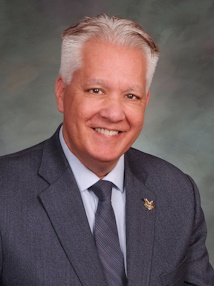
Rep. Chris Knapp
Sponsored bills
Maddy summaryThis bill (SF 128) removes the sales tax on electricity sold by public utilities for domestic, industrial, or commercial use in Wyoming. It directly affects all electricity consumers, including households and businesses, by eliminating a tax they currently pay on their electricity bills. The key mechanism is amending Wyoming’s tax code (W.S. 39-15-103 and 39-15-105) to create a specific exemption for electricity sales. The change takes effect on July 1, 2025.
Maddy summaryHB 319 exempts sales and use tax on mining equipment used in surface, underground, or in-situ mining operations in Wyoming. It directly affects mining companies purchasing qualifying equipment, such as machinery and tools for extraction. The bill creates new tax exemptions in Wyoming’s tax code (sections 39-15-105 and 39-16-105) with a sunset clause repealing the exemption on July 1, 2029. The exemption becomes effective July 1, 2025, and applies only to equipment specifically defined for mining operations.
Maddy summaryHB 252 repeals a three-year tax exemption for new wind energy production in Wyoming, effective immediately upon enactment. It directly affects new wind energy projects by removing a tax break previously available for the first three years of operation. However, wind turbines that began generating electricity for sale before the bill's effective date will retain the exemption under the repealed provision. The bill makes no changes to existing wind energy operations but alters tax treatment for future projects.
Maddy summaryHB 287 requires Wyoming counties to reimburse individuals for legal costs (including attorney fees and bail) when they successfully use self-defense in criminal cases and are found not guilty, have charges dismissed, or are released from prosecution. It also mandates courts to automatically expunge all related criminal records in these cases, removing arrest and prosecution history from public records. The bill directly affects people facing criminal charges who defend themselves, streamlining access to reimbursement and record removal through simplified court petitions with no filing fees.
Maddy summaryHB 125 repeals specific restrictions on concealed weapons in schools and public facilities while clarifying that only the Wyoming state legislature can regulate firearms, not local governments. It allows lawfully carrying concealed weapons in government meetings, legislative sessions, and public schools (excluding facilities where students are enrolled under existing law), and prohibits local entities from banning such carry in these locations. The bill also creates a misdemeanor penalty for blocking someone with a valid concealed carry permit from entering authorized areas. It explicitly preserves private property owners' rights to ban firearms on their land and requires the state building commission to issue necessary rules within 30 days of the law's effective date.
Maddy summarySF 99 prohibits physicians and health care providers in Wyoming from performing specific medical procedures related to gender transition for children under 18. This includes surgeries like sterilization (e.g., hysterectomy, orchiectomy), mastectomies, puberty-blocking drugs, and hormone therapies that induce infertility. Exceptions apply for medically verified conditions, such as disorders of sex development or central precocious puberty, with parental consent. Violations could lead to suspension or revocation of a provider’s license, and the bill takes effect July 1, 2024.
Maddy summaryWyoming's SF 105, the Second Amendment Financial Privacy Act, prohibits credit card processors and financial institutions from using a "firearms code" (a merchant category code identifying firearm purchases) to track or disclose information about firearm and ammunition transactions beyond standard payment processing. The law defines "protected financial information" as records linked to such codes and bans its use for surveillance, discouraging lawful gun purchases, or sharing with government entities without a specific legal requirement. It creates a private right for individuals to file civil lawsuits if their financial privacy is violated and includes exceptions for mandatory financial reporting (e.g., anti-money laundering compliance). The bill directly affects credit card processors, financial institutions, and firearm buyers by preventing the misuse of transaction data for monitoring constitutional rights.
Maddy summaryWyoming's SF 80 amends definitions in solid waste management law to clarify what constitutes solid waste and recycling facilities. It excludes certain materials (like post-use polymers processed through advanced recycling) from "solid waste" definitions and creates new terms for "advanced recycling" (using processes like pyrolysis) and "advanced recycling facilities." This change specifically affects recycling operations that convert plastic waste into raw materials, removing them from standard solid waste management regulations. The bill requires the Environmental Quality Council to create implementing rules, with most provisions effective July 1, 2024.
Maddy summaryHB 116 requires the Wyoming Sage Grouse Implementation Team to provide written notice to affected surface landowners at least 45 days before making recommendations to the governor that could impact their property rights. It also mandates a public comment opportunity in the impacted community at least 30 days prior to such recommendations. The bill directly affects landowners whose surface interests may be affected by sage grouse management decisions. These notice and comment requirements apply to all recommendations under the team's duties, ensuring landowners and the public have time to review and respond before decisions are submitted to the governor.