

Maddy summarySF 105 redefines "customer" in Wyoming real estate law as a person who has not established an agency relationship with a broker, such as someone viewing properties without formal representation. It requires real estate licensees to provide written disclosures about agency relationships before discussing transactions, clarifying that customers do not need to sign agency agreements to tour properties and are not entitled to confidentiality. The bill specifies that these disclosures must include key details about the customer relationship and include a signature line for acknowledgment, though the acknowledgment alone does not create a binding contract. The changes take effect July 1, 2026, and apply to all new transactions after that date.
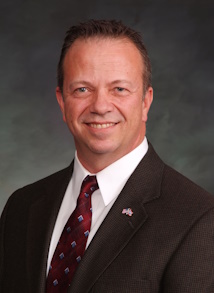
Rep. Rob Geringer
Sponsored bills
Maddy summaryThis bill requires Wyoming's state engineer to conduct groundwater studies every decade in counties with designated groundwater control areas. The studies must assess water usage, determine necessary controls to replenish underground water systems, and may include mapping or test wells. Results must be publicly shared and reported to a legislative committee within 15 days of completion. The state engineer's office is allocated $250,000 specifically for this study, which must be finished by June 30, 2028.
Maddy summaryHB 2, the Fast Track Permits Act, requires cities, towns, and counties in Wyoming to review residential building permit applications within strict deadlines. Local governments must notify applicants within 15 days if an application is incomplete and must approve or deny complete applications within 30 days (excluding delays for clarification or state/federal approvals). If deadlines are missed, permits are automatically approved as submitted the next day. The bill directly affects homebuilders applying for permits for detached single-family homes, townhouses, or small multi-unit projects under specific size and code limits, and the local governments that process these applications.
Maddy summaryThis bill creates a 13-member Wyoming Business Council Strategic Advisory Task Force to evaluate the state's Wyoming Business Council (WBC). The task force, including legislative members, business representatives (from agriculture, manufacturing, tourism, oil/gas, and local economic development), and local officials, must assess the WBC's programs, duties, and operations - including those not specified in law - and compare them to economic development models in other states. It will develop recommendations for strategic direction, propose changes to the WBC's structure or functions, and suggest improvements for communication with state leadership. The task force must meet at least three times and submit findings by a specified deadline. (Note: This is a procedural evaluation bill, not a policy change.)
Maddy summaryThis bill appropriates $15 million from Wyoming's tourism reserve fund to support the development of a rodeo and cowboy museum and hall of fame in Wyoming. The funds will be distributed in three installments of $5 million each on July 1, 2026, 2027, and 2028, contingent on the Wyoming Tourism Board certifying that relocation efforts will boost tourism, jobs, and state revenue. Applicants must provide matching funds (at least $1 for every $1 granted) and relocate to Wyoming by June 30, 2028, or repay the grant. The Wyoming Office of Tourism must report annually on fund usage until 2036.
Maddy summaryThis bill prohibits Wyoming state agencies and local law enforcement from using state funds to enforce federal gun regulations that conflict with Second Amendment rights. It creates criminal penalties (up to 1 year in jail or $2,000 fine) and civil penalties of $50,000 per violation for agencies that enforce such federal rules. The law specifically exempts cooperation with federal authorities on non-gun-related matters and defines key terms like "federal regulation" and "law abiding citizen."
Maddy summaryThis Wyoming bill (SF 53) requires high school athletes to maintain "amateur status" to compete in school-sanctioned sports, directly affecting student-athletes in Wyoming public high schools. It prohibits athletes from receiving money, prizes exceeding association limits, or monetizing their name/image/likeness for competition, with key exceptions including family support payments, necessary travel expenses, and scholarships paid directly to colleges after graduation. Violating these rules results in loss of eligibility for the sport. The law takes effect July 1, 2026, and aims to align with national amateurism standards for high school athletics.
Maddy summaryThis bill changes Wyoming's zoning protest rules to make it easier for neighbors to block certain property changes. It lowers the required vote from city councils to approve zoning changes from three-quarters (3/4) to two-thirds (2/3) when a protest meets specific owner thresholds. To trigger this lower vote requirement, protesters must either own 33%+ of the affected lots or represent 33%+ of adjacent property owners within 300 feet (not counting streets). The change applies to zoning decisions made on or after July 1, 2026. This directly affects property owners near proposed zoning changes who wish to challenge them through the protest process.
Maddy summaryThis bill requires Wyoming cities and towns to hold elections for existing surface water drainage fee systems that began collecting payments before July 1, 2026, without prior voter approval. Municipalities must hold these elections by July 1, 2027, and if voters reject the fees, they must stop collecting them within 60 days. It clarifies that new or existing drainage systems must follow specific rate-setting rules for water use and runoff management after an election. The law takes effect July 1, 2026, directly affecting local governments managing surface water drainage.
Maddy summaryWyoming's HB 140 allows building owners or contractors to hire licensed architects, engineers, or ICC-certified third-party inspectors (not involved in the project's design or construction) to perform most building permit inspections, rather than relying solely on local building departments. Owners must notify the local authority in writing before inspections (via email or online systems), provide the inspector's details, and share inspection reports electronically within deadlines. Third-party inspectors must carry $1 million in liability insurance and cannot conduct final inspections required for certificate of occupancy, which remains the local authority's responsibility. This bill directly affects construction project owners, contractors, and local building departments in Wyoming.