

Maddy summaryHB 102 would allow school employees with valid concealed carry permits to carry firearms on school property if their district board adopts specific rules. School boards that choose not to adopt such rules must submit a written explanation to the state education department. The bill appropriates $100,000 for a statewide marketing campaign to promote this authority, with funds restricted to use from July 2024 through June 2026. The bill failed its introduction in the Wyoming House on February 14, 2024, with a vote of 35-26.
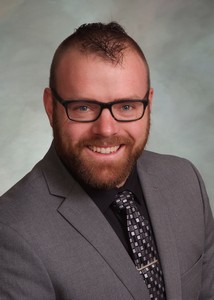
Rep. Jeremy Haroldson
Sponsored bills
Maddy summaryHB 157 clarifies that Wyoming property tax valuations must consistently follow the state law definition of "fair market value" as specified in W.S. 39-11-101(a)(vi). The bill requires county assessors and the Department of Revenue to use appraisal methods aligned with this definition when annually valuing taxable property. It directly affects property taxpayers and local assessors by mandating uniform valuation practices under existing tax statutes. The bill, which failed committee passage in February 2024, takes effect July 1, 2024, if enacted.
Maddy summaryThis joint resolution (SJ 1) is a non-binding request from Wyoming's legislature to the U.S. Congress. It demands that Congress extinguish federal ownership of public lands and subsurface resources within Wyoming (currently covering about 46% of the state's surface area and 69% of its subsurface resources) to fulfill Wyoming's constitutional "equal footing" status as a state admitted to the Union. The resolution requires Congress to confirm its intent to transfer these lands to Wyoming by October 1, 2024, and proposes that the transferred lands remain state public lands. It is a procedural resolution, not a law, and has not advanced beyond the introduction stage in the Wyoming Senate (failed 17-14).
Maddy summaryWyoming's SF 88 requires the attorney general to investigate local government actions (counties, cities, towns) that allegedly violate state law or the Wyoming Constitution, following a legislator's written request and prior notice to the local government. If violations aren't resolved within 60 days of notice, the attorney general must notify the state treasurer to withhold state funds from the violating entity until the issue is fixed. The bill creates a specific process for holding local governments accountable, including mandatory reporting to the governor and legislature. It directly affects counties, cities, and towns that adopt policies conflicting with state law, with the primary enforcement tool being the withholding of state revenue distributions. The law amends existing fund distribution rules to implement this withholding mechanism.
Maddy summaryWyoming's HB 152, the "Life is a Human Right Act," prohibits most abortions by defining "abortion" as the intentional termination of an unborn baby's life from conception. It directly affects pregnant individuals and medical providers in Wyoming by banning abortion except when a physician uses reasonable medical judgment to prevent the death of the pregnant woman, address a serious risk to her life or a life-sustaining organ, or treat an ectopic pregnancy. The bill explicitly excludes contraception from the prohibition and defines "unborn baby" as a living human from fertilization through birth. This law creates criminal penalties for violations and amends existing abortion-related statutes.
Maddy summaryWyoming's SF 109 prohibits the use of specific abortion drugs (like mifepristone and misoprostol) for terminating pregnancies, affecting doctors, pharmacists, and anyone distributing or prescribing these drugs. Exceptions include contraceptive use before pregnancy confirmation, treatment of natural miscarriages under medical guidelines, and cases where a patient faces an immediate physical danger to life or health (excluding psychological conditions), or pregnancy from incest/sexual assault. Violations carry misdemeanor penalties of up to six months in jail or a $9,000 fine. Women seeking abortions using these drugs are explicitly exempt from criminal prosecution under this law.
Maddy summaryThis Wyoming bill (SF 133) prohibits male students from competing on teams designated for female students in K-12 interscholastic sports. It requires schools to designate teams as "male," "female," or "coed" based on biological sex at birth (defined as "genetics and anatomy at birth" in Section 21-25-101(iv)). The bill also creates a commission to determine eligibility if courts invalidate the main prohibition (Section 21-25-202), but its core effect is to bar male students from female-designated teams. It directly affects public and private K-12 schools and student athletes in Wyoming.
Maddy summaryWyoming's SF 174 creates a new Wyoming Charter School Authorizing Board to oversee public charter schools statewide. The board, consisting of five members (including the state superintendent and appointees from the governor, Senate, and House), will approve, renew, and oversee charter schools under specific quality standards. The bill modifies how charter schools are authorized (replacing school district oversight with the state board), adjusts funding rules, and requires transparency in decision-making. This directly affects public charter schools, their governing boards, and the state education department as the local education agency.
Maddy summaryWyoming's SF 153 strengthens election security by requiring counties to audit up to 5% of ballots after each election to verify results. It changes absentee ballot distribution timelines (45 days before election for military voters, 28 days for others) and mandates that electronic voting systems maintain an "air gap" (physical isolation from networks/internet). The bill also requires election records and ballots to be transported in sealed, locked containers with unique numbered seals. A $100,000 appropriation funds county training and consultant services for implementation. These changes directly affect county clerks, election administrators, and electronic voting systems statewide.
Maddy summaryWyoming's SF 169 creates a 12-member task force to plan a state shooting complex. The task force includes state agency directors, two firearm industry representatives, a shooting sports organization member, a hunting conservation group representative, and legislative members appointed by leadership. It must develop location criteria, review existing facilities, create a request for proposals, and make recommendations by October 1 each year until June 2026. The bill appropriates $8.125 million from existing state funds (including $5 million from American Rescue Plan funds) specifically for the complex's siting and construction, with all funds required to be spent by the 2026 deadline.