

died Feb 11, 2020
1 co-sponsor
Total votes
134
all sessions
Attendance
100%
of floor votes
With party
92%
of cast votes
Near the chamber average
Bipartisan score
4%
crosses aisle rarely
Near the chamber average
Sponsored
74
bills & resolutions
Near the chamber average
Committees
0
assignments
74 bills and resolutions
Sponsored bills
Total
74
Primary
37
Co-sponsor
37
This page
74
matching current filters
Community colleges-bachelor of applied science programs.
Maddy summaryWyoming's SF 111 authorizes community colleges to offer applied bachelor's degree programs (called "baccalaureate of applied science" degrees) for the first time. It requires the Community College Commission to approve all new such programs before they can receive state funding. The bill also updates the Hathaway scholarship program to cover these new degrees, allowing students to use scholarships for up to eight semesters to complete them while maintaining a 2.25 GPA. This directly affects community college students pursuing applied bachelor's degrees and the colleges offering them.
Signed into law Mar 15, 2019
1 co-sponsor
Court supervised treatment programs-prosecutor's consent.
Maddy summaryHB 177 removes the requirement for prosecutors to consent before defendants can join court-supervised treatment programs in Wyoming. Previously, defendants needed agreement from the prosecutor, judge, and program team; this bill now requires only the judge and defendant's consent, plus program team acceptance. The change applies to all criminal cases filed on or after July 1, 2019, streamlining access to treatment options. This policy shift does not alter prosecutors' authority in charging or prosecuting cases, only the process for program enrollment.
Signed into law Mar 8, 2019
0 co-sponsors
District court filing fees.
Maddy summaryHB 125 increases filing fees for probate cases in Wyoming district courts from $50 to $75 and for civil cases from $85 to $110. It specifies that $25 of the civil filing fee funds court automation and $10 supports indigent civil legal services, with the remaining amounts covering court operations. This bill directly affects individuals and organizations filing probate or civil cases in Wyoming district courts. The fee changes took effect on July 1, 2019.
Signed into law Feb 28, 2019
1 co-sponsor
Presentence investigation reports-judicial discretion.
Maddy summaryHB 143 gives judges more discretion in sentencing by allowing them to skip or limit presentence investigation reports for felony defendants. The bill amends Wyoming law to state that courts may dispense with the report requirement or restrict its scope to factors relevant to sentencing, instead of mandating full reports in all felony cases. It specifically maintains the requirement for substance abuse assessments in certain felony cases (like third misdemeanors or felonies) and keeps the cost assessed to the offender. This directly affects felony defendants and courts by changing when detailed pre-sentence reports are needed before sentencing.
Signed into law Feb 28, 2019
1 co-sponsor
Pari-mutuel fee distribution-state fair account.
Maddy summaryThis bill (SF 107) redirects 1% of fees from historic pari-mutuel wagering events in Converse County to the state fair account instead of splitting them between the county and local municipality. It amends Wyoming law to require the commission to transfer these fees directly to the state fair fund when events are approved in Converse County under specific provisions. The change applies to all reported pari-mutuel events in Converse County, ensuring the revenue supports the state fair. The bill took effect July 1, 2019.
Signed into law Feb 28, 2019
1 co-sponsor
Wyoming children's trust fund-expenditures.
Maddy summaryThis bill changes how Wyoming's Children's Trust Fund can spend money. Until the fund's total assets reach $5 million, the board may spend up to 90% of annual contributions plus prior year's interest. Once the fund exceeds $5 million, only interest income and specific other funds (like those from certain state fees) can be used. The rules took effect July 1, 2019.
died Feb 27, 2019
1 co-sponsor
Commercial vehicles-irrigation operations.
Maddy summaryHB 240 exempts drivers operating irrigation district vehicles from Wyoming's commercial vehicle licensing and regulatory requirements when used solely for operating or maintaining irrigation infrastructure. The bill specifically covers vehicles driven for tasks related to headgates, canals, laterals, ditches, pipelines, and reservoirs. This exemption applies to irrigation district employees performing routine facility maintenance and operations, removing a layer of administrative burden for these specific duties. The policy change was intended to take effect July 1, 2019, though the bill did not advance beyond committee.
died Feb 27, 2019
1 co-sponsor
State capital construction.
Maddy summaryThis bill (SF 103) expands and reorganizes Wyoming's oversight for state capital construction projects. It renames the "select committee on school facilities" to include community colleges and state capital construction, authorizes additional temporary members, and specifies the committee's expanded duties - including reviewing construction project designs and receiving annual reports from state agencies. The bill removes the requirement for quarterly committee meetings and updates statutes to clarify how the committee coordinates with the state building commission and legislative bodies on construction priorities and funding recommendations. This change directly affects the committee, state agencies managing facilities, and the legislative process for capital projects.
Passed Feb 27, 2019
1 co-sponsor
Free and fair elections.
Maddy summaryHJ 8 is a Wyoming legislative resolution urging Congress to propose a constitutional amendment to regulate political spending. It argues that corporations should not have the same constitutional rights as natural persons regarding election funding, based on Wyoming's constitution. The resolution does not create new laws but asks Congress to clarify that states can regulate campaign contributions and expenditures. Introduced in 2019, it was referred to a committee but remains a non-binding request.
died Feb 26, 2019
1 co-sponsor
Ask Maddy
·
AI policy assistant
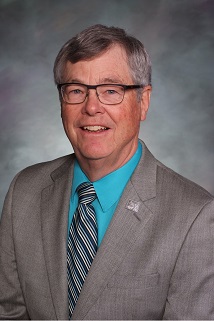
Ask Maddy about Dan Kirkbride
Scope: wyoming
Hi! I can help you understand Dan Kirkbride's legislative record. What would you like to know?
Try one of these
i
Maddy answers using official bill text and legislative records. Always verify before sharing.
Sources cited inline