

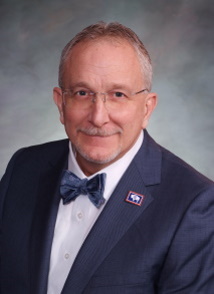
Maddy summaryHB 80 changes the schedule for distributing county school funds in Wyoming. It removes an additional annual fund transfer, requiring county treasurers to apportion funds only on the second Monday of each month and on June 20 (or the last business day before June 20) each year. This affects county treasurers and school districts by altering when they receive funds from the county school fund, which includes interest, fines, and forfeitures. The bill does not create new funding but modifies the existing distribution timeline. It takes effect immediately upon becoming law.
Sponsored bills
Maddy summarySF 104 amends Wyoming law to change how wind and solar energy facilities on state lands are permitted. It requires county commissioners to obtain written consent from grazing and agricultural leaseholders before approving such facilities, especially when projects are near residential structures (within specific distance limits). The bill mandates that leaseholders be notified about proposed projects and allows them to participate as formal parties in the permitting process. Additionally, it updates definitions to include leaseholders as "affected landowners" and sets clear setback requirements for facilities near homes.
Maddy summaryHB 120 would establish a regulatory framework for online gambling (interactive gaming) in Wyoming, authorizing and overseeing internet-based casino-style games like poker or slots through the Wyoming Gaming Commission. The bill defines key terms, requires operators to verify players' physical presence in Wyoming via geolocation technology (except under reciprocal agreements), and mandates rules for security, wagering procedures, and revenue collection. It explicitly excludes fantasy sports, tribal gaming on Indian lands, and traditional lotteries from this definition. This legislation would directly affect online gambling companies, their service providers (like payment processors), and Wyoming residents who participate in interactive gaming.
Maddy summaryHB 87 amends Wyoming's livestock disease reporting rules to clarify how brucellosis test results must be shared. It requires the Wyoming Livestock Board to provide positive brucellosis test results directly to animal owners within 3 days and to all county brand inspectors and veterinarians within 7 days of receiving preliminary lab results. These changes apply specifically to livestock owners, veterinarians, and brand inspectors in counties where a positive test occurs. The bill does not alter disease control measures but ensures timely, targeted information sharing to manage outbreaks. The bill is effective July 1, 2024.
Maddy summaryHB 82 (Wyoming) creates a tax credit program to encourage property owners to improve abandoned or nuisance buildings in cities and towns. It allows local governments to designate properties as "abandoned" (vacant >6 months) or "nuisance" (deteriorated structures) for tax credit eligibility, with limits based on city size (e.g., max 3 designations for towns under 15,000 residents). Property owners can claim up to 50% of demolition costs or 100% of improvement costs within 2 years (or 5 years for new owners) by submitting proof to the city for approval. The bill failed to pass in the 2024 legislative session (H Failed Introduction on Feb 14, 2024) and remains a proposed framework, not enacted law.
Maddy summaryWyoming's SF 174 creates a new Wyoming Charter School Authorizing Board to oversee public charter schools statewide. The board, consisting of five members (including the state superintendent and appointees from the governor, Senate, and House), will approve, renew, and oversee charter schools under specific quality standards. The bill modifies how charter schools are authorized (replacing school district oversight with the state board), adjusts funding rules, and requires transparency in decision-making. This directly affects public charter schools, their governing boards, and the state education department as the local education agency.
Maddy summaryWyoming's HB 276 states that all shed antlers and horns found on public land belong to the state, not individuals. It requires anyone collecting these items on public land (specifically west of I-90 from the Montana border to Buffalo and west of I-25 from Buffalo to Colorado) to obtain a permit. Residents may collect without charge, while nonresidents must pay a $20 fee. The Game and Fish Commission will create rules to implement the permit system, effective immediately upon enactment. This law directly affects hunters, collectors, and outdoor enthusiasts who gather shed antlers on public lands.
Maddy summaryWyoming's SF 112 creates confidentiality protections for peer support counseling sessions involving law enforcement officers and emergency services personnel (including volunteers). The bill prohibits disclosure of all communications, notes, or records from these sessions - such as those addressing trauma from critical incidents - and explicitly excludes them from public records under Wyoming's disclosure laws. Exceptions include threats of suicide or criminal acts, required abuse reports, admissions of criminal conduct, or consented disclosures by participants or survivors. This policy directly affects peer support specialists, their teams, and the personnel they assist, ensuring sensitive discussions remain private unless specific safety exceptions apply.
Maddy summaryWyoming's SF 38 creates special license plates for motor vehicles (non-commercial) to raise awareness about organ, eye, and tissue donation. Residents can apply for these plates through county treasurers, with an optional $1 donation to fund public education on donation awareness. The plates feature a distinctive symbol, match standard size/color, and require registration fees like regular plates. If fewer than 1,000 plates are issued by December 31, 2031, production will end by January 2033.
Maddy summaryHB 199 allows Wyoming vehicle owners to voluntarily purchase a special license plate decal featuring a breast cancer ribbon symbol. The decal must be placed in the lower left corner of the license plate without covering other text or numbers. Owners pay a $5 fee (capped at the cost to administer the program) when applying through their county treasurer's office. This bill directly affects drivers who choose to display the decal to support breast cancer awareness, with the program effective July 1, 2023.