

Failed Feb 11, 2020
1 co-sponsor
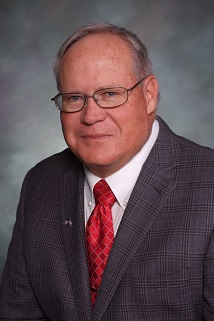
Total votes
186
all sessions
Attendance
100%
of floor votes
With party
97%
of cast votes
Higher than 76% of chamber peers
Bipartisan score
2%
crosses aisle rarely
Near the chamber average
Sponsored
33
bills & resolutions
Lower than 92% of chamber peers
Committees
0
assignments
33 bills and resolutions
Sponsored bills
Total
33
Primary
8
Co-sponsor
25
This page
33
matching current filters
New opportunities for Wyoming coal fired generation.
Maddy summaryThis bill allows private buyers to purchase retiring Wyoming coal-fired power plants without becoming regulated public utilities, while requiring utilities to make good-faith efforts to sell such plants before retirement. It prevents utilities from recovering costs for replacement facilities unless the commission determines they attempted to sell the retiring plant and received no reasonable offers. The Public Service Commission must approve all sale agreements and evaluate offers based on cost savings, risk reduction, and public interest - not potential lost utility revenues. It directly affects Wyoming utilities owning retiring coal plants, potential private buyers, and the commission overseeing approvals.
Signed into law Mar 8, 2019
1 co-sponsor
Driver's licenses-medical alert designation.
Maddy summaryWyoming's HB 191 allows residents to request a medical alert designation on their driver's license or state ID card, indicating they have a medical condition requiring special attention during emergencies. The bill does not require disclosure of specific medical details - only a standardized alert marker will appear on the card. It affects all Wyoming drivers and ID cardholders who choose to request this designation during application or renewal. The law amends licensing procedures to include a checkbox for this request and provides mechanisms to add or remove the alert on replacement cards. This is a procedural change that went into effect July 1, 2019.
Signed into law Feb 27, 2019
1 co-sponsor
Commercial vehicles-irrigation operations.
Maddy summaryHB 240 exempts drivers operating irrigation district vehicles from Wyoming's commercial vehicle licensing and regulatory requirements when used solely for operating or maintaining irrigation infrastructure. The bill specifically covers vehicles driven for tasks related to headgates, canals, laterals, ditches, pipelines, and reservoirs. This exemption applies to irrigation district employees performing routine facility maintenance and operations, removing a layer of administrative burden for these specific duties. The policy change was intended to take effect July 1, 2019, though the bill did not advance beyond committee.
died Feb 27, 2019
1 co-sponsor
Highway and wildlife safety studies and improvements.
Maddy summaryWyoming's HB 228 requires the Department of Transportation and Game and Fish Department to study wildlife-vehicle collisions on highways and wildlife deaths along specific railroad corridors (near U.S. Highway 30). The bill mandates collecting data on accident locations, injuries, animal deaths, and injury locations from 2019-2023, then creating priority maps and lists of high-risk areas. It appropriates $5 million for wildlife safety projects like signage, crossings, and fences on identified highways, with projects requiring local matching funds (5-30% depending on the entity). This directly affects drivers, wildlife conservation efforts, and communities along Wyoming highways and railroads, focusing on reducing collisions through data-driven infrastructure improvements.
died Feb 26, 2019
0 co-sponsors
Patching Prexy's Pasture parallelogram problem.
Maddy summaryHB 91 corrects a technical error in the legal description of "Prexy's Pasture" (a campus green space at the University of Wyoming), fixing a geometric inconsistency in its boundary coordinates. The bill amends a statute to replace an inaccurate parcel description that incorrectly described the pasture as a parallelogram. This adjustment ensures the written legal description matches the actual land boundaries, without changing any existing restrictions on construction or land use. The pasture remains protected from buildings per current law, and the correction became effective July 1, 2019.
Signed into law Feb 26, 2019
0 co-sponsors
Taxation of broadband internet infrastructure.
Maddy summaryThis Wyoming bill exempts sales and use taxes on equipment used to build broadband internet infrastructure in unserved areas. It applies to telecom providers, internet access companies, and video programming services constructing networks where high-speed internet isn't currently available (defined as 25 Mbps download/3 Mbps upload for residential areas). The exemption covers infrastructure equipment like routers and cables but excludes items sold directly to end-users. Providers may use reasonable methods to allocate equipment costs across service regions instead of tracking exact geographic locations.
Signed into law Feb 26, 2019
1 co-sponsor
Protection of children-child endangerment amendments.
Maddy summaryThis bill amends Wyoming law to strengthen protections for children under 16 by specifically prohibiting caregivers from exposing children to methamphetamine, cocaine, heroin, or LSD in any setting (including manufacturing, storage, or use locations). It clarifies that "in the presence of a child" includes situations where a caregiver knows a child is present and may witness domestic violence or drug activity. The law also limits temporary protective custody to 48 hours for the affected child and 24 hours for siblings in the same household, requiring court orders for extended custody. These changes became effective July 1, 2019, directly impacting caregivers, law enforcement, and child protective agencies.
Signed into law Feb 26, 2019
1 co-sponsor
Failed Feb 21, 2019
1 co-sponsor
died Feb 5, 2019
1 co-sponsor
Ask Maddy
·
AI policy assistant
Ask Maddy about Tom Crank
Scope: wyoming
Hi! I can help you understand Tom Crank's legislative record. What would you like to know?
Try one of these
i
Maddy answers using official bill text and legislative records. Always verify before sharing.
Sources cited inline