

Maddy summaryWyoming's HB 144 establishes rules for how tax revenues collected from senior citizen service districts must be spent. It requires these funds to support specific programs for seniors, including operational costs for senior centers, expanded services like nutrition, health, transportation, and in-home care, and maintenance/upgrades for income-restricted senior housing facilities. The bill explicitly prohibits using these funds for real property purchases or capital construction. It takes effect July 1, 2023, and applies directly to senior centers and housing providers within designated districts.
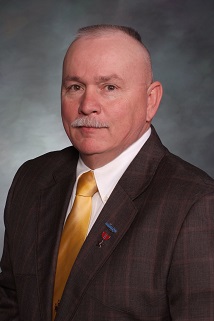
Rep. Clarence Styvar
Sponsored bills
Maddy summaryThis is a ceremonial joint resolution (SJ 5) recognizing the U.S. Air Force's 75th anniversary. It formally commends the Air Force for its service, acknowledges Wyoming's historical ties to the military (including Francis E. Warren Air Force Base, the oldest continuously active base, and the Wyoming Air National Guard), and reaffirms the state's partnership with the Air Force. The resolution has no policy changes or funding impacts - it is purely symbolic, directing the Secretary of State to share it with federal officials, military leaders, and Air Force ROTC. As a procedural resolution, it does not affect any laws or regulations.
Maddy summaryWyoming's SF 123 allows children of active-duty military members to transfer between public schools within their school district at any time. To transfer, parents must provide proof they filed a discrimination complaint with a military base equal opportunity office. School districts may deny transfers only for lack of space at the requested grade level or if the student is suspended/expelled. Districts must report denials to the state superintendent within 10 days, and parents can seek review under Wyoming's administrative procedures. The bill directly affects military-connected students and school districts in Wyoming, effective July 1, 2023.
Maddy summaryHB 118 directs 60% of Wyoming's fire insurance premium tax revenue to the volunteer firefighter, EMT, and search and rescue pension account, while 40% goes to a legislative reserve fund. It also appropriates $9 million from the state general fund directly to the pension account. The bill increases funding for these volunteer emergency responders' retirement benefits by changing tax distribution and adding new state money. It becomes effective July 1, 2023.
Maddy summaryWyoming's HB 67 creates a special decal for honorably discharged women veterans to attach to their existing veteran license plates. It directly affects eligible Wyoming women veterans who already qualify for veteran plates, requiring them to submit proof of service and gender to apply. The decal must be placed in the lower left corner of the plate, with a $5 administrative fee per vehicle, and the program became effective July 1, 2023. This is a recognition measure, not a new plate type, and does not alter existing veteran plate eligibility requirements.
Maddy summaryWyoming's HB 180 requires the state veterinarian to notify livestock owners within three days when an animal tests positive for brucellosis. It mandates the Wyoming Livestock Board to create a communication protocol sharing test results with affected livestock producers, veterinarians, and brand inspectors in the same county. The bill also specifies that adjacent landowners, local veterinarians, and owners of potentially exposed animals may receive limited information to manage disease outbreaks. These changes amend existing statutes to standardize reporting and notification procedures for brucellosis, directly affecting livestock owners and veterinarians in Wyoming.
Maddy summaryHB 100 requires Wyoming's Department of Revenue to hire a consultant to study converting the state's residential property tax system from current assessed value to one based on a property's original purchase price (acquisition value). The study must analyze revenue impacts across Wyoming, develop at least three implementation options - including one using 2017 values with annual 2% inflation - and address technical details like agricultural properties, new construction, and sales exclusions. The consultant must report findings to the Joint Revenue Committee by September 1, 2023, with the committee then determining if legislative action is needed. The bill appropriates $10,000 for this study, which is a preliminary step toward potential future tax system changes, not an immediate policy shift. This study directly affects how Wyoming might eventually calculate property taxes for homeowners.
Maddy summaryThis bill (SF 111) creates a new felony offense for intentionally administering medical procedures, drugs, or agents to change the sex of a child under 18. It directly affects minors under 18, their medical providers, and parents/guardians regarding certain medical treatments. Key exceptions include medical care for intersex conditions diagnosed before age 4, treatment for ambiguous genitalia at birth, and care for traumatic injuries or life-threatening conditions - excluding psychological or emotional issues. Consent from the child, parents, or guardians is not a valid defense against this offense. The law takes effect July 1, 2023.
Maddy summaryWyoming's SF 86 amends election law to allow concealed carry permits as valid identification for in-person voting. The bill adds "a valid permit to carry a concealed firearm" to the list of acceptable IDs under state election code, directly affecting voters who use concealed carry permits as their primary ID. This change takes effect July 1, 2023, and applies to all polling places and absentee voting locations. The policy update simplifies voter ID requirements for permit holders without altering other identification options.
Maddy summaryHB 270 caps fees, property taxes, and assessments that improvement and service districts can impose on landowners, limiting them to the maximum amount originally promised when the district was formed. Landowners within these districts are directly affected, as districts cannot exceed this pre-set limit without voter approval through mail ballot or concurrent election. The law allows districts to adjust the cap only with majority voter consent, while maintaining exceptions for bond payments. Violations can be challenged in court within 120 days by affected landowners. (HB 270, effective July 1, 2023)