Maddy summaryHR 3186, the Universal Savings Account Act of 2025, creates a new tax-advantaged savings account type. It allows individuals to contribute up to $10,000 in 2025 (increasing annually with inflation, capped at $25,000), with contributions growing tax-free until withdrawal. The accounts must be held by banks or approved institutions, accept only cash contributions, and prohibit investments in life insurance. This directly affects individual savers seeking tax-free growth for future needs, excluding retirement-specific accounts like IRAs. The bill takes effect for taxable years starting after December 31, 2024.
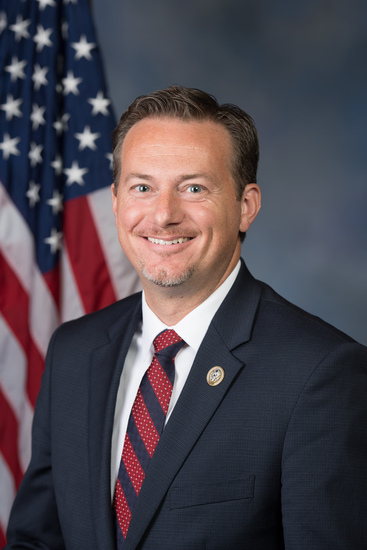
Rep. Michael Cloud
Sponsored bills
Maddy summaryHR 3134, the Emergency Care Improvement Act, allows Medicare and Medicaid to reimburse freestanding emergency centers (FECs) for specific emergency services. The bill defines FECs as 24/7 facilities meeting state emergency care standards, with physician staffing, hospital referral agreements, and quality programs - currently operating in over 118 locations, primarily in Texas. It amends coverage rules to include FECs under Medicare Part B and Medicaid for "specified emergency services" (excluding certain evaluation codes), sets payment rates based on outpatient department standards, and extends EMTALA emergency care laws to cover these centers. This policy change directly affects FECs and Medicare/Medicaid beneficiaries by enabling reimbursement for emergency care previously excluded from coverage.
Maddy summaryThe Military Chaplains Act of 2025 clarifies and strengthens protections for chaplains serving in all branches of the U.S. military. It outlines specific duties for chaplains to meet the religious needs of service members while ensuring they can practice their faith without censorship or retaliation. The bill prohibits requiring chaplains to perform actions contrary to their religious beliefs and bans retaliation against chaplains who refuse such requests. It also defines key terms like "confidential communications" and "religious-endorsing organization" to ensure consistent application of these protections across all military services.
Maddy summaryHRES 365 is a non-binding resolution expressing the House's recognition that Robert Aitken’s Bible - the first English-language Bible printed in North America - should be formally acknowledged as a historical document of the U.S. Congress. It cites historical context, including Congress’s 1782 approval of the Bible for use in schools and Secretary Charles Thomson’s endorsement. The resolution directly affects Congress’s historical record by recommending the House formally recognize this artifact’s significance. It does not create new laws or policies but aims to document a historical connection between Congress and early American religious printing. This is a procedural resolution, not a legislative action.
Maddy summaryHRES 339 is a non-binding House resolution supporting the Second Amendment and criticizing the Biden administration's firearm-related policies. It does not create new laws or directly affect anyone; instead, it formally disapproves of specific Biden-era actions by the Bureau of Alcohol, Tobacco, Firearms, and Explosives (ATF) and Bureau of Industry and Security (BIS) that the resolution claims restricted constitutional rights. Key provisions include condemning ATF rules limiting firearm access, BIS policies restricting firearm exports, and the Biden administration's "gun control agenda," while commending former President Trump for seeking to reverse these policies. The resolution reaffirms the constitutional right to bear arms but has no legal effect, as it is a symbolic statement of legislative opinion.
Maddy summaryHR 2819, the DRIVE Act, prohibits the Federal Motor Carrier Safety Administration from requiring speed limiting devices on trucks weighing over 26,000 pounds operating in interstate commerce. This directly affects commercial truck drivers and carriers that operate large vehicles across state lines. The bill blocks the agency from implementing any rule mandating speed limiters that would cap these trucks' maximum speed. It prevents a potential new federal requirement for trucking companies without altering existing safety standards.
Safeguard American Voter Eligibility Act or the SAVE Act This bill requires individuals to provide documentary proof of U.S. citizenship when registering to vote in federal elections. Specifically, the bill prohibits states from accepting and processing an application to register to vote in a federal election unless the applicant presents documentary proof of U.S. citizenship. The bill specifies what documents are considered acceptable proof of U.S. citizenship, such as identification that complies with the REAL ID Act of 2005 that indicates U.S. citizenship. Further, the bill (1) prohibits states from registering an individual to vote in a federal election unless, at the time the individual applies to register to vote, the individual provides documentary proof of U.S. citizenship; and (2) requires states to establish an alternative process under which an applicant may submit other evidence to demonstrate U.S. citizenship. Each state must take affirmative steps on an ongoing basis to ensure that only U.S. citizens are registered to vote, which shall include establishing a program to identify individuals who are not U.S. citizens using information supplied by certain sources. Additionally, states must remove noncitizens from their official lists of eligible voters. The bill allows for a private right of action against an election official who registers an applicant to vote in a federal election who fails to present documentary proof of U.S. citizenship. The bill establishes criminal penalties for certain offenses, including registering an applicant to vote in a federal election who fails to present documentary proof of U.S. citizenship.

Maddy summaryThis resolution recognizes Tren de Aragua members as "alien enemies" under the 1798 Alien Enemies Act, affirming the President's authority to apprehend and remove them from the U.S. It does not create new law but supports the executive action taken under existing legal authority. The resolution specifically references the President's March 2025 proclamation declaring Tren de Aragua's activities constitute an invasion, citing its presence in 19 states and alleged violent actions against law enforcement.
Nuclear Family Priority Act This bill imposes limits on various types of family-sponsored immigration visas. The non-U.S. national ( alien under federal law) parents of U.S. citizens shall not qualify for visas for immediate relatives, which are not subject to any direct numerical limits. Currently, the spouses, unmarried children under 21, and parents of citizens are considered immediate relatives. The bill also creates a nonimmigrant visa for such parents of citizens. Such non-U.S. nationals shall not be eligible for employment or any public benefits. The bill also reduces the baseline annual cap for family-sponsored visas from 480,000 to 88,000, and revises the methods for calculating the cap. Currently, the 480,000 cap may be adjusted depending on various factors but shall not be less than 226,000. The bill eliminates preference allocations (visa categories subject to various annual caps) for various family-sponsored visas, including those for the siblings and married children of citizens. The bill provides for a preference allocation for the unmarried children under 21 and spouses of permanent residents, subject to the 88,000 annual cap.
Maddy summaryHR 2552, the RIFLE Act, repeals the federal tax on firearm transfers (Section 5811 of the Internal Revenue Code). This directly affects firearm sellers and purchasers by removing the tax paid when transferring firearms. The bill also updates related tax code references to reflect the repeal and specifies the tax removal applies to transfers after the law's enactment. It clarifies that the repeal does not change how firearms are regulated under the National Firearms Act or involve the Consumer Product Safety Commission.