Issue · Criminal Justice

Criminal Justice

Every criminal justice bill, vote, and legislator stance in Wyoming, automatically classified by Maddy, our AI policy reader.

Total bills
14
2026 Regular Session
Top supporter
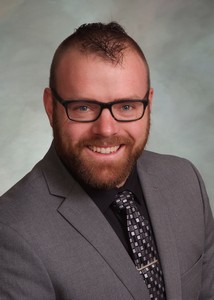
Jeremy Haroldson
88% support rate
Top opponent
Art Washut
27% support rate
Ranked legislators
10
5 support · 5 oppose
Key legislators

Who's moving criminal justice in Wyoming

Legislators moving criminal justice in Wyoming
Legislator Party Stance Support rate Votes
Jeremy Haroldson
Jeremy Haroldson House · District 4
R
Strong +
88% 47
Mike Gierau
Mike Gierau Senate · District 17
D
Strong +
80% 65
Dan Laursen
Dan Laursen Senate · District 19
R
Strong +
80% 65
Joel Guggenmos
Joel Guggenmos House · District 55
R
Support
75% 50
Tomi Strock
Tomi Strock House · District 6
R
Support
75% 48
Art Washut
Art Washut House · District 36
R
Oppose
27% 53
Lee Filer
Lee Filer House · District 44
R
Oppose
36% 52
J.T. Larson
J.T. Larson House · District 17
R
Oppose
38% 47
Ken Clouston
Ken Clouston House · District 32
R
Oppose
38% 49
Cody Wylie
Cody Wylie House · District 39
R
Oppose
38% 45
Showing 1–10 of 14 bills

All criminal justice bills

signed · Wyoming · House Mar 8, 2026

HB 39: Firearms rights-restoration amendments.

Wyoming's HB 39 clarifies that individuals who have had their firearm rights restored under the laws of another state may legally possess firearms in Wyoming. The bill amends statutes (W.S. 6-8-102 and 6-10-106) to explicitly recognize out-of-state rights restoration as valid for Wyoming residents convicted of felonies or violent misdemeanors. This directly affects people with prior convictions who had their firearm rights restored in another jurisdiction but faced uncertainty under Wyoming law. The change takes effect immediately upon becoming law, removing barriers for these individuals to legally own firearms in Wyoming.
Sub-Topics Firearms
introduced · Wyoming · House Feb 14, 2026

HB 184: Juveniles-criminal deferral.

HB 184 creates a criminal deferral program for juveniles (under 18) charged with specific misdemeanors who have no prior misdemeanor or felony convictions. Instead of facing trial, eligible juveniles can be placed on probation for up to 18 months, requiring them to report to court twice yearly, follow law-abiding behavior, avoid leaving the state without permission, and pay restitution to victims. If they complete probation successfully, charges are dismissed without a conviction. Violating probation terms may lead to trial or transfer to juvenile court, but successful completion avoids formal criminal records.
signed · Wyoming · House Mar 8, 2026

HB 102: Protecting kids from deepfakes and exploitative images.

HB 102 prohibits the creation and distribution of AI-generated sexual images of children without consent (Section 6-4-307) and bans developing or distributing AI systems specifically designed to create or promote child sexual material (Section 6-4-308). It makes these acts felonies punishable by up to 10 years in prison and $10,000 fines, with harsher penalties for repeat offenses. The bill also clarifies that using AI to commit crimes isn’t a defense (Section 6-1-206) and provides limited immunity for AI developers who didn’t intend illegal use. It directly affects developers of AI tools, distributors of nonconsensual deepfakes, and individuals using AI to exploit children.
failed · Wyoming · House Feb 10, 2026

HB 93: The people's right to judicial transparency.

HB 93 requires Wyoming courts to make most court records and audio/video recordings of proceedings available online for free, including documents like pleadings, evidence, and case details. Exceptions include juvenile cases, adoptions, sealed records, sexual assault cases, and sensitive materials like child pornography or bulky exhibits. Courts must also stream hearings live and maintain an online archive of recordings within seven days. The bill establishes a new fund to cover technology costs for implementing these changes.
Sub-Topics Courts Juvenile Justice Violent Crime Tags Government Transparency
died · Wyoming · House Feb 23, 2026

HB 91: Ban on government social scoring with AI.

This Wyoming bill prohibits state and local government agencies from using artificial intelligence to assign "social scores" based on personal behavior or characteristics, which could lead to unfair treatment (like denying services for unrelated reasons). It specifically bans AI systems from identifying individuals using biometric data (e.g., fingerprints, facial recognition) without consent, except for health data covered under HIPAA. The law applies broadly to all government entities - including counties, schools, and departments - excluding universities and certain health districts. It takes effect July 1, 2026.
signed · Wyoming · House Mar 8, 2026

SF 85: RAVEN Act.

Wyoming's SF 85 (RAVEN Act) creates a dedicated funding account for the state's Internet Crimes Against Children (ICAC) task force, directly supporting law enforcement efforts to investigate and combat online child exploitation. The bill appropriates $1.6 million from the general fund (2026-2028) to sustain the ICAC program, with funds continuously available for investigations, victim assistance, and public education on internet safety. All money in the account must be used solely by the Division of Criminal Investigation to address internet crimes against children, with no funds allowed to lapse or transfer to other purposes. The account will accept additional grants or donations, ensuring stable, long-term resources for this critical law enforcement work.
signed · Wyoming · House Mar 6, 2026

HB 106: Smokebuster module leaders.

This bill authorizes two new full-time positions within Wyoming's state forestry division (one effective April 2026, one April 2027) to support the forestry conservation inmate crew program. It appropriates $499,709 from the general fund specifically for these positions, associated equipment/supplies, and program costs through June 2028. The funding is tied to coordination with the Department of Corrections and includes specific budgeting instructions for the state's next fiscal biennium. The bill directly affects the state forestry division, the inmate crew program, and the Department of Corrections.
signed · Wyoming · House Mar 8, 2026

HB 98: Prohibit Red Flag Gun Seizure Act-penalty amendments.

HB 98 amends Wyoming law to add criminal penalties for violating the Prohibit Red Flag Gun Seizure Act. It makes knowingly violating this law a misdemeanor punishable by up to one year in jail, a $2,000 fine, or both. The bill directly affects individuals who improperly seize firearms under the red flag law, such as law enforcement or officials acting outside legal authority. The law takes effect on July 1, 2026, and does not change the underlying red flag seizure procedures.
introduced · Wyoming · House Feb 14, 2026

HB 181: Biometric data and license plate readers-regulation.

Wyoming's HB 181 prohibits all state and local government entities from using biometric data (like facial recognition or fingerprints) to identify people or verify identities, geolocation data to track individuals or vehicles, and automatic license plate reader systems for vehicle identification or toll collection. The bill requires governments to adopt compliance policies, creates a civil lawsuit option for violations, and amends the Wyoming Governmental Claims Act to address liability. It specifically excludes school bus cameras, anonymized health data, and certain utility infrastructure from the restrictions. The law directly affects all state agencies, counties, cities, and law enforcement entities by restricting their use of these surveillance technologies. The bill is currently in early procedural stages and has not advanced beyond introduction.
signed · Wyoming · House Mar 8, 2026

HB 92: Registered sex offenders prohibited from public office.

Wyoming's HB 92 prohibits individuals convicted of sex offenses from holding specific public offices. The bill bars registered sex offenders (as defined by Wyoming law) from running for or serving as school district trustees, community college board members, county/district attorneys, county commissioners, city/town governing body members, mayors, or county sheriffs. Election officials must refuse to certify ineligible candidates, and those already in office would be deemed vacant. The law takes effect July 1, 2026, applying to all offices filled on or after that date.
Sub-Topics Higher Education
Showing 1 to 10 of 14 bills
1 2 Next