

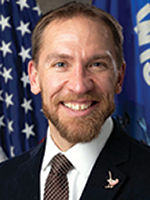
Photo of Chris Larson
D Wisconsin Senate · District 7 On the 2026 ballot

Sen. Chris Larson

Compare
Total votes
695
all sessions
Attendance
97%
21 missed
Near the chamber average
With party
93%
of cast votes
Near the chamber average
Bipartisan score
4%
crosses aisle rarely
Near the chamber average
Sponsored
1,117
bills & resolutions
Near the chamber average
Committees
3
assignments
1,117 bills and resolutions

Sponsored bills

Total
1,117
Primary
1,117
Co-sponsor
0
This page
1,117
matching current filters
Primary SJR 109
Failed · Wisconsin Senate · Lead sponsor
Relating to: recognizing October 26 in 2025 and 2026, as Intersex Awareness Day in Wisconsin.

Maddy summarySJR 109 is a symbolic resolution recognizing October 26, 2025, and 2026, as Intersex Awareness Day in Wisconsin. It commemorates the first public demonstration by intersex people in the U.S. on October 26, 1996, and aims to raise awareness about intersex individuals - those born with variations in sex characteristics - and the challenges they face, including stigma and unnecessary medical procedures. The resolution does not create new laws or policies; it is purely a formal acknowledgment by the Wisconsin Legislature to honor the intersex community. This recognition aligns with national observances but has no direct legal effect on residents or government actions.

Failed Mar 23, 2026 0 co-sponsors
Primary SB 500
Failed · Wisconsin Senate · Lead sponsor
Relating to: various changes to the unemployment insurance law. (FE)

Maddy summarySB 500 amends Wisconsin's unemployment insurance law to make it easier for workers who quit jobs to qualify for benefits. It extends the timeframe for employees to voluntarily terminate work without losing benefits from 30 days to 10 weeks after starting a job. The bill also revises the definition of "suitable work" for weeks 7-11 of unemployment, requiring wages to be above the lowest quartile for similar jobs in the area, rather than requiring relevant experience or training. These changes directly affect unemployed workers who leave jobs due to unsuitable work conditions.

Failed Mar 23, 2026 0 co-sponsors
Primary SB 634
Failed · Wisconsin Senate · Lead sponsor
Relating to: the age for marriage and eliminating spousal exceptions for certain sex crimes against children.

Maddy summarySB 634 eliminates a legal exception that previously allowed spouses to avoid prosecution for sexual crimes against minor spouses. It amends statutes (948.09 and 948.093) to remove language stating that sexual assault laws do not apply when the victim is the defendant’s spouse, making it a crime for a spouse to engage in sexual activity with a minor regardless of marriage age. This change directly affects minors who married as children and their spouses, ensuring such acts can now be prosecuted under standard sexual assault laws. The bill also adds a new provision (767.185) allowing minors under 18 to file for divorce.

Failed Mar 23, 2026 0 co-sponsors
Primary SB 605
Failed · Wisconsin Senate · Lead sponsor
Relating to: housing and homelessness; emergency rental assistance program; indigent civil legal services; workforce development; community action agencies; poverty reports; mental health; economic security; reimbursement for nonemergency medical transportation services; urban mass transit aid; lead exposure and abatement services; lead service line replacement; providing an exemption from emergency rule procedures; granting rule-making authority; and making an appropriation. (FE)

Maddy summarySB 605 restructures funding for multiple social services programs. It creates a new lead service line replacement program for public water systems, establishes an emergency rental assistance program for households earning ≤80% of county median income (with $5 million allocated for 2026-27), and expands indigent civil legal services funding by $43 million annually. The bill also mandates annual reports on improving homeless services access and creates new grants for housing support, workforce development, and internet assistance programs. These changes directly affect low-income residents, homeless individuals, and legal aid clients through specific funding allocations and program requirements.

Failed Mar 23, 2026 0 co-sponsors
Primary SJR 111
Failed · Wisconsin Senate · Lead sponsor
Relating to: proclaiming the months of October 2025 and October 2026 as Cybersecurity Awareness Month.

Maddy summarySJR 111 is a joint resolution designating October 2025 and October 2026 as Cybersecurity Awareness Month in Wisconsin. It formally asks the Wisconsin State Legislature to recognize these months for public education on cybersecurity threats like phishing and identity theft. This resolution does not create new laws or impose obligations - it is a symbolic designation to raise awareness, consistent with the national observance since 2003. The resolution was introduced by multiple senators and representatives in November 2025.

Failed Mar 23, 2026 0 co-sponsors
Primary SB 494
Failed · Wisconsin Senate · Lead sponsor
Relating to: repealing prohibition on state and local government labor regulation. (FE)

Maddy summarySB 494 repeals two statutes (66.0134 and 947.21) that currently prohibit state and local governments from regulating labor practices. This change would allow cities and counties to establish their own workplace standards, such as minimum wage requirements or safety rules, without state restrictions. The bill directly affects local governments by removing barriers to creating tailored labor regulations for their jurisdictions. It is a procedural bill focused solely on removing existing prohibitions, with no new regulations created.

Failed Mar 23, 2026 0 co-sponsors
Primary SB 644
Failed · Wisconsin Senate · Lead sponsor
Relating to: prohibiting individuals under age 21 from accessing intoxicating hemp products and providing a penalty. (FE)

Maddy summarySB 644 prohibits the sale of intoxicating hemp products to anyone under age 21. It defines "intoxicating hemp products" as those containing specific cannabinoids (like delta-8 or delta-9 THC) above 0.3% concentration in solids or 1mg per 12oz beverage. The bill requires manufacturers to test products, provide certificates of analysis via QR codes, and package products in child-resistant, tamper-evident containers with clear age warnings and ingredient labels. Retailers must verify ages, display age restriction signs, and avoid vending machines accessible to minors. This directly affects hemp product manufacturers, retailers, and consumers under 21 in the state.

Failed Mar 23, 2026 0 co-sponsors
Primary SB 664
Failed · Wisconsin Senate · Lead sponsor
Relating to: reducing the eligibility threshold to claim the veterans and surviving spouses property tax credit. (FE)

Maddy summarySB 664 lowers the disability rating requirement for veterans and surviving spouses to qualify for the state property tax credit. Previously, claimants needed a 100% service-connected disability rating; this bill reduces that threshold to 70% or higher. It also creates a new provision allowing the credit amount to be calculated as a percentage of the full credit based on the veteran's actual disability rating (e.g., a 70% rating would yield 70% of the full credit). The bill directly affects veterans and surviving spouses with service-connected disabilities rated between 70% and 99%, who now qualify for a proportional tax credit. The change applies to taxable years beginning in the year the bill takes effect.

Failed Mar 23, 2026 0 co-sponsors
Primary SB 642
Failed · Wisconsin Senate · Lead sponsor
Relating to: creating a landlord fire prevention grant program, granting rule-making authority, and making an appropriation. (FE)

Maddy summarySB 642 creates a program providing grants to residential landlords for fire safety upgrades, including installing sprinklers and fire extinguishers in rental properties. Landlords can receive grants covering up to 50% of eligible costs, with a total program cap of $10 million. Grants are awarded on a first-come, first-served basis, and the Department of Insurance will establish eligibility rules and application procedures. The $10 million funding is allocated from a new budget appropriation for the 2025-26 fiscal year.

Failed Mar 23, 2026 0 co-sponsors
Primary SB 264
Signed into law · Wisconsin Senate · Lead sponsor
Relating to: coverage of breast cancer screenings by the Medical Assistance program and health insurance policies and plans. (FE)

Maddy summarySB 264 requires health insurance plans and the Medical Assistance program to cover specific breast cancer screenings without out-of-pocket costs for enrollees. It defines two key types of screenings: "diagnostic breast examinations" (used to evaluate symptoms or abnormalities, like mammograms) and "supplemental breast screening examinations" (for high-risk individuals without symptoms, using MRI or ultrasound). The bill prohibits cost-sharing (such as copays) for all diagnostic screenings and for the first supplemental screening per year, while allowing limited cost-sharing for additional supplemental screenings in the same year. This directly affects individuals with health insurance or Medical Assistance who require these screenings, particularly those at higher risk for breast cancer.

Signed into law Mar 19, 2026 0 co-sponsors
Showing 431 to 440 of 1,117 bills
Previous 1 … 43 44 45 … 112 Next