

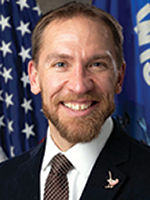
Photo of Chris Larson
D Wisconsin Senate · District 7 On the 2026 ballot

Sen. Chris Larson

Compare
Total votes
595
all sessions
Attendance
98%
13 missed
Near the chamber average
With party
93%
of cast votes
Near the chamber average
Bipartisan score
4%
crosses aisle rarely
Near the chamber average
Sponsored
1,117
bills & resolutions
Near the chamber average
Committees
3
assignments
1,117 bills and resolutions

Sponsored bills

Total
1,117
Primary
1,117
Co-sponsor
0
This page
1,117
matching current filters
Primary SB 1181
Failed · Wisconsin Senate · Lead sponsor
Relating to: residency requirements for certain employees of a local governmental unit. (FE)

Maddy summaryThis bill modifies Wisconsin statutes to allow local governments to set residency requirements for specific administrative and leadership roles within their departments. It permits police, fire, and protective services departments to require their chiefs to live within the jurisdiction, while cities, villages, and certain counties can impose similar requirements on their administrators. Additionally, the bill enables cities and villages that have or are selecting a city manager to require that manager to reside locally. The changes apply only to individuals hired on or after the effective date of the legislation, leaving existing employees unaffected.

Failed Apr 8, 2026 0 co-sponsors
Primary SB 1142
Failed · Wisconsin Senate · Lead sponsor
Relating to: grants for emergency notification systems that are accessible to deaf and hard-of-hearing pupils and making an appropriation. (FE)

Maddy summaryThis bill creates a grant program to help school districts install or upgrade emergency notification systems that are accessible to deaf and hard-of-hearing students. It authorizes $1 million in funding for the 2025-26 and 2026-27 school years to reimburse school districts for the costs of making these systems accessible. The bill establishes that grants cannot exceed the actual amount a district spends on installation or upgrades. Although the bill was introduced in March 2026, it failed to pass the Senate and did not become law.

Failed Apr 7, 2026 0 co-sponsors
Primary SB 1179
Failed · Wisconsin Senate · Lead sponsor
Relating to: a home repair program and making an appropriation. (FE)

Maddy summaryThis bill establishes a home repair program that provides financial assistance to eligible homeowners and landlords for fixing habitability issues, improving energy efficiency, and making housing accessible for individuals with disabilities. The program offers grants of up to $25,000 to homeowners and interest-free loans of up to $25,000 to landlords who own no more than 15 affordable housing units. Eligibility is limited to individuals or landlords with incomes at or below 100 percent of the area median income, and assistance is restricted to homes built between 10 and 40 years ago. The state authority will administer the program, potentially contracting with counties or nonprofit organizations to distribute funds while maintaining oversight through reporting and audit requirements.

Failed Apr 7, 2026 0 co-sponsors
Primary SB 1169
Failed · Wisconsin Senate · Lead sponsor
Relating to: a first-time home buyer purchasing assistance fund and loan program and making an appropriation. (FE)

Maddy summaryThis bill creates a new fund and loan program to help first-time home buyers in Wisconsin cover costs like down payments, closing costs, and mortgage insurance. The program is managed by the Wisconsin Housing and Economic Development Authority and provides interest-free loans up to $35,000 or 10 percent of the home's purchase price, whichever is less. Eligible borrowers must be first-time home buyers or those who lost their home to foreclosure, have household income at or below 100 percent of the area median income, complete a home buyer education course, and agree to live in the home as their primary residence. The loans are forgiven in installments over ten years if the borrower keeps the home as their primary residence, with larger forgiveness amounts at five and ten-year intervals. The bill also appropriates $150 million for the fund in the 2025-26 fiscal year and allows the authority to invest unused funds in safe, low-risk investments.

Failed Apr 7, 2026 0 co-sponsors
Primary SB 1143
Failed · Wisconsin Senate · Lead sponsor
Relating to: grants for school district construction of or upgrades to accessible playgrounds and making an appropriation. (FE)

Maddy summaryThis bill establishes a grant program to help school districts build or upgrade playgrounds to be accessible for students with disabilities. It allocates $1 million for each of the 2025-26 and 2026-27 fiscal years to fund these projects. The program requires that grant amounts cannot exceed the actual costs school districts spend on construction or upgrades. School districts apply through the state department of public instruction to receive funding for making playgrounds more inclusive.

Failed Apr 7, 2026 0 co-sponsors
Primary SB 1137
Failed · Wisconsin Senate · Lead sponsor
Relating to: creating WisEARNS, granting rule-making authority, and making an appropriation. (FE)

Maddy summaryThis bill creates the WisEARNS program, a state-administered retirement savings plan designed for employees who do not have access to an employer-sponsored retirement plan. It establishes a new WisEARNS board attached to the state treasurer, composed of representatives from various sectors including investments, small business, employees, and employers, with specific requirements to ensure diverse expertise and independence from securities dealers. The board will oversee the selection of a vendor to manage the program, which will automatically enroll eligible employees and allow them to make contributions to retirement savings accounts. The legislation also grants the board rule-making authority and includes an appropriation to fund the program's initial implementation.

Failed Apr 7, 2026 0 co-sponsors
Primary SB 1167
Failed · Wisconsin Senate · Lead sponsor
Relating to: the school district revenue limit adjustment for energy efficiency projects. (FE)

Maddy summaryThis bill would allow Wisconsin school districts to increase their revenue limits when they spend money on energy efficiency projects. If a school board chooses to participate, the district's spending on energy-saving measures, including debt payments for bonds or loans used to finance those projects, would count toward raising the revenue cap for that school year. To qualify, projects must reduce energy or operational costs, follow a performance contract, and have financing terms of 20 years or less. The legislation also defines eligible projects as facility upgrades, training programs, or services that lower energy use, conserve water, or improve metering accuracy.

Failed Apr 7, 2026 0 co-sponsors
Primary SB 826
Failed · Wisconsin Senate · Lead sponsor
Relating to: vaccination of minors without parental consent. (FE)

Maddy summarySB 826 allows healthcare providers to vaccinate minors aged 16 or older without parental consent if the minor requests it. The bill requires providers to obtain the minor’s consent before billing insurance or other third parties for the vaccination. If the minor declines third-party billing, they are responsible for payment directly to the provider, following existing fee guidelines. This applies specifically to medically appropriate vaccines and affects minors aged 16+, healthcare providers, and third-party payers. The bill does not change parental rights for minors under 16.

Failed Apr 7, 2026 0 co-sponsors
Primary SB 842
Failed · Wisconsin Senate · Lead sponsor
Relating to: violence prevention grants and making an appropriation. (FE)

Maddy summarySB 842 creates a program to fund violence prevention initiatives using tax revenue from vapor products. It directs local health departments and tribal health centers to apply for grants to run violence prevention programs or award subgrants to community organizations, while explicitly prohibiting funds from going to law enforcement agencies or entities working with them. The bill appropriates $30,000 for administrative staffing in fiscal year 2025-26 and $120,000 for 2026-27 to manage the program, with grant applications due annually by June 30. This policy change directly affects local health entities and tribal health centers by providing dedicated funding streams for community-based violence prevention work.

Failed Apr 7, 2026 0 co-sponsors
Primary SB 729
Failed · Wisconsin Senate · Lead sponsor
Relating to: large energy customer fees; electric utility very large customer class; a renewable resource tariff; building requirements for data centers; water usage by large customers; required pay rate on large-scale data center projects; and granting rule-making authority. (FE)

Maddy summarySB 729 imposes annual fees on large energy customers (primarily large data centers) based on their peak electricity demand: $2 million for 100-250 MW, $3 million for 250-500 MW, and $1 million more for each additional 250 MW. Fifty percent of these fees fund the Green Innovation Fund via the Wisconsin Economic Development Corporation. The bill also requires data centers to report actual water usage annually and certify compliance with sustainable building standards (like LEED or BREEAM) within three years of operation. It defines "large-scale data centers" as projects costing $250 million+ in construction or equipment over 60 months.

Failed Apr 6, 2026 0 co-sponsors
Showing 21 to 30 of 1,117 bills
Previous 1 2 3 4 112 Next