

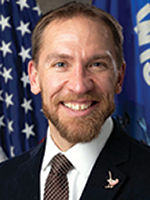
Photo of Chris Larson
D Wisconsin Senate · District 7 On the 2026 ballot

Sen. Chris Larson

Compare
Total votes
595
all sessions
Attendance
98%
13 missed
Near the chamber average
With party
93%
of cast votes
Near the chamber average
Bipartisan score
4%
crosses aisle rarely
Near the chamber average
Sponsored
1,117
bills & resolutions
Near the chamber average
Committees
3
assignments
1,117 bills and resolutions

Sponsored bills

Total
1,117
Primary
1,117
Co-sponsor
0
This page
1,117
matching current filters
Primary SB 948
Failed · Wisconsin Senate · Lead sponsor
Relating to: storage of a firearm in a house in which a resident is prohibited from possessing a firearm and providing a penalty.

Maddy summarySB 948 requires anyone living in a household with a person banned from owning firearms (due to certain criminal convictions) to store all firearms securely - either in a locked container or with a trigger lock engaged. This applies to all firearms owned by household members who are not prohibited from possessing them. Violating this rule is a Class A misdemeanor for a first offense and a Class I felony for subsequent violations. The bill directly affects households where one resident is legally barred from firearm possession due to specific felony convictions.

Failed Mar 23, 2026 0 co-sponsors
Primary SJR 131
Failed · Wisconsin Senate · Lead sponsor
Relating to: the right to privacy (first consideration).

Maddy summaryThis bill proposes adding a new constitutional right to privacy. It would create Section 1m in Article I of the state constitution stating: "As a necessary part of a free society, the people have an individual and fundamental right to privacy." If approved by voters, this would establish a fundamental constitutional protection directly affecting all residents, requiring future laws to align with this privacy right. The proposal must be approved by voters in the next general election to become part of the constitution.

Failed Mar 23, 2026 0 co-sponsors
Primary SB 1002
Failed · Wisconsin Senate · Lead sponsor
Relating to: minority health grants.

Maddy summarySB 1002 creates an annual grant program to improve health outcomes for economically disadvantaged minority group members. It authorizes grants of up to $50,000 per year from a specific state fund, requiring grantees to contribute at least 50% of the grant amount in cash or non-cash resources (like donated services or materials). Priority for funding is given to community health organizations that are not federally qualified health centers and those providing maternal and child health services. The bill directly affects community-based health providers serving minority populations in the state.

Failed Mar 23, 2026 0 co-sponsors
Primary SB 1017
Failed · Wisconsin Senate · Lead sponsor
Relating to: funding for child care provider workforce training and making an appropriation. (FE)

Maddy summarySB 1017 allocates $2.17 million annually for workforce training programs for child care providers and prospective providers. The bill creates a new funding line (20.437(2)(d)) to support contracts under section 49.137(4) focused specifically on training. This direct funding affects licensed child care facilities and individuals seeking to work in early childhood education. The measure provides concrete financial support for professional development but does not change eligibility rules or service requirements.

Failed Mar 23, 2026 0 co-sponsors
Primary SB 1016
Failed · Wisconsin Senate · Lead sponsor
Relating to: child care subsidies for custodial parents who are child care employees and making an appropriation. (FE)

Maddy summarySB 1016 creates a new child care subsidy program specifically for custodial parents who work as child care employees in Wisconsin. It establishes separate eligibility rules (under section 49.155(2s)) allowing these parents to qualify for subsidies even if they don't meet standard income or asset requirements, provided they work for a child care provider. The bill appropriates $1.2 million for administrative costs to implement this new program. This directly affects low-income parents employed in the child care sector who need subsidized care for their own children.

Failed Mar 23, 2026 0 co-sponsors
Primary SB 1005
Failed · Wisconsin Senate · Lead sponsor
Relating to: state parks vehicle admission receipts purchased with motor vehicle registration.

Maddy summarySB 1005 allows vehicle owners to purchase an annual state park pass when registering or renewing their vehicle, with fees collected added to the conservation fund. It establishes three fee tiers: standard rates, discounted rates for households with existing passes, and reduced rates for senior citizens. Vehicle registration forms will include a section for selecting the park pass option, and the Department of Transportation will share purchaser lists weekly with the Department of Natural Resources. The bill directly affects all vehicle owners in the state during registration or renewal, with fees supporting state parks, recreation areas, and forest lands. Funds collected under this bill will be deposited quarterly into the conservation fund per statute.

Failed Mar 23, 2026 0 co-sponsors
Primary SB 1011
Failed · Wisconsin Senate · Lead sponsor
Relating to: income eligibility for Wisconsin Shares child care subsidy and making an appropriation. (FE)

Maddy summarySB 1011 expands eligibility for Wisconsin Shares child care subsidies to families with incomes above 200% of the federal poverty line but below 100% of the state median income for their family size. It creates a new eligibility category (via 20.437(2)(ct)) allowing subsidies for individuals who qualify under specific provisions but not under the standard 200% threshold, and adjusts income calculation rules to include certain child support payments. The bill modifies existing income guidelines in statutes to clarify eligibility for families who previously lost subsidies due to modest income increases. It appropriates an additional $1.25 million for fiscal year 2026-27 to fund these expanded subsidies. The changes directly affect low-to-moderate-income families seeking child care assistance in Wisconsin.

Failed Mar 23, 2026 0 co-sponsors
Primary SB 1015
Failed · Wisconsin Senate · Lead sponsor
Relating to: increasing the earned income tax credit for families with fewer than three children. (FE)

Maddy summarySB 1015 increases the state's earned income tax credit for low-income working families with fewer than three children. It raises the state credit to 34% of the federal basic earned income credit for families with children (effective 2026), and sets it at 15% for individuals without qualifying children. This directly affects eligible taxpayers who qualify for the federal earned income credit but have limited income. The bill amends tax statutes to replace the previous credit rate (applicable through 2025) with these new percentages for future tax years.

Failed Mar 23, 2026 0 co-sponsors
Primary SJR 128
Passed · Wisconsin Senate · Lead sponsor
Relating to: paying tribute to the entire Polish community that has lived in Wisconsin for 180 years and contributed to its strength.

Maddy summarySJR 128 is a symbolic resolution honoring Wisconsin's Polish community for its 180-year presence in the state and its contributions to Wisconsin's cultural and social strength. It does not create new laws, alter policies, or affect any individuals or groups. The resolution specifically recognizes historical milestones, including Polish immigrants arriving in 1845, contributions to Wisconsin's development, and connections to Polish-American historical figures. As a commemorative measure, it has no binding legal effect or practical impact beyond formal recognition.

Passed Mar 23, 2026 0 co-sponsors
Primary SB 922
Failed · Wisconsin Senate · Lead sponsor
Relating to: automatic voter registration, deceptive election practices, voter intimidation and suppression, voter rights, polling place posting and language requirements, election manual requirements, withholding of voluntarily provided elector information, granting rule-making authority, and providing a penalty. (FE)

Maddy summarySB 922 requires polling places to display a clear "Voter Bill of Rights" listing specific rights (like secret ballots, language assistance, and provisional voting) at all locations. It mandates election officials to coordinate with language advocacy groups to ensure polling places serve voters speaking non-English languages and have at least one bilingual official present. The bill also creates new legal pathways for voters to sue if their rights are violated, including seeking injunctive relief or attorney fees if they win. These provisions directly affect all voters, particularly language minority communities and those facing potential voting barriers.

Failed Mar 23, 2026 0 co-sponsors
Showing 101 to 110 of 1,117 bills
Previous 1 10 11 12 112 Next