

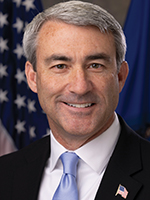
Photo of Rob Hutton
R Wisconsin Senate · District 5

Sen. Rob Hutton

Compare
Total votes
411
all sessions
Attendance
100%
1 missed
Near the chamber average
With party
96%
of cast votes
Lower than 97% of chamber peers
Bipartisan score
3%
crosses aisle rarely
Higher than 93% of chamber peers
Sponsored
313
bills & resolutions
Near the chamber average
Committees
4
assignments
313 bills and resolutions

Sponsored bills

Total
313
Primary
313
Co-sponsor
0
This page
313
matching current filters
Primary SB 508
Failed · Wisconsin Senate · Lead sponsor
Relating to: owner liability for illegally passing a school bus and providing a penalty.

Maddy summarySB 508 allows school buses to install cameras to record drivers illegally passing them. Bus operators or third-party vendors can submit photo/video evidence of violations to traffic officers, who can then issue fines. The bill establishes fines of $30-$500 for drivers who pass school buses illegally, with no license suspension or demerit points added to driving records. It directly affects drivers who violate school bus stop laws, creating a new process for evidence-based enforcement.

Failed Mar 23, 2026 0 co-sponsors
Primary SB 669
Failed · Wisconsin Senate · Lead sponsor
Relating to: grants for feasibility studies of school district consolidation or whole grade sharing. (FE)

Maddy summarySB 669 creates a grant program to help school districts explore consolidation or whole-grade sharing agreements. It provides reimbursement of up to $25,000 per grant to consortia of two or more school boards for feasibility studies, covering costs like financial analysis and population studies. To qualify, each school board in the consortium must have adopted a resolution supporting the study under existing law. The grants are funded biennially through the state's education budget, with the Department of Public Instruction administering the program. This bill directly affects school districts considering collaborative arrangements to improve efficiency.

Failed Mar 23, 2026 0 co-sponsors
Primary SB 671
Failed · Wisconsin Senate · Lead sponsor
Relating to: creating a crime of grooming a child for sexual activity and providing a penalty.

Maddy summarySB 671 creates a new criminal offense for grooming a child for sexual activity and establishes penalties for this conduct. The bill amends multiple statutes to define "grooming" as a serious crime, specifically adding it to lists of offenses that bar individuals from certain homes (like relatives' homes or unlicensed childcare settings) if they have prior convictions or plea agreements related to child sexual abuse. It updates definitions of "serious crimes" for entities serving minors, ensuring that grooming violations trigger mandatory reporting and registration requirements under laws like 948.072. This directly affects children at risk of exploitation, individuals convicted of grooming-related offenses, and organizations that provide services to minors.

Failed Mar 23, 2026 0 co-sponsors
Primary SB 445
Failed · Wisconsin Senate · Lead sponsor
Relating to: consideration of a certain definition of antisemitism for purposes of laws, ordinances, policies, or criminal penalty enhancers concerning discrimination based on race, religion, color, or national origin.

Maddy summarySB 445 requires state agencies and local governments (including cities, counties, and school districts) to consider the International Holocaust Remembrance Alliance's (IHRA) 2016 definition of antisemitism when evaluating discrimination cases involving race, religion, color, or national origin under state laws, ordinances, or criminal penalty enhancements. It specifically applies when assessing whether a victim was targeted due to their actual or perceived identity. The bill clarifies it does not override First Amendment rights or conflict with existing federal or state antidiscrimination laws. This is a procedural requirement for consistent application of the IHRA definition in relevant legal contexts.

Failed Mar 23, 2026 0 co-sponsors
Primary SB 475
Failed · Wisconsin Senate · Lead sponsor
Relating to: applicability of the commercial building code to certain buildings. (FE)

Maddy summarySB 475 modifies Wisconsin's building code rules for public buildings, structures, and places of employment (like government offices, schools, or public facilities). It specifies that most commercial building code chapters (SPS 361-366) apply to these public spaces, but excludes one specific provision (SPS 361.03(7)) from applying if building plans are submitted to the department or local government by April 1, 2026. The bill takes effect for projects where plans are submitted by that deadline, altering which code requirements govern public building construction. This change directly affects public construction projects requiring building code compliance.

Failed Mar 23, 2026 0 co-sponsors
Primary SB 38
Signed into law · Wisconsin Senate · Lead sponsor
Relating to: personalized registration plate fees for gold star family special registration plates. (FE)

Maddy summaryThis bill exempts eligible families of Wisconsin military members killed in action (known as "gold star families") from paying fees for special registration plates. It removes the $15 annual or $30 biennial maintenance fees, as well as the $15 reissuance fee, that typically apply to personalized plates. Families qualifying under statute §341.14(6r)(f)19m will no longer pay these costs for initial issuance or ongoing plate maintenance. The law takes effect 7 months after publication, ensuring immediate cost savings for this group.

Signed into law Dec 10, 2025 0 co-sponsors
Primary SB 98
Signed into law · Wisconsin Senate · Lead sponsor
Relating to: conversion of cooperative associations organized to establish and operate nonprofit plans or programs for health care into service insurance corporations.

Maddy summarySB 98 creates a legal process for nonprofit healthcare cooperatives to convert into service insurance corporations. The bill requires cooperatives to submit a detailed conversion plan - including reasons, terms, new name, and governance - to the insurance commissioner for approval, which can be denied if the plan violates law, lacks financial stability, or harms members or the public. After commissioner approval, the cooperative must seek member approval and file conversion documents with the Department of Financial Institutions. Upon completion, the new corporation inherits all assets and obligations of the original cooperative, which ceases to exist, while retaining the cooperative’s original incorporation date. This applies specifically to cooperatives organized to operate nonprofit healthcare plans.

Signed into law Aug 11, 2025 0 co-sponsors
Primary SJR 2
Signed into law · Wisconsin Senate · Lead sponsor
Relating to: requiring photographic identification to vote in any election (second consideration).

Maddy summarySJR 2 proposes a constitutional amendment that would require all qualified voters to present valid photographic identification to cast a ballot in any election. This identification must be issued by the state, federal government, a federally recognized American Indian tribe, or a college or university. The bill allows the legislature to specify acceptable forms of identification and establish exceptions to this requirement. Voters unable to present valid ID on election day would be permitted to cast a provisional ballot, which would only be counted if they present valid identification at a later time. If agreed to by the legislature on this second consideration, the proposed amendment will be submitted to the people for ratification.

Signed into law May 20, 2025 0 co-sponsors
Primary SB 517
Failed · Wisconsin Senate · Lead sponsor
Relating to: court-issued criminal complaints if the person's actions were in self-defense.

Maddy summaryThis bill allows circuit judges to issue criminal complaints when a district attorney refuses to do so, specifically in cases where the accused claims self-defense. Under the new rules, a judge can only proceed with a hearing if there is new evidence suggesting the person did not act in self-defense, as the law currently protects individuals who defend themselves or others. If the judge determines a crime was committed despite the self-defense claim, they can subpoena witnesses and review police reports to decide whether to file charges. The district attorney must provide all relevant investigation records and explain their reasons for refusing to issue charges if the judge requests them.

Failed May 15, 2024 0 co-sponsors
Showing 61 to 70 of 313 bills
Previous 1 6 7 8 32 Next