

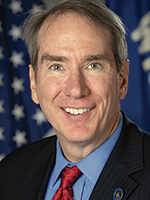
Photo of Jamie Wall
D Wisconsin Senate · District 30

Sen. Jamie Wall

Compare
Total votes
191
all sessions
Attendance
100%
of floor votes
Near the chamber average
With party
95%
of cast votes
Near the chamber average
Bipartisan score
3%
crosses aisle rarely
Near the chamber average
Sponsored
200
bills & resolutions
Near the chamber average
Committees
3
assignments
200 bills and resolutions

Sponsored bills

Total
200
Primary
200
Co-sponsor
0
This page
200
matching current filters
Primary SB 970
Failed · Wisconsin Senate · Lead sponsor
Relating to: financial exploitation of vulnerable adults.

Maddy summarySB 970 allows financial institutions (like banks and credit unions) to refuse or delay specific financial transactions when they reasonably suspect financial exploitation of a vulnerable adult. This applies to transactions involving the vulnerable adult’s account, accounts where they are a beneficiary, or accounts of suspected perpetrators. Financial institutions must notify authorized account holders (unless the notifier is the suspected perpetrator) and report incidents to adult-at-risk agencies, while retaining the right to delay transactions for up to 15 business days. The bill also provides legal immunity for financial institutions acting in good faith based on reasonable suspicion.

Failed Mar 23, 2026 0 co-sponsors
Primary SJR 125
Passed · Wisconsin Senate · Lead sponsor
Relating to: the life and public service of George Meyer.

Maddy summarySJR 125 is a commemorative resolution honoring George Meyer, a former Wisconsin Department of Natural Resources (DNR) secretary and conservation leader, for his decades of service protecting waterways, advancing tribal treaty rights, and expanding state land conservation. It was adopted by the Wisconsin Legislature to recognize his legacy following his death in 2025, citing his work on wetland regulations, mercury emissions rules, and land acquisitions during his DNR tenure (1993-2001). The resolution does not create new laws or policies but formally expresses legislative gratitude for his contributions to Wisconsin's environmental stewardship.

Passed Mar 23, 2026 0 co-sponsors
Primary SJR 134
Failed · Wisconsin Senate · Lead sponsor
Relating to: proclaiming February 2026 as Black History Month.

Maddy summaryThis Senate Joint Resolution (SJR 134) is a symbolic proclamation designating February 2026 as Black History Month in Wisconsin. It honors the contributions of eight notable African American Wisconsinites - such as civil rights leader Lloyd Barbee, first Black state legislator Marcia Coggs, and community leaders Clinton and Bernice Rose - while recognizing the historical significance of Black history in the state and nation. The resolution has no binding legal effect but serves to formally acknowledge these figures and the broader observance of Black History Month.

Failed Mar 23, 2026 0 co-sponsors
Primary SJR 135
Failed · Wisconsin Senate · Lead sponsor
Relating to: Commemorating the 250th anniversary of one of the first major victories for the Patriots in the Revolutionary War and recognizing the contributions of Irish Americans in the struggle for independence.

Maddy summarySJR 135 is a symbolic resolution commemorating the 250th anniversary of the 1776 Boston siege withdrawal (a key Revolutionary War victory) and recognizing Irish American contributions to American independence. It highlights historical connections, including Irish immigrant soldiers like General John Sullivan, eight Irish American Declaration of Independence signers, and Irish emigrant roles in the military and printing the Declaration. The resolution has no binding effect; it formally acknowledges these historical events and directs the Senate clerk to share copies with Irish officials. As a commemorative measure, it does not create new laws or affect any individuals or policies.

Failed Mar 23, 2026 0 co-sponsors
Primary SB 1044
Failed · Wisconsin Senate · Lead sponsor
Relating to: health insurance coverage of vaccines if recommended by certain organizations and consideration of recommendations of certain organizations regarding the state immunization program vaccination schedule.

Maddy summaryThis bill requires health insurance plans to cover vaccines recommended by the U.S. Centers for Disease Control and Prevention (CDC) for children under 6 years old. If the CDC withdraws its recommendations, insurers must instead cover vaccines recommended by the American Academy of Pediatrics or American Academy of Family Physicians. It applies to all health insurance plans, including self-insured state/local government plans, covering dependent children. The law ensures continuous vaccine coverage regardless of changes to CDC guidelines.

Failed Mar 23, 2026 0 co-sponsors
Primary SB 1048
Failed · Wisconsin Senate · Lead sponsor
Relating to: modifications to the property tax exemption for nonprofit organizations that sell property to low-income persons. (FE)

Maddy summarySB 1048 modifies property tax exemption rules for nonprofit organizations (501(c)(3) status) that sell properties to low-income households. It requires nonprofits to hold property for rehabilitation, redevelopment, or new construction specifically for sale to buyers with income below 120% of the area median income (using federal standards). The bill removes a previous requirement for nonprofits to offer interest-free loans to buyers and updates the income threshold for eligibility. This exemption applies to property tax assessments starting January 1, 2026, directly affecting nonprofits developing affordable housing for qualifying buyers.

Failed Mar 23, 2026 0 co-sponsors
Primary SB 942
Failed · Wisconsin Senate · Lead sponsor
Relating to: changes to the low-income housing tax credit. (FE)

Maddy summarySB 942 amends state tax statutes to clarify how the low-income housing tax credit is claimed by entities and their members. It specifies that partnerships, limited liability companies, and tax-option corporations cannot claim the credit directly, but their individual partners, members, or shareholders may claim it based on the entity’s eligible costs. The bill requires entities to calculate and distribute credit amounts to members and mandates that individuals claiming credit under written agreements must submit those agreements with tax returns. It also adds a specific provision allowing insurers (as shareholders) to claim the credit based on costs incurred by the entity they are part of. This bill directly affects housing developers, investors, and insurers involved in low-income housing projects financed with tax-exempt bonds.

Failed Mar 23, 2026 0 co-sponsors
Primary SB 1074
Failed · Wisconsin Senate · Lead sponsor
Relating to: refundability of the additional child and dependent care tax credit and making an appropriation. (FE)

Maddy summarySB 1074 makes Wisconsin's additional child and dependent care tax credit fully refundable starting in 2026. For tax years beginning after December 31, 2025, taxpayers can claim the full credit amount against their state taxes, and if the credit exceeds their tax liability, the state will pay the difference directly. This affects Wisconsin residents who qualify for the federal child and dependent care tax credit and claim it on their state return, primarily low-to-moderate income families with childcare expenses. The bill creates a new state appropriation to fund these payments, ensuring the credit is refundable without interest on unused amounts.

Failed Mar 23, 2026 0 co-sponsors
Primary SB 1065
Failed · Wisconsin Senate · Lead sponsor
Relating to: requiring carbon monoxide detectors in child care centers and schools, grants for placing carbon monoxide detectors in schools, and making an appropriation. (FE)

Maddy summarySB 1065 requires all public and private elementary and secondary schools, as well as licensed child care centers, to install carbon monoxide detectors in rooms with fuel-burning appliances. Detectors must be battery-powered for older buildings or hardwired with fire alarm monitoring for newer buildings, and must meet safety certification standards. The bill also creates a $75,000 grant program to help schools purchase detectors, with grants up to $3,000 per school, and mandates annual reporting on grant usage. These requirements apply directly to schools and child care centers serving students or children, with the grants specifically targeting compliance costs.

Failed Mar 23, 2026 0 co-sponsors
Primary SB 1043
Failed · Wisconsin Senate · Lead sponsor
Relating to: legislator district residency requirements and residency standard for qualified electors. (FE)

Maddy summarySB 1043 requires state legislators to annually verify their residency in their elected district through sworn statements and proof of address, with updates needed within 10 days of moving. It mandates that legislators file these documents with legislative offices at the start of each session and annually while in office. Failure to comply triggers an investigation and potential quo warranto legal action to vacate the seat, initiated by the attorney general or a district elector. The bill also requires all residency records to remain confidential under state privacy laws.

Failed Mar 23, 2026 0 co-sponsors
Showing 31 to 40 of 200 bills
Previous 1 3 4 5 20 Next