

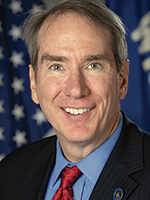
Photo of Jamie Wall
D Wisconsin Senate · District 30

Sen. Jamie Wall

Compare
Total votes
191
all sessions
Attendance
100%
of floor votes
Near the chamber average
With party
95%
of cast votes
Near the chamber average
Bipartisan score
3%
crosses aisle rarely
Near the chamber average
Sponsored
200
bills & resolutions
Near the chamber average
Committees
3
assignments
200 bills and resolutions

Sponsored bills

Total
200
Primary
200
Co-sponsor
0
This page
200
matching current filters
Primary SB 1167
Failed · Wisconsin Senate · Lead sponsor
Relating to: the school district revenue limit adjustment for energy efficiency projects. (FE)

Maddy summaryThis bill would allow Wisconsin school districts to increase their revenue limits when they spend money on energy efficiency projects. If a school board chooses to participate, the district's spending on energy-saving measures, including debt payments for bonds or loans used to finance those projects, would count toward raising the revenue cap for that school year. To qualify, projects must reduce energy or operational costs, follow a performance contract, and have financing terms of 20 years or less. The legislation also defines eligible projects as facility upgrades, training programs, or services that lower energy use, conserve water, or improve metering accuracy.

Failed Apr 7, 2026 0 co-sponsors
Primary SB 1064
Failed · Wisconsin Senate · Lead sponsor
Relating to: carbon monoxide detection systems on motorboats and providing a penalty. (FE)

Maddy summarySB 1064 requires all new motorboats with enclosed sleeping/galley compartments (defined as "enclosed accommodation compartments") to have certified marine carbon monoxide detection systems installed before sale. It also mandates that cabin motorboat owners display a visible carbon monoxide warning sticker and ensures the state department provides free safety information and stickers during boat registration. Violating these requirements carries a $300 penalty for repeat offenses. The law applies to new boats sold, registered, or operated after its effective date.

Failed Apr 7, 2026 0 co-sponsors
Primary SB 729
Failed · Wisconsin Senate · Lead sponsor
Relating to: large energy customer fees; electric utility very large customer class; a renewable resource tariff; building requirements for data centers; water usage by large customers; required pay rate on large-scale data center projects; and granting rule-making authority. (FE)

Maddy summarySB 729 imposes annual fees on large energy customers (primarily large data centers) based on their peak electricity demand: $2 million for 100-250 MW, $3 million for 250-500 MW, and $1 million more for each additional 250 MW. Fifty percent of these fees fund the Green Innovation Fund via the Wisconsin Economic Development Corporation. The bill also requires data centers to report actual water usage annually and certify compliance with sustainable building standards (like LEED or BREEAM) within three years of operation. It defines "large-scale data centers" as projects costing $250 million+ in construction or equipment over 60 months.

Failed Apr 6, 2026 0 co-sponsors
Primary SB 367
Signed into law · Wisconsin Senate · Lead sponsor
Relating to: virtual credit card payments in health insurance policies.

Maddy summarySB 367 requires health insurance companies to notify healthcare providers if an additional fee may be charged for using virtual credit card payments. This directly affects insurers who must disclose such fees to providers accepting this payment method. The bill amends policy language to mandate this clear notification about potential extra costs. It does not change insurance coverage or payment amounts, only the disclosure requirement for virtual credit card transactions. The bill passed on November 18, 2025, after being amended to include this notification provision.

Signed into law Apr 6, 2026 0 co-sponsors
Primary SB 1045
Failed · Wisconsin Senate · Lead sponsor
Relating to: legalizing the possession of cannabis; medical cannabis; expunging or adjusting past convictions for marijuana-related crimes; regulating the production, processing, transportation, testing, and sale of cannabis; granting rule-making authority; providing an exemption from emergency rule procedures; making an appropriation; and providing a penalty. (FE)

Maddy summarySB 1045 legalizes recreational cannabis possession for adults, establishes a new Division of Cannabis Regulation within the Department of Agriculture, and creates a Cannabis Conviction Review Unit to expunge or adjust past marijuana-related convictions. It allocates $30 million annually for cannabis regulation operations, funds a medical cannabis registry program with $5 million per year, and creates new tax revenue streams for enforcement and research. The bill repeals outdated marijuana laws, regulates cannabis production and sales through licensing, and sets up a system for individuals to seek conviction expungement. These changes directly affect all Wisconsin residents, particularly those with prior cannabis convictions, and establish a comprehensive regulatory framework for the state's cannabis industry.

Failed Mar 25, 2026 0 co-sponsors
Primary SJR 142
Passed · Wisconsin Senate · Lead sponsor
Relating to: recognizing the life and extraordinary leadership of Bob Harlan.

Maddy summaryThis Senate Joint Resolution formally recognizes the life and leadership of Bob Harlan, the former president and CEO of the Green Bay Packers. The bill highlights his contributions to the franchise, including hiring key personnel, leading the team to a Super Bowl victory, and overseeing a major stadium redevelopment. It serves as a commemorative tribute rather than enacting new policy or funding. The resolution was adopted by the Wisconsin Senate but did not receive concurrence from the Assembly.

Passed Mar 23, 2026 0 co-sponsors
Primary SB 1126
Failed · Wisconsin Senate · Lead sponsor
Relating to: a state minimum wage, allowing the enactment of local minimum wage ordinances, and granting rule-making authority. (FE)

Maddy summaryThis bill establishes a state minimum wage of $15 per hour while allowing local governments to enact their own minimum wage ordinances. It creates a system where the state department of labor can set lower wages for specific groups like agricultural workers, camp counselors, and students, and can exempt certain casual employment arrangements. The minimum wage will automatically adjust annually based on changes in the consumer price index, unless inflation shows no increase. The legislation also prohibits the state from setting different minimum wages for men and women.

Failed Mar 23, 2026 0 co-sponsors
Primary SB 1151
Failed · Wisconsin Senate · Lead sponsor
Relating to: general equalization aids, the reimbursement rate for special education costs, excluding special education reimbursement from certain per pupil payments, and making an appropriation. (FE)

Maddy summaryThis bill proposes changes to how Wisconsin calculates and distributes state funding for special education and related school programs. It would adjust the reimbursement rate for special education costs to distribute the full appropriated amount, capping reimbursement at 60 percent of eligible costs, and modifies how certain special education funds are excluded from per-pupil payment calculations. The legislation also increases the general school aid appropriation by approximately $446 million for the 2026-27 fiscal year. These changes would affect the Wisconsin Department of Public Instruction and school districts receiving state education funding. The bill was introduced in March 2026 but failed to pass the Senate.

Failed Mar 23, 2026 0 co-sponsors
Primary SB 1117
Failed · Wisconsin Senate · Lead sponsor
Relating to: entering into an agreement among the states to elect the president and vice president of the United States by means of a national popular vote.

Maddy summaryThis bill proposes to join an interstate compact that would allow states to elect the U.S. president and vice president based on the national popular vote rather than the Electoral College. It would take effect only when enough states have joined the agreement to collectively hold a majority of Electoral College votes. The bill amends state election laws to implement the compact's provisions, which require member states to count all popular votes nationwide and award all Electoral College votes to the candidate who wins the most popular votes across all participating states. The agreement includes provisions for state withdrawal, dispute resolution in case of ties, and termination if the Electoral College is abolished.

Failed Mar 23, 2026 0 co-sponsors
Primary SB 1120
Failed · Wisconsin Senate · Lead sponsor
Relating to: securitization of retiring power plants. (FE)

Maddy summaryThis bill would update state statutes to clarify how retiring power plants fueled by nonrenewable energy sources are classified for environmental cost calculations. It defines the retirement of such facilities as a specific category of environmental control activity and expands the definition of environmental control costs to include the unrecovered value of retired property and related demolition expenses. The changes apply to energy utilities managing the decommissioning of existing power plants and aim to ensure these costs are properly accounted for in regulatory assessments.

Failed Mar 23, 2026 0 co-sponsors
Showing 11 to 20 of 200 bills