

Maddy summarySB 1055 increases funding for home-delivered meal programs by $250,000 for fiscal years 2025-26 and 2026-27. This bill directly affects existing home-delivered meal services, primarily supporting seniors and vulnerable individuals who rely on these programs. The key provision amends the state budget to add the specified funds to the department of health services' appropriation under Section 46.80(5)(a). The funding boost aims to expand meal availability without creating new programs or changing eligibility rules.
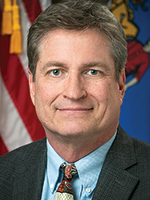
Sen. Tim Carpenter
Sponsored bills
Maddy summarySB 1041 creates an Office of the Student Loan Ombudsman within the Department of Financial Institutions to assist student loan borrowers in the state. The office will handle complaints, resolve issues with loan servicers, analyze borrower data, and provide information about borrowers' rights under student education loans. It directly affects student loan borrowers (including residents and those sharing repayment responsibility) and student loan servicers (non-state entities managing loans). Key provisions require the ombudsman to monitor loan servicing practices, collaborate with schools and servicers, and make recommendations to improve borrower protections.
Maddy summarySB 925 creates a system for automatic voter registration by requiring the election commission to match driver's license and ID data from the Department of Transportation with existing voter registration lists. It directs the commission to obtain names, addresses, birth dates, license numbers, and verified citizenship proof from the DMV to identify eligible voters not yet registered. The bill mandates that the commission contact voters to resolve discrepancies, add eligible unregistered individuals to the list, and send multilingual notices informing them of their registration and providing opt-out instructions. Voters can request removal from the list, and the commission must send notices for any removals (except for duplicates or deceased individuals). This law directly affects all state residents who interact with the DMV and meet voter eligibility requirements.
Maddy summarySB 923 reduces the residency requirement for voting in Wisconsin from 28 consecutive days to 10 consecutive days before an election. It directly affects voters who move within the state shortly before an election, allowing them to vote in their new district if they meet the 10-day requirement, or at their previous address if they cannot. The bill also creates a special affidavit process for voters with less than 10 days of residency to vote only for president and vice president, while maintaining the 10-day standard for all other elections. Key provisions include updated registration forms and penalties for false statements on residency affidavits. This bill modifies existing voting statutes to shorten the residency period for most voting purposes.
Maddy summarySB 931 allows student identification cards issued by accredited Wisconsin universities, colleges, or technical colleges to be used as valid voter ID. The bill requires these cards to include the cardholder's signature, date of issuance, and an expiration date no later than two years after issuance. If a card is expired, voters must prove current student enrollment at the time of voting. This applies to all University of Wisconsin System institutions and technical colleges, which must issue qualifying IDs by August 1, 2026.
Maddy summarySB 1083 expands the existing indoor smoking ban to include electronic delivery devices (like e-cigarettes, vape pens, and e-hookahs) used for vaping nicotine, cannabis, or other substances. The bill defines "electronic delivery device" broadly to cover all such products except FDA-approved nicotine products. It also amends the definition of "smoking" to explicitly include using activated vaping devices in indoor public spaces. This affects businesses operating in indoor areas (e.g., restaurants, offices) and individuals using these devices indoors, bringing them under the same indoor ban rules that currently apply to traditional tobacco products.
Maddy summarySB 1081 bans vaping on all public and private school property, including playgrounds, athletic fields, and other areas regularly used by students. It defines "vaping" as inhaling vapor from any electronic smoking device (like e-cigarettes or vape pens) and covers all school grounds owned, rented, or controlled by school boards, charter schools, or private schools. The law prohibits vaping but allows schools or local governments to adopt stricter rules if desired. This directly affects students, staff, and visitors on school property across all public and private K-12 institutions in the state.
Maddy summarySB 1082 allocates $2 million for a public health campaign to prevent youth tobacco and e-cigarette use, along with grants to local organizations providing youth vaping prevention and cessation services. The bill creates a new funding mechanism under the Department of Health, requiring annual reports to the legislature detailing grant recipients and purposes starting in 2027. It directly affects youth (by targeting prevention) and community organizations working on vaping issues (through grant funding). The key change is increasing the Department of Health's existing appropriation by $2 million for these specific public health efforts.
Maddy summaryThis is a ceremonial resolution (SJR 117) honoring the late Representative Rudolph L. "Rudy" Silbaugh, who served in the Wisconsin State Assembly from 1991 to 1997 representing the 46th District. It recognizes his 30+ years of public service, including his work on committees related to aging, small business, and seniors' healthcare, as well as his community involvement. The resolution has no policy impact - it solely expresses the Legislature's commemoration of his life and service.
Maddy summarySB 811 would increase funding for the Department of Agriculture, Trade and Consumer Protection to add two full-time equivalent positions focused on regional farmer support. The bill proposes adding $150,400 for fiscal year 2025-26 to authorize these positions and $200,500 for fiscal year 2026-27 to cover their operational costs. These positions would provide direct on-the-ground assistance to farmers across different regions of the state. The bill, introduced in January 2026, is currently pending in the Agriculture and Revenue Committee.