

Maddy summarySB 33 (now Wisconsin Act 34) defines when representations depicting nudity become illegal by adding a specific standard: content must be "so realistic that a reasonable person would believe it depicts conduct of the identifiable person." This law directly affects creators and distributors of visual media, such as photographs or digital art, that realistically portray identifiable individuals engaging in nude conduct. The key provision establishes a legal threshold for penalties, moving beyond general nudity restrictions to target depictions likely mistaken for real people. The bill was enacted on October 3, 2025, after passing through the legislature and being signed by the governor.
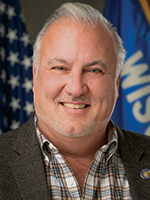
Sen. Cory Tomczyk
Sponsored bills
Maddy summarySB 152 removes financial eligibility requirements for Wisconsin’s Alzheimer’s family and caregiver support program. It repeals section 46.87 (5m), which previously set income-based criteria, and amends related sections to no longer reference those financial limits. This change directly affects caregivers and family members of Alzheimer’s patients who previously faced income restrictions to access support services. The bill simplifies eligibility by eliminating income thresholds, allowing more individuals to qualify for program services regardless of household income. The law became effective after Governor approval on August 11, 2025 (Wisconsin Act 21).
Maddy summarySB 56 clarifies how Wisconsin can use federal funds for water infrastructure projects. It specifically prohibits using federal capitalization grant funds (from 42 USC 300j-12) to forgive loan principal for private community water systems, except for lead service line replacements. The bill ensures these federal dollars can only cover the direct costs of replacing lead pipes, not other types of financial assistance. This affects private water system owners seeking federal funding for infrastructure upgrades. The law was enacted as 2025 Wisconsin Act 8.
Maddy summarySJR 7 is a non-binding legislative resolution passed by Wisconsin's legislature declaring support for nuclear power and fusion energy as critical clean energy sources. It states the legislature's commitment to advancing these technologies, citing their role in providing 66.6% of Wisconsin's carbon-free electricity, powering 1.2 million homes, and supporting 650 high-paying jobs. The resolution does not create new laws or allocate funds but formally recognizes nuclear/fusion energy as essential for meeting energy demands and reducing emissions. It emphasizes Wisconsin's existing nuclear infrastructure (including two operating reactors) and academic resources as foundations for future growth in this sector.
Maddy summarySB 126 amends the effective date for specific provisions in 2023 Wisconsin Act 126, delaying their implementation from July 1, 2025, to December 1, 2027. It directly affects the listed statutes in Section 35(1m), which cover areas like property tax assessments, education funding, and local government regulations. The bill does not change the substance of these provisions but adjusts their start date through a procedural amendment. This change provides additional time for affected entities to prepare for the new requirements.
Maddy summarySJR 2 proposes a constitutional amendment that would require all qualified voters to present valid photographic identification to cast a ballot in any election. This identification must be issued by the state, federal government, a federally recognized American Indian tribe, or a college or university. The bill allows the legislature to specify acceptable forms of identification and establish exceptions to this requirement. Voters unable to present valid ID on election day would be permitted to cast a provisional ballot, which would only be counted if they present valid identification at a later time. If agreed to by the legislature on this second consideration, the proposed amendment will be submitted to the people for ratification.
Maddy summarySenate Joint Resolution 16 recognizes May 1st of each year as "St. Joseph the Worker Day" in Wisconsin. It also designates May 1st as a day to honor all working men and women in the state. The resolution further urges the executive branch to organize an annual celebration to appreciate the dignity of Wisconsin's workforce.
Maddy summarySJR 22 designates April 2025 and April 2026 as Testicular Cancer Awareness Month in Wisconsin. This resolution aims to raise awareness about testicular cancer, which is common among younger men, to encourage early detection and healthy habits.
Maddy summarySJR 27 is a joint resolution that formally proclaims April 24, 2025, as Holocaust Remembrance Day and April 27, 2025, to May 4, 2025, as Holocaust Days of Remembrance in Wisconsin. This resolution aims to raise public awareness about the Holocaust and its impact on world history and shared humanity.
Maddy summarySJR 28 is a joint resolution by the Wisconsin Legislature that reaffirms the state's commitment to its sister-state relationship with Taiwan, established in 1986. The resolution expresses support for the federal Taiwan Relations Act and endorses Taiwan's efforts to secure a Bilateral Trade Agreement with the United States. It also advocates for increasing Taiwan's meaningful participation in international organizations that impact its people's well-being. This bill primarily affects the diplomatic and economic relationship between Wisconsin and Taiwan by formally stating the legislature's supportive stance.