

Maddy summarySJR 49 designates May 14, 2025, and 2026, as Hmong-Lao Veterans Day in Wisconsin to honor veterans who served alongside U.S. forces in the Vietnam War. The resolution recognizes the historical contributions of Hmong-Lao fighters recruited by the U.S. during the war, their post-war displacement, and their resettlement in Wisconsin communities. It formally acknowledges their service through legislative recognition, building on existing state law (2021 Wisconsin Act 31) that already designates May 14 for this purpose. This commemorative resolution directly affects Hmong-Lao veterans and their families in Wisconsin, with no new policy requirements or funding impacts.
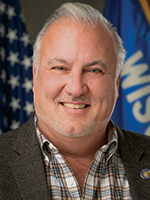
Sen. Cory Tomczyk
Sponsored bills
Maddy summarySB 222 increases penalties for extortion and sexual extortion by making it a Class B felony if the crime directly causes the victim's death. It also expands victim compensation, allowing family members or household members of victims of specific violent crimes (including certain sexual offenses) to claim economic losses from the victim's death. The bill modifies existing statutes to clarify eligibility for these compensation awards, which cover losses like funeral costs or lost wages. These changes directly affect victims of extortion-related deaths and their families seeking financial support.
Maddy summarySJR 63 is a symbolic resolution that officially designates June as "Dairy Month" in Wisconsin. It recognizes the state's long history with dairy, from early 19th-century farmers to modern contributions, including the industry's $45.6 billion annual economic impact and over 6,000 dairy farms. The resolution has no new requirements or funding - it simply honors dairy farmers' role in Wisconsin's heritage and identity through a formal proclamation. It directly affects the state's dairy industry and its cultural recognition, but does not create new laws or policies. This is a ceremonial gesture, not a substantive legislative change.
Maddy summarySB 456 provides a $150 million grant to support aviation biofuel manufacturing in Wisconsin, funded through state public debt. It directly affects manufacturers who build facilities in designated zones, requiring them to use 80% in-state biomass (measured over 5 years), make $1.5 billion in state investments within 5 years, and maintain facilities exclusively for aviation biofuel production. The bill also creates a tax credit for such manufacturing and includes repayment penalties if grant conditions aren't met. This policy aims to support the state's forest products industry and create jobs through aviation biofuel development.
Maddy summaryThis bill creates a new exception for certain retired Wisconsin Retirement System members. It allows former county jailers (not protective occupation) and protective occupation retirees to return to work for a participating employer without automatically becoming active retirement system participants. To qualify, they must not have a prior agreement to return, must formally elect not to rejoin the system using a department-provided form, and must have terminated employment without an agreement to return. The change specifically applies to rehires after the bill's effective date, giving these workers a clear path to return to work without automatic retirement system re-enrollment.
Maddy summarySB 544 updates cigarette tax rates to distinguish between traditional smoking products and "heating tobacco" products (which heat tobacco without burning). It creates a new tax category for heating tobacco products, charging 63 mills per cigarette for lighter products and 126 mills for heavier ones - half the rate applied to traditional cigarettes. Businesses selling these products will pay these new rates, with adjustments to offset federal taxes. The bill also requires a one-time inventory tax on existing stock when rates change, but the main policy change is reducing taxes for heating tobacco products compared to traditional cigarettes.
Maddy summarySB 381 requires the Wisconsin Supreme Court to form a panel under existing law before temporarily suspending a judge without pay in cases involving alleged judicial misconduct or permanent disability. This new procedural step mandates a hearing to determine "probable cause" for the suspension before it can be imposed. The bill directly affects sitting judges facing misconduct allegations or disability proceedings by adding a formal review process prior to suspension. It amends statute 757.95 to create a specific requirement for this panel hearing, streamlining the suspension process while adding a safeguard. The bill passed committee amendments in November 2025 and is now available for scheduling.
Maddy summarySB 627 sets a maximum age of 75 for new appointments or elections to the state supreme court or courts of record, meaning no one can be elected or appointed after turning 75. It directly affects future judicial candidates but does not apply to current judges or temporary reserve judges under existing rules. The bill creates a clear age limit in state law for all new judicial positions in these courts. This is a procedural change affecting only future appointments, not current or existing judges.
Maddy summarySB 418 creates a sales and use tax exemption for ski lift operators in Wisconsin. It specifically exempts the purchase, storage, use, or consumption of ski lifts, related machines, equipment, and parts used exclusively for operating ski lifts from state sales and use taxes. This bill directly affects ski resorts and mountain operations that purchase or maintain ski lift infrastructure. The exemption applies to qualifying equipment purchases and is effective starting the first day of the third month following publication. The bill was recently recommended for passage by the Agriculture and Revenue Committee.
Maddy summarySB 92 increases penalties for repeat theft offenses by creating new sentencing provisions. It allows prosecutors to charge and convict individuals with a Class I felony for certain misdemeanors if they have prior convictions for specific theft crimes under sections 943.20(3)(a)-(cm) or 943.50(4)(a)-(c). Similarly, it elevates felony charges to a higher classification when prior theft convictions exist. The bill applies to offenses committed on its effective date but permits counting prior convictions toward sentencing. It directly affects repeat offenders of specified theft offenses by imposing harsher penalties.