

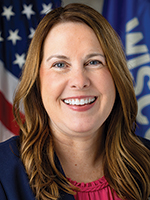
Photo of Dianne Hesselbein
D Wisconsin Senate · District 27 On the 2026 ballot

Sen. Dianne Hesselbein

Compare
Total votes
802
all sessions
Attendance
100%
of floor votes
Near the chamber average
With party
98%
of cast votes
Near the chamber average
Bipartisan score
1%
crosses aisle rarely
Near the chamber average
Sponsored
1,223
bills & resolutions
Near the chamber average
Committees
4
assignments
1,223 bills and resolutions

Sponsored bills

Total
1,223
Primary
1,223
Co-sponsor
0
This page
1,223
matching current filters
Primary SB 1106
Failed · Wisconsin Senate · Lead sponsor
Relating to: expanding eligibility for the Medical Assistance program. (FE)

Maddy summaryThis bill expands eligibility for the Medical Assistance program to include parents or caretakers of dependent children and adults under 65 whose family income falls between 101 and 133 percent of the poverty line. The legislation requires the state insurance commissioner to seek federal approval for these new eligibility categories, and the program changes would only take effect if the federal government grants permission. If federal approval is not obtained, individuals meeting these new criteria would not qualify for benefits. The expanded eligibility provisions are scheduled to take effect on January 1, 2029, if approved.

Failed Mar 23, 2026 0 co-sponsors
Primary SB 1127
Failed · Wisconsin Senate · Lead sponsor
Relating to: fertility treatment rights, reimbursement of fertility treatments under the Medical Assistance program, and requiring insurance coverage for fertility treatments. (FE)

Maddy summaryThis bill establishes legal rights for individuals to access fertility treatments, including egg and sperm preservation, artificial insemination, in vitro fertilization, and related medications, while also protecting health care providers and insurance companies from interference when delivering these services. It creates a reimbursement mechanism for fertility treatments under the state's Medical Assistance program, though payment is contingent on federal approval or the absence of required federal waivers. The legislation defines fertility treatment broadly to include genetic testing, gamete donation, and other services aligned with American Society for Reproductive Medicine guidelines, and grants individuals rights to make decisions about their reproductive genetic material. Additionally, the bill provides legal recourse through civil actions for individuals, providers, or manufacturers whose rights are violated, with courts authorized to award equitable relief and litigation costs.

Failed Mar 23, 2026 0 co-sponsors
Primary SB 1091
Failed · Wisconsin Senate · Lead sponsor
Relating to: a premium assistance individual income tax credit and making an appropriation. (FE)

Maddy summaryThis bill establishes a state premium assistance tax credit for Wisconsin residents who pay monthly premiums for qualified health plans during the 2026 tax year. The credit allows eligible individuals to claim a refund equal to the federal premium assistance amount they would have qualified for between 2021 and 2025, but only if they are not already eligible for similar federal tax credits. The legislation applies only to full-year residents who file claims within the standard tax filing deadline and requires state funding to cover any credit amounts exceeding the taxpayer's tax liability.

Failed Mar 23, 2026 0 co-sponsors
Primary SB 1119
Failed · Wisconsin Senate · Lead sponsor
Relating to: protection of pregnant individuals’ information, authorization for disclosure, data breach, and providing a penalty.

Maddy summaryThis bill establishes privacy protections for health information collected at unregulated pregnancy services centers, requiring written authorization from individuals before their nonpublic personal health information can be shared. It defines specific types of health information and pregnancy-related services, and outlines requirements for authorization forms including details about the information to be disclosed, who it will be shared with, and the right to revoke consent at any time. The legislation also mandates that these centers notify affected individuals if there is a data breach and prohibits discrimination against people who do not grant authorization for information disclosure. Any violations of these privacy requirements would be treated as unfair and deceptive trade practices under existing state law.

Failed Mar 23, 2026 0 co-sponsors
Primary SB 1115
Failed · Wisconsin Senate · Lead sponsor
Relating to: minimum nurse staffing ratios in hospitals, registered nurses’ right to refuse a work assignment, prohibiting mandatory overtime for registered nurses, and providing a penalty.

Maddy summaryThis bill establishes minimum nurse-to-patient staffing ratios for various hospital units, such as limiting registered nurses to no more than four patients in emergency units or two patients in intensive care units. It requires hospitals to create and publicly post annual staffing plans that include input from nursing staff, maintain detailed records of actual staffing levels, and establish committees with a majority of frontline nurses to oversee staffing decisions. The legislation also grants registered nurses the right to refuse work assignments that violate these ratios and prohibits mandatory overtime for nurses. Hospitals that fail to comply with staffing requirements or submit plans by the deadline face financial penalties, including a $25,000 forfeiture for missing deadlines and daily fines for non-compliance with corrective action plans.

Failed Mar 23, 2026 0 co-sponsors
Primary SB 1126
Failed · Wisconsin Senate · Lead sponsor
Relating to: a state minimum wage, allowing the enactment of local minimum wage ordinances, and granting rule-making authority. (FE)

Maddy summaryThis bill establishes a state minimum wage of $15 per hour while allowing local governments to enact their own minimum wage ordinances. It creates a system where the state department of labor can set lower wages for specific groups like agricultural workers, camp counselors, and students, and can exempt certain casual employment arrangements. The minimum wage will automatically adjust annually based on changes in the consumer price index, unless inflation shows no increase. The legislation also prohibits the state from setting different minimum wages for men and women.

Failed Mar 23, 2026 0 co-sponsors
Primary SB 1102
Failed · Wisconsin Senate · Lead sponsor
Relating to: reimbursement of maternal mental health screenings under the Medical Assistance program and coverage of maternal mental health screenings by health insurance policies and plans. (FE)

Maddy summaryThis bill requires health insurance policies and plans in Wisconsin to cover maternal mental health screenings for each pregnancy, while also allowing the Medical Assistance program to reimburse these screenings. The legislation mandates that screening standards be developed in consultation with organizations led by Black, Indigenous, and other persons of color, and permits licensed midwives, nurse-midwives, advanced practice registered nurses, and other qualified healthcare providers to administer the screenings. Additionally, the bill requires state disability insurance policies and self-insured health plans that include maternity coverage to include these screenings. The law takes effect on the day after publication, with specific provisions for collective bargaining agreements to apply when new or renewed.

Failed Mar 23, 2026 0 co-sponsors
Primary SB 1149
Failed · Wisconsin Senate · Lead sponsor
Relating to: prescription drug cost reporting by manufacturers, making an appropriation, and providing a penalty. (FE)

Maddy summaryThis bill requires prescription drug manufacturers to report price increases and new drug introductions to the state health department and insurance office, affecting companies that sell brand-name or generic drugs in the state. Manufacturers must notify regulators at least 30 days before raising prices by more than 25 percent over two years or introducing high-cost drugs, providing justification including cost-effectiveness data and comparisons to similar medications. The bill also mandates annual reports on manufacturer-sponsored patient assistance programs and requires posting of pricing documentation online with public hearings to review trends. Failure to submit required notices or reports can result in daily penalties of up to $10,000. The legislation authorizes funding for two additional state staff positions to administer these reporting requirements.

Failed Mar 23, 2026 0 co-sponsors
Primary SB 1100
Failed · Wisconsin Senate · Lead sponsor
Relating to: a state-based insurance exchange and making an appropriation. (FE)

Maddy summaryThis bill establishes a state-based health insurance exchange that will operate on the federal platform by 2029 and transition to a standalone state-run exchange by 2030. It authorizes the state insurance commissioner to collect user fees from insurers offering plans through the exchange, starting at 0.5 percent of monthly premiums for the federal platform phase and adjusting rates for the standalone phase. The legislation also creates a specific appropriation account for exchange operations, with any unspent funds exceeding 10 percent of annual expenditures returning to the state's general fund at the end of each fiscal year.

Failed Mar 23, 2026 0 co-sponsors
Primary SB 1117
Failed · Wisconsin Senate · Lead sponsor
Relating to: entering into an agreement among the states to elect the president and vice president of the United States by means of a national popular vote.

Maddy summaryThis bill proposes to join an interstate compact that would allow states to elect the U.S. president and vice president based on the national popular vote rather than the Electoral College. It would take effect only when enough states have joined the agreement to collectively hold a majority of Electoral College votes. The bill amends state election laws to implement the compact's provisions, which require member states to count all popular votes nationwide and award all Electoral College votes to the candidate who wins the most popular votes across all participating states. The agreement includes provisions for state withdrawal, dispute resolution in case of ties, and termination if the Electoral College is abolished.

Failed Mar 23, 2026 0 co-sponsors
Showing 31 to 40 of 1,223 bills
Previous 1 … 3 4 5 … 123 Next