

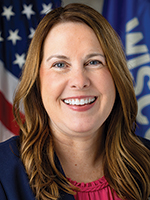
Photo of Dianne Hesselbein
D Wisconsin Senate · District 27 On the 2026 ballot

Sen. Dianne Hesselbein

Compare
Total votes
802
all sessions
Attendance
100%
of floor votes
Near the chamber average
With party
98%
of cast votes
Near the chamber average
Bipartisan score
1%
crosses aisle rarely
Near the chamber average
Sponsored
1,223
bills & resolutions
Near the chamber average
Committees
4
assignments
1,223 bills and resolutions

Sponsored bills

Total
1,223
Primary
1,223
Co-sponsor
0
This page
1,223
matching current filters
Primary SB 639
Failed · Wisconsin Senate · Lead sponsor
Relating to: veterans mental health services and making an appropriation. (FE)

Maddy summarySB 639 allocates $5 million in state funds specifically for veterans' mental health services through the Department of Veterans Affairs. It requires the department to promote veterans' access to community-based mental health care and provide grants to organizations offering these services. The bill also streamlines rulemaking by allowing the department to issue emergency rules for administering these services without usual requirements for emergency rule justification. This directly affects veterans seeking mental health support and community organizations delivering those services. The funding and program structure are established for the 2026 biennium.

Failed Mar 23, 2026 0 co-sponsors
Primary SB 579
Failed · Wisconsin Senate · Lead sponsor
Relating to: collective bargaining for employees of the University of Wisconsin System, granting rule-making authority, and making an appropriation. (FE)

Maddy summarySB 579 standardizes collective bargaining processes for employees of the University of Wisconsin (UW) System, directly affecting faculty, staff, and other workers covered by existing union contracts. The bill requires that pay increases align with approved compensation plans or collective bargaining agreements, and it establishes funding mechanisms to cover costs for grievance arbitrations and training related to bargaining disputes. Key provisions update statutes to clarify that bargaining agreements govern pay decisions and define "governmental body" to exclude bargaining committees. The bill also creates new appropriation accounts to fund administrative functions of the state's employment relations system, including mediation and arbitration services.

Failed Mar 23, 2026 0 co-sponsors
Primary SB 486
Failed · Wisconsin Senate · Lead sponsor
Relating to: various changes to the unemployment insurance and worker’s compensation laws. (FE)

Maddy summarySB 486 would revise unemployment insurance eligibility rules for workers terminated due to "misconduct" or who refuse suitable work. It defines "misconduct" more narrowly (e.g., excluding unexcused absences without prior written policy notice) and requires workers who lose benefits for misconduct to earn wages equal to 14 times their weekly benefit rate before requalifying. For refusing suitable work, it lowers the required earnings threshold from 6 times to 6 times the weekly benefit rate. These changes affect unemployed workers seeking benefits and employers responsible for paying unemployment insurance contributions.

Failed Mar 23, 2026 0 co-sponsors
Primary SB 430
Failed · Wisconsin Senate · Lead sponsor
Relating to: special motions to strike strategic lawsuits against public participation. (FE)

Maddy summarySB 430 creates a legal procedure to quickly dismiss lawsuits that target public speech on issues of public concern. It allows defendants to file a "special motion to strike" if a lawsuit stems from someone's free speech or petitioning activity (like speaking at a town meeting, writing to officials, or posting online about community issues). If the court finds the lawsuit lacks merit, it dismisses the case early and awards the defendant their legal fees. This protects citizens, journalists, and activists from being silenced by costly lawsuits meant to intimidate them, while exempting government enforcement actions. The bill directly affects people speaking publicly on community issues and those who sue them over such speech.

Failed Mar 23, 2026 0 co-sponsors
Primary SB 566
Failed · Wisconsin Senate · Lead sponsor
Relating to: coverage of infertility services under health policies and plans and granting rule-making authority. (FE)

Maddy summarySB 566 requires most health insurance plans to cover infertility treatment and fertility preservation services, directly affecting individuals seeking these services and their insurers. It mandates coverage for diagnosis and treatment of infertility (defined as failure to conceive after specified timeframes) and standard fertility preservation (like egg freezing before cancer treatment), including at least four egg retrievals and unlimited embryo transfers per medical guidelines. Insurers cannot impose stricter cost-sharing or exclusions for infertility care compared to other pregnancy-related benefits. The bill applies to group health plans and self-insured plans, excluding certain disability policies and state/local self-insured plans.

Failed Mar 23, 2026 0 co-sponsors
Primary SB 589
Failed · Wisconsin Senate · Lead sponsor
Relating to: statutory right to contraception.

Maddy summarySB 589 establishes a statutory right for individuals to obtain contraception and for health care providers to offer it, directly affecting patients, providers, and local governments. It prohibits state or local governments from restricting access to FDA-approved contraceptives (like pills, condoms, or IUDs) through laws, regulations, or policies that single out contraception or impede access. The bill allows individuals or providers to sue if a policy violates these rights, and courts can block such policies and award attorney fees to winning parties. It explicitly does not change health insurance coverage requirements or override existing constitutional protections.

Failed Mar 23, 2026 0 co-sponsors
Primary SJR 108
Failed · Wisconsin Senate · Lead sponsor
Relating to: recognizing the second Monday in October as Indigenous Peoples Day.

Maddy summarySJR 108 is a non-binding resolution recognizing the second Monday in October as Indigenous Peoples Day in Wisconsin. It does not create new laws or affect any specific group legally, but formally acknowledges the historical and ongoing presence of Wisconsin's eleven federally recognized tribes. The resolution highlights the state's responsibility to honor Indigenous contributions and work toward reconciliation, referencing the history of dispossession and resilience of Native nations. It serves as a symbolic gesture to promote appreciation and partnership with Indigenous communities. The resolution was introduced by multiple legislators and referred to a committee for further consideration.

Failed Mar 23, 2026 0 co-sponsors
Primary SB 437
Failed · Wisconsin Senate · Lead sponsor
Relating to: automated external defibrillators in child care centers and making an appropriation. (FE)

Maddy summaryThis bill provides $1 million every two years to help licensed child care centers purchase and maintain automated external defibrillators (AEDs). It requires centers to contribute 33% of the grant amount as matching funds. The Department of Children and Families will administer the grants, distributing funds to eligible centers under state licensing rules. This policy directly affects all licensed child care centers in the state by improving emergency cardiac response capabilities.

Failed Mar 23, 2026 0 co-sponsors
Primary SB 408
Failed · Wisconsin Senate · Lead sponsor
Relating to: an agricultural purchase program and making an appropriation. (FE)

Maddy summarySB 408 creates an agricultural purchase program that allocates $30 million in state funds to support local food assistance organizations purchasing Wisconsin-grown or made food. The program provides grants to nonprofit food banks, pantries, and local food distributors to buy food produced within the state. It establishes new staff positions (a program specialist and grants specialist) within the Department of Agriculture to manage the program, funded by the same appropriation. The bill directly affects Wisconsin food assistance providers and local agricultural producers by creating a dedicated funding stream for regional food purchases.

Failed Mar 23, 2026 0 co-sponsors
Primary SB 660
Failed · Wisconsin Senate · Lead sponsor
Relating to: a public information campaign related to aggressive driving and making an appropriation. (FE)

Maddy summarySB 660 creates a statewide public information campaign to reduce aggressive driving behaviors like excessive speeding, illegal racing, and fleeing police. The campaign, funded with $500,000 over two fiscal years, must run for 1-2 years and prioritize local governments with the highest rates of these incidents. It requires using billboards, radio, TV, and digital ads, while partnering with local creative agencies and community groups (like schools and churches) to share real stories from affected drivers and families. The law mandates that materials reflect the experiences of high-risk drivers and target communities most impacted by aggressive driving.

Failed Mar 23, 2026 0 co-sponsors
Showing 301 to 310 of 1,223 bills
Previous 1 … 30 31 32 … 123 Next