

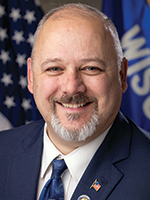
Photo of Jesse James
R Wisconsin Senate · District 23

Sen. Jesse James

Compare
Total votes
568
all sessions
Attendance
95%
27 missed
Near the chamber average
With party
100%
of cast votes
Near the chamber average
Bipartisan score
1%
crosses aisle rarely
Near the chamber average
Sponsored
558
bills & resolutions
Near the chamber average
Committees
4
assignments
558 bills and resolutions

Sponsored bills

Total
558
Primary
558
Co-sponsor
0
This page
558
matching current filters
Primary SB 832
Signed into law · Wisconsin Senate · Lead sponsor
Relating to: remote dispensing sites under the pharmacy practice law.

Maddy summarySB 832 establishes a new regulatory framework for pharmacies operating remotely without a pharmacist physically present on-site. It defines "remote dispensing sites" (now called "remotely supervised pharmacies") and allows the pharmacy board to create rules exempting these sites from standard pharmacy requirements. The bill clarifies that such remote operations are not classified as community or institutional pharmacies under existing rules. It repeals previous provisions requiring pharmacist presence and modifies licensing rules to specifically accommodate these remote pharmacy models.

Signed into law Apr 6, 2026 0 co-sponsors
Primary SB 191
Signed into law · Wisconsin Senate · Lead sponsor
Relating to: requiring a subpoena to a law enforcement officer or tribal law enforcement officer served in official capacity to be served at the officer’s work address.

Maddy summarySB 191 requires courts to serve subpoenas for law enforcement officers, tribal law enforcement officers, public officers, or public employees at their workplace address - not their home address - when their testimony relates to official duties. This applies to all witnesses in these roles whose testimony concerns actions taken in their official capacity or employment. The bill specifies that subpoenas must be delivered by giving a copy to the individual at work, leaving it at the workplace, or presenting it to them there. It updates legal procedures to streamline service for these officials while clarifying that "address" for such testimony means their employer’s street address under defined circumstances.

Signed into law Apr 6, 2026 0 co-sponsors
Primary SB 391
Signed into law · Wisconsin Senate · Lead sponsor
Relating to: equipment of school buses with audiovisual recording devices.

Maddy summarySB 391 clarifies that the requirement for school buses to be equipped with audiovisual recording devices applies to public school boards *and* the governing bodies of private or tribal schools. The bill amends existing law by replacing "board" with "board, or the governing body of a private school or tribal school" to explicitly include these entities. This change ensures all schools operating buses - public, private, or tribal - must comply with the recording device requirement. The bill does not create new requirements but specifies which school entities are subject to the existing mandate.

Signed into law Apr 6, 2026 0 co-sponsors
Primary SB 485
Signed into law · Wisconsin Senate · Lead sponsor
Relating to: video monitoring or recording in residential care centers for children and youth, group homes, and shelter care facilities.

Maddy summarySB 485 allows residential care centers for children and youth, group homes, and shelter care facilities to use video surveillance in common areas, entrances, and exits without a child’s consent. Facilities must inform children and their parents/guardians about the monitoring and adopt written safety policies that may include video. The law prohibits using video as a substitute for one-on-one supervision of children at high risk for self-harm and requires all video data to remain confidential, with limited exceptions for department review. This directly affects staff and children in these facilities by standardizing monitoring practices while maintaining privacy protections.

Signed into law Apr 6, 2026 0 co-sponsors
Primary SB 474
Signed into law · Wisconsin Senate · Lead sponsor
Relating to: fire suppression products derived from soybeans.

Maddy summarySB 474 adds soybean-derived fire suppression products to the list of eligible costs for state fire grant programs. This means local fire departments and municipalities can now use state grant funds to purchase fire suppressants made from soybeans, rather than only traditional chemical-based products. The bill directly affects grant recipients by expanding their funding options for fire safety equipment under existing state grant programs. It creates a specific policy change without altering other grant requirements or imposing new costs.

Signed into law Apr 6, 2026 0 co-sponsors
Primary SB 556
Signed into law · Wisconsin Senate · Lead sponsor
Relating to: providing utility aid payments for certain energy storage facilities. (FE)

Maddy summarySB 556 creates new annual payments to municipalities and counties for hosting energy storage facilities (like batteries or thermal systems) and liquefied natural gas (LNG) storage facilities. For energy storage facilities with at least 1 megawatt capacity, payments are calculated as $2,000 per megawatt, split between the local city/town (two-thirds) and county (one-third) or town (one-third) and county (two-thirds). For LNG storage facilities, payments are based on the property's net book value at 6 mills for cities/villages or 3 mills for towns, with the county receiving the remaining share. The bill ensures payments continue even if some facility units cease operation, maintaining consistent support for local governments.

Signed into law Apr 6, 2026 0 co-sponsors
Primary SB 448
Signed into law · Wisconsin Senate · Lead sponsor
Relating to: the use of videoconferencing technology in certain civil actions.

Maddy summaryThis bill changes rules for objections to video testimony in civil cases. It requires courts to use discretion when ruling on objections (instead of automatically sustaining them) for most civil proceedings, except for expert witness testimony in cases under chapters 51 or 55. The change directly affects defendants and respondents who object to video testimony, and applies to cases where physical courtroom presence isn’t required. Courts must now follow specific criteria in statute 885.56 when deciding such objections.

Signed into law Mar 27, 2026 0 co-sponsors
Primary SB 926
Failed · Wisconsin Senate · Lead sponsor
Relating to: implementing a behavioral health prevention pilot program and making an appropriation.

Maddy summarySB 926 creates a two-year pilot program (2026-27 and 2027-28 school years) to provide behavioral health prevention tools to at least 50,000 high school students across Wisconsin. The program allocates $3 million in funding, with up to $1.5 million per school year, to deliver an electronic tool meeting specific requirements: online education resources, moderated peer support, private sessions with mental health professionals, mobile/web accessibility, and English/Spanish language support. The Wisconsin Department of Public Instruction will administer the pilot, potentially contracting with educational service agencies, and must select tools proven effective in rural and urban schools in other states. This program directly affects high school students by expanding access to preventive mental health services through a structured digital platform.

Failed Mar 23, 2026 0 co-sponsors
Primary SB 935
Failed · Wisconsin Senate · Lead sponsor
Relating to: prohibiting the use of phones while driving a motor vehicle and providing a penalty.

Maddy summarySB 935 prohibits probationary license holders (new drivers) and those with instruction permits from using wireless phones while driving, except to report emergencies. The bill amends existing law to specifically apply this restriction to these driver categories, expanding the current ban which previously covered only full license holders. Violations would incur penalties under the statute, though the bill text doesn't detail the specific penalty amount. This change directly affects new drivers learning to operate vehicles under supervision or with restricted licenses. The bill applies to violations occurring on its effective date.

Failed Mar 23, 2026 0 co-sponsors
Primary SB 1000
Failed · Wisconsin Senate · Lead sponsor
Relating to: prohibiting education employers from entering into certain agreements related to information about alleged immoral conduct by an employee and civil immunity for information provided to a prospective employer.

Maddy summarySB 1000 prohibits education employers (like school boards, charter schools, and qualifying private schools) from including clauses in agreements (such as termination or severance contracts) that hide information about investigations into alleged immoral conduct by employees. It requires employers to retain such information unless findings are later deemed false or unsubstantiated. The bill also grants civil immunity to education employers who share verified information about an employee's conduct - including alleged immoral conduct - with prospective employers upon request. This protects employers from lawsuits when providing such information, while ensuring transparency about workplace conduct during employment transitions.

Failed Mar 23, 2026 0 co-sponsors
Showing 11 to 20 of 558 bills