

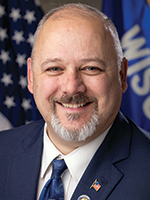
Photo of Jesse James
R Wisconsin Senate · District 23

Sen. Jesse James

Compare
Total votes
702
all sessions
Attendance
100%
of floor votes
Near the chamber average
With party
100%
of cast votes
Near the chamber average
Bipartisan score
1%
crosses aisle rarely
Near the chamber average
Sponsored
558
bills & resolutions
Near the chamber average
Committees
4
assignments
558 bills and resolutions

Sponsored bills

Total
558
Primary
558
Co-sponsor
0
This page
558
matching current filters
Primary SJR 7
Passed · Wisconsin Senate · Lead sponsor
Relating to: recognizing that the Wisconsin State Legislature supports nuclear power and fusion energy as clean energy sources that are critical to safely meeting Wisconsin’s growing energy demands and declaring the legislature’s commitment to the continuation and expansion of nuclear power and nuclear technologies, the development of nuclear technologies and fusion energy, and employing the leadership and resources necessary to support the development of and investment in nuclear power, fusion energy, and related technologies in the state.

Maddy summarySJR 7 is a non-binding legislative resolution passed by Wisconsin's legislature declaring support for nuclear power and fusion energy as critical clean energy sources. It states the legislature's commitment to advancing these technologies, citing their role in providing 66.6% of Wisconsin's carbon-free electricity, powering 1.2 million homes, and supporting 650 high-paying jobs. The resolution does not create new laws or allocate funds but formally recognizes nuclear/fusion energy as essential for meeting energy demands and reducing emissions. It emphasizes Wisconsin's existing nuclear infrastructure (including two operating reactors) and academic resources as foundations for future growth in this sector.

Passed Jun 25, 2025 0 co-sponsors
Primary SJR 2
Signed into law · Wisconsin Senate · Lead sponsor
Relating to: requiring photographic identification to vote in any election (second consideration).

Maddy summarySJR 2 proposes a constitutional amendment that would require all qualified voters to present valid photographic identification to cast a ballot in any election. This identification must be issued by the state, federal government, a federally recognized American Indian tribe, or a college or university. The bill allows the legislature to specify acceptable forms of identification and establish exceptions to this requirement. Voters unable to present valid ID on election day would be permitted to cast a provisional ballot, which would only be counted if they present valid identification at a later time. If agreed to by the legislature on this second consideration, the proposed amendment will be submitted to the people for ratification.

Signed into law May 20, 2025 0 co-sponsors
Primary SB 528
Failed · Wisconsin Senate · Lead sponsor
Relating to: top-five primaries and instant runoff voting for the offices of U.S. senator and U.S. representative in Congress. (FE)

Maddy summaryThis bill proposes changing how voters select candidates for U.S. Senate and House of Representatives by implementing ranked-choice voting in the general election and allowing voters to rank up to five candidates. Under the new system, ballots would permit voters to list their preferences in order, with the winner determined through an instant runoff process if no single candidate receives a majority of first-choice votes. The legislation also modifies primary election rules to allow voters to cast ballots for candidates from multiple political parties in certain consolidated voting scenarios. Additionally, the bill requires election officials to post clear signs warning voters that votes for candidates from different parties will not be counted unless a specific party preference is selected.

Failed May 16, 2024 0 co-sponsors
Primary SB 517
Failed · Wisconsin Senate · Lead sponsor
Relating to: court-issued criminal complaints if the person's actions were in self-defense.

Maddy summaryThis bill allows circuit judges to issue criminal complaints when a district attorney refuses to do so, specifically in cases where the accused claims self-defense. Under the new rules, a judge can only proceed with a hearing if there is new evidence suggesting the person did not act in self-defense, as the law currently protects individuals who defend themselves or others. If the judge determines a crime was committed despite the self-defense claim, they can subpoena witnesses and review police reports to decide whether to file charges. The district attorney must provide all relevant investigation records and explain their reasons for refusing to issue charges if the judge requests them.

Failed May 15, 2024 0 co-sponsors
Primary SB 1014
Failed · Wisconsin Senate · Lead sponsor
Relating to: funding for hospital emergency department services. (FE)

Maddy summaryThis bill authorizes the Wisconsin Department of Health Services to distribute up to $15 million in grants between 2023 and 2025 to support hospital emergency department services in Chippewa or Eau Claire counties. To receive funding, health systems must commit to providing emergency care in these specific counties and agree to use the grant money for capital expenditures that improve those services. The legislation requires recipients to report how the funds were spent and their impact on emergency care by March 2025, with a final summary report submitted to the legislature by June 2025.

Failed May 15, 2024 0 co-sponsors
Primary SB 1015
Signed into law · Wisconsin Senate · Lead sponsor
Relating to: transfer from the state building trust fund to the general fund, funding for grants to support hospital emergency department services, and making an appropriation. (FE)

Maddy summaryThis bill transfers $15 million from the state building trust fund to the general fund to finance grants for hospital emergency department services. The legislation creates a new statutory provision authorizing these biennial grants and repeals an older statute related to the funding source. By moving the money between funds, the bill ensures that the state can support emergency care without using money originally set aside for construction projects. The measure was ultimately rejected after the Governor issued a partial veto that the legislature could not override.

Signed into law May 14, 2024 0 co-sponsors
Primary SB 916
Vetoed · Wisconsin Senate · Lead sponsor
Relating to: requiring local governments to designate an individual for consultation required under a federal program regarding refugee resettlement and assistance. (FE)

Maddy summaryThis bill would require local governments in Wisconsin, such as cities, towns, and counties, to appoint a specific staff member to handle communications with the federal government about refugee resettlement. Under the proposed rules, local officials must report any initial contact with federal agencies regarding refugee placement within seven business days and then notify neighboring local units within 100 miles within 10 days. Following these notifications, the local governing body would be required to hold a public meeting to discuss the contact and officially designate an employee to serve as the point of contact for future federal consultations on refugee assistance.

Vetoed May 14, 2024 0 co-sponsors
Primary SB 617
Vetoed · Wisconsin Senate · Lead sponsor
Relating to: indicia of registration for electric vehicles. (FE)

Maddy summaryThis bill would require owners of hybrid and nonhybrid electric vehicles in Wisconsin to display specific decals on their license plates to indicate the vehicle type. The legislation allows the Department of Transportation to issue new registration plates with "EV" markings instead, which would exempt those vehicles from the decal requirement. Although the bill passed the legislature, it was vetoed by the Governor and did not become law.

Vetoed May 14, 2024 0 co-sponsors
Primary SB 641
Vetoed · Wisconsin Senate · Lead sponsor
Relating to: eliminating the prohibitions on electric weapons and providing a penalty.

Maddy summaryThis Wisconsin bill sought to remove state laws that currently ban the possession and use of electric weapons, such as stun guns and tasers. By repealing specific prohibitions and adding "electric weapon" to the legal definition of a weapon, the legislation would have allowed adults to own these devices and altered how juveniles are informed about restrictions on such items. The proposed changes also aimed to adjust penalties for possessing electric weapons and modify rules regarding the release of information about juveniles who escape custody while in possession of them. Although the bill passed the legislature, it was vetoed by the Governor and did not become law.

Vetoed May 14, 2024 0 co-sponsors
Showing 181 to 190 of 558 bills
Previous 1 … 18 19 20 … 56 Next