

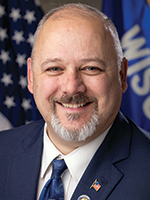
Photo of Jesse James
R Wisconsin Senate · District 23

Sen. Jesse James

Compare
Total votes
702
all sessions
Attendance
100%
of floor votes
Near the chamber average
With party
100%
of cast votes
Near the chamber average
Bipartisan score
1%
crosses aisle rarely
Near the chamber average
Sponsored
558
bills & resolutions
Near the chamber average
Committees
4
assignments
558 bills and resolutions

Sponsored bills

Total
558
Primary
558
Co-sponsor
0
This page
558
matching current filters
Primary SB 608
Failed · Wisconsin Senate · Lead sponsor
Relating to: a state matching grant program for recipients of federal per diem payments and making an appropriation. (FE)

Maddy summarySB 608 creates a state matching grant program that provides $950,000 in state funds to match federal per diem payments received by eligible non-state entities (like community organizations or service providers). The program directly affects organizations that already receive federal daily living payments, allowing them to access additional state funding through a 1:1 match. Key provisions include allocating $950,000 specifically for this matching grant under the Veterans Affairs budget and defining eligible recipients as non-state entities receiving federal per diem payments. This is a procedural funding measure that establishes a new appropriation line without changing eligibility criteria or creating new requirements.

Failed Mar 23, 2026 0 co-sponsors
Primary SB 598
Failed · Wisconsin Senate · Lead sponsor
Relating to: coverage under the Medical Assistance program for incarcerated individuals. (FE)

Maddy summarySB 598 would require the state health department to seek a federal Medicaid waiver enabling coverage for incarcerated individuals in the Medical Assistance program (state Medicaid) up to 90 days before release. It specifically covers case management, medication-assisted treatment for substance use disorders, and a 30-day supply of prescription medications for those already eligible for Medical Assistance. If approved, the federal government would fund the program’s share of these services, with the state covering its portion. This bill directly affects incarcerated individuals transitioning to community care, aiming to improve continuity of health services upon release.

Failed Mar 23, 2026 0 co-sponsors
Primary SB 658
Failed · Wisconsin Senate · Lead sponsor
Relating to: creating a tax credit for insurers for certain investments in community development entities. (FE)

Maddy summarySB 658 creates a tax credit for insurance companies that invest in community development entities (CDEs) focused on low-income communities. Insurers can claim a credit equal to 0% of their investment for the first two years and 10% for the next five years, based on the investment amount, against certain insurance fees. The credit applies only to investments where CDEs use at least 100% of funds to support qualified low-income businesses with operations in Wisconsin's rural counties ($125 million allocation) or metro counties ($125 million allocation). This policy directly affects insurers, CDEs, and qualifying businesses in targeted communities, aiming to incentivize private investment in economic development.

Failed Mar 23, 2026 0 co-sponsors
Primary SB 309
Signed into law · Wisconsin Senate · Lead sponsor
Relating to: immunity for 911 call centers and dispatchers that transfer callers to the national 988 Suicide and Crisis Lifeline.

Maddy summarySB 309 grants legal immunity to 911 call centers and dispatchers who transfer callers to the national 988 Suicide and Crisis Lifeline. It specifically protects them from civil lawsuits related to those transfers, unless the harm resulted from gross negligence or willful misconduct by the dispatcher or center. The bill defines the "national crisis hotline" as the federally managed 988 number (or its successor). This law directly affects public safety answering points in Wisconsin by limiting their liability when connecting individuals in crisis to the 988 service.

Signed into law Mar 19, 2026 0 co-sponsors
Primary SB 66
Signed into law · Wisconsin Senate · Lead sponsor
Relating to: registration plate concealment devices and providing a penalty.

Maddy summarySB 66 prohibits the use of devices designed to conceal, obstruct, or alter vehicle license plates, such as mechanical switches, moving covers, or altered plates that obscure numbers. It bans possessing, selling, installing, or using these devices and requires impounding vehicles equipped with them (with costs paid by the owner for towing/impoundment). Violations carry penalties of up to $1,000 in fines, 90 days in jail, or both. This law directly affects vehicle owners who might attempt to obscure license plates, and it became effective under 2025 Wisconsin Act 37.

Signed into law Mar 19, 2026 0 co-sponsors
Primary SB 264
Signed into law · Wisconsin Senate · Lead sponsor
Relating to: coverage of breast cancer screenings by the Medical Assistance program and health insurance policies and plans. (FE)

Maddy summarySB 264 requires health insurance plans and the Medical Assistance program to cover specific breast cancer screenings without out-of-pocket costs for enrollees. It defines two key types of screenings: "diagnostic breast examinations" (used to evaluate symptoms or abnormalities, like mammograms) and "supplemental breast screening examinations" (for high-risk individuals without symptoms, using MRI or ultrasound). The bill prohibits cost-sharing (such as copays) for all diagnostic screenings and for the first supplemental screening per year, while allowing limited cost-sharing for additional supplemental screenings in the same year. This directly affects individuals with health insurance or Medical Assistance who require these screenings, particularly those at higher risk for breast cancer.

Signed into law Mar 19, 2026 0 co-sponsors
Primary SB 23
Signed into law · Wisconsin Senate · Lead sponsor
Relating to: extension of eligibility under the Medical Assistance program for postpartum women. (FE)

Maddy summarySB 23 extends Medicaid eligibility for postpartum women from 60 days to 365 days (one year) after pregnancy, directly affecting pregnant and postpartum women enrolled in the Medical Assistance program. The bill modifies eligibility rules to ensure coverage continues without regard to income changes during this extended period. It also adds a provision allowing women with family income above 300% of the poverty line to qualify if medical expenses for family members are covered, extending this eligibility to all family members. The bill requires federal approval for the 365-day extension to take effect.

Signed into law Mar 19, 2026 0 co-sponsors
Primary SB 678
Signed into law · Wisconsin Senate · Lead sponsor
Relating to: the use of oral fluids for preliminary screening of a person suspected of operating a motor vehicle while intoxicated.

Maddy summarySB 678 allows law enforcement officers to request a sample of a person's oral fluids (or breath) as a preliminary screening tool when they suspect someone is driving under the influence of alcohol or drugs. This applies before an arrest for DUI violations, and the test results can only be used to decide whether to arrest the driver or request a formal chemical test later. The bill specifies that refusal to take this oral fluid screening does not trigger penalties under other statutes, and the results cannot be used as evidence in court except to establish probable cause for an arrest. It directly affects drivers suspected of DUI and officers conducting roadside screenings.

Signed into law Mar 19, 2026 0 co-sponsors
Primary SB 466
Signed into law · Wisconsin Senate · Lead sponsor
Relating to: age for the issuance of a Missing Child Alert.

Maddy summarySB 466 raises the age threshold for issuing a Missing Child Alert from under 10 to under 12 years. It directly affects minors aged 10 or 11 who go missing and are deemed unable to return home without assistance due to a disability or condition. The bill amends statute 175.51(1m)(a)2 to change the age requirement from "not attained the age of 10 years" to "not attained the age of 12 years." This adjustment ensures children in this age group qualify for alerts when their safety is at risk. The change applies to alerts issued when a minor's location is unknown and other alert criteria aren't met.

Signed into law Mar 9, 2026 0 co-sponsors
Primary SB 413
Signed into law · Wisconsin Senate · Lead sponsor
Relating to: immunity from prosecution for certain crimes based on assisting a victim of sexual assault, extending the time limit for prosecution of second-degree sexual assault, and the standard for terminating residential residency when tenant is the victim of sexual assault.

Maddy summarySB 413 provides legal immunity for individuals who assist sexual assault victims by calling 911, reporting the assault, or seeking help at a medical facility. It extends the statute of limitations for second-degree sexual assault prosecutions from 10 to 20 years for specific offenses under state law. The bill also allows tenants who are sexual assault victims to immediately terminate their lease by providing an injunction order, without liability for future rent, and requires landlords to change locks upon request. Additionally, it mandates 20-year storage of sexual assault kits to give victims more time to report incidents. These changes directly affect sexual assault victims, tenants in rental housing, and individuals seeking to assist victims without fear of drug-related charges.

Signed into law Mar 9, 2026 0 co-sponsors
Showing 161 to 170 of 558 bills
Previous 1 … 16 17 18 … 56 Next