

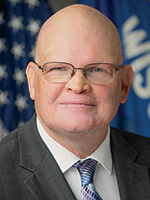
Photo of Dan Feyen
R Wisconsin Senate · District 20

Sen. Dan Feyen

Compare
Total votes
695
all sessions
Attendance
100%
of floor votes
Near the chamber average
With party
98%
of cast votes
Near the chamber average
Bipartisan score
2%
crosses aisle rarely
Near the chamber average
Sponsored
709
bills & resolutions
Near the chamber average
Committees
7
assignments
709 bills and resolutions

Sponsored bills

Total
709
Primary
709
Co-sponsor
0
This page
709
matching current filters
Primary SB 226
Failed · Wisconsin Senate · Lead sponsor
Relating to: determination of where a defendant resides or does substantial business for purposes of venue.

Maddy summarySB 226 clarifies venue rules for civil cases involving corporations. It creates two new statutory provisions: Section 801.50(3c) prevents courts from considering joined parties (like insurers under §803.04) when determining proper venue, and Section 801.50(3g) defines where corporations "reside" (place of incorporation) and where they "do substantial business" (only their principal county). This directly affects businesses and plaintiffs in civil lawsuits by limiting venue options based on corporate structure. The bill aims to standardize venue decisions for corporations, preventing claims of business activity in multiple counties to influence court location.

Failed Mar 23, 2026 0 co-sponsors
Primary SB 450
Failed · Wisconsin Senate · Lead sponsor
Relating to: nonprofit agricultural organization health benefit coverage.

Maddy summarySB 450 allows specific member-owned agricultural cooperatives (defined as pre-1922 organizations with 501(c)(5) status) to provide health benefit coverage exclusively for their members and families. The bill requires these organizations to offer coverage in all state counties, file insurance commissioner attestations, and provide annual actuarial reviews to ensure financial stability. It mandates clear written notice that this coverage is not health insurance and cannot satisfy federal insurance requirements, while prohibiting exclusions for preexisting conditions beyond six months or denying coverage based on provider type. Organizations must also reinsure risks with state-authorized companies and establish complaint resolution processes similar to standard health insurance.

Failed Mar 23, 2026 0 co-sponsors
Primary SB 145
Failed · Wisconsin Senate · Lead sponsor
Relating to: the procedure for adding federal newborn screening recommendations to the state-required newborn screenings, granting rule-making authority, and providing an exemption from emergency rule procedures. (FE)

Maddy summarySB 145 establishes a process for Wisconsin to add federal newborn screening recommendations to its state-required list. It requires the Department of Health Services (DHS) to evaluate new federal disorders within 18 months, conduct annual reviews of excluded disorders, and begin rule-making to include them if appropriate. The bill grants DHS authority to create new screening rules and exempts these rules from standard emergency rule procedures. It directly affects newborns in Wisconsin by potentially expanding screening tests for certain disorders, with testing for newly added disorders required to begin within six months of rule publication. The law applies to federal recommendations approved after January 1, 2025, and includes specific timelines for evaluation and implementation.

Failed Mar 23, 2026 0 co-sponsors
Primary SB 206
Failed · Wisconsin Senate · Lead sponsor
Relating to: voidable provisions in residential rental agreements and the application of the Wisconsin Consumer Act to leases. (FE)

Maddy summarySB 206 makes certain terms in Wisconsin residential rental agreements void and unenforceable if they violate specific protections. It directly affects tenants and landlords by prohibiting clauses that allow retaliation for contacting services (e.g., law enforcement or health services), termination due to a tenant being a crime victim, or termination without required notice for crimes on property. Tenants can choose to void their entire lease or sever only the prohibited clause, with remedies including a periodic tenancy (renewable month-to-month) and double damages for financial losses caused by prohibited terms. The bill specifically targets provisions under sections 704.44(1m) to (10) of Wisconsin statutes, creating clear legal pathways for tenants to challenge unfair lease terms.

Failed Mar 23, 2026 0 co-sponsors
Primary SB 180
Failed · Wisconsin Senate · Lead sponsor
Relating to: modifications to housing programs under the Wisconsin Housing and Economic Development Authority. (FE)

Maddy summarySB 180 modifies Wisconsin's housing programs under the Wisconsin Housing and Economic Development Authority (WHEDA). It allows WHEDA to offer loans with interest rates at or below market rate minus 1% (or no interest) and requires newly constructed workforce or senior housing to remain affordable for 10 years after initial occupancy. For owner-occupied homes, it restricts resale prices to the original purchase price plus annual inflation (capped at 5% per year), with these rules recorded on property deeds and published online by WHEDA. The bill directly affects developers receiving WHEDA loans and future homeowners purchasing qualifying affordable housing units, applying to new loans starting January 1, 2026.

Failed Mar 23, 2026 0 co-sponsors
Primary SB 371
Passed · Wisconsin Senate · Lead sponsor
Relating to: explaining pregnancy, prenatal development, and childbirth as part of a human growth and development instructional program. (FE)

Maddy summarySB 371 requires public schools to include specific content in human growth and development classes about pregnancy, prenatal development, and childbirth. It mandates two key instructional tools: a high-definition ultrasound video showing fetal organ development week-by-week, and a presentation detailing each trimester's impact on a mother's physical and emotional health. The bill directly affects public school curricula in human growth and development courses, setting concrete requirements for the instructional materials used. It does not alter existing curriculum standards but specifies the exact content and format for this particular topic. The bill is currently under review in the Education Committee.

Passed Mar 23, 2026 0 co-sponsors
Primary SJR 88
Passed · Wisconsin Senate · Lead sponsor
Relating to: honoring the life and legacy of Charlie Kirk.

Maddy summarySJR 88 is a symbolic resolution honoring Charlie Kirk, founder of Turning Point USA, following his assassination. It expresses the Wisconsin Legislature's gratitude for his dedication to "faith, liberty, and truth," his work inspiring young Americans, and his commitment to family. The resolution commends his legacy as a "beacon of conviction and courage" and joins in prayer for his family and the nation. As a commemorative measure, it has no binding policy changes or direct impact on constituents.

Passed Mar 23, 2026 0 co-sponsors
Primary SB 29
Failed · Wisconsin Senate · Lead sponsor
Relating to: requiring school boards to adopt policies to prohibit the use of wireless communication devices during instructional time.

Maddy summarySB 29 requires all school boards to adopt written policies prohibiting student use of wireless communication devices (like cell phones and tablets) during instructional time. School boards must submit these policies to the Department of Justice and Legislative Council by October 1, 2026, and annually thereafter. The bill mandates that school boards provide each enrolled student with a copy of the policy and allows districts to implement stricter rules than the minimum requirements. It directly affects public school students and administrators by establishing clear, consistent device-use rules across school districts. The policy changes focus on creating standardized guidelines for device use during class, not on enforcement methods or student consequences.

Failed Mar 23, 2026 0 co-sponsors
Primary SB 443
Passed · Wisconsin Senate · Lead sponsor
Relating to: eligibility of a highway for an agricultural roads improvement program grant. (FE)

Maddy summaryThis bill updates eligibility criteria for highways seeking agricultural road improvement grants. It adds a new requirement that an engineering analysis by a licensed professional must confirm a highway cannot safely handle heavy agricultural traffic. Previously, eligibility was based on structural deficiencies or posted weight restrictions. The change directly affects farmers and rural communities relying on specific highways for transporting equipment and crops.

Passed Mar 23, 2026 0 co-sponsors
Primary SB 502
Failed · Wisconsin Senate · Lead sponsor
Relating to: a nuclear energy generation tax credit; prioritizing nuclear energy resources; approval of certain electric tariffs for very large customers; and authorizing electric utilities to recover certain precertification costs through rates. (FE)

Maddy summarySB 502 creates a 20-year tax credit for nuclear energy facilities in Wisconsin, providing electric utilities and cooperatives with annual credits of $10,000 per megawatt (decreasing to $1,000 by year 19) for qualifying nuclear power generation. The credit applies only to facilities located in Wisconsin that generated electricity during the tax year, with a cap of 20 years per facility. It also modifies definitions to include nuclear energy in "renewable resource" reporting for state agencies and utilities. The bill allows credit transfers to other taxpayers subject to state income tax, but prohibits partnerships and similar entities from claiming the credit directly.

Failed Mar 23, 2026 0 co-sponsors
Showing 81 to 90 of 709 bills
Previous 1 … 8 9 10 … 71 Next