

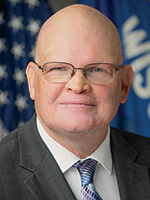
Photo of Dan Feyen
R Wisconsin Senate · District 20

Sen. Dan Feyen

Compare
Total votes
595
all sessions
Attendance
100%
of floor votes
Near the chamber average
With party
98%
of cast votes
Near the chamber average
Bipartisan score
2%
crosses aisle rarely
Near the chamber average
Sponsored
709
bills & resolutions
Near the chamber average
Committees
7
assignments
709 bills and resolutions

Sponsored bills

Total
709
Primary
709
Co-sponsor
0
This page
709
matching current filters
Primary SB 176
Vetoed · Wisconsin Senate · Lead sponsor
Relating to: an income and franchise tax exemption for broadband expansion grants and for federal high-cost program funding for broadband expansion. (FE)

Maddy summarySB 176 creates tax exemptions for income received from broadband expansion grants and federal high-cost program funding. It exempts from state income and franchise taxes funds provided by the state, local governments, tribal governments, or the federal government for broadband expansion projects. This directly affects businesses, internet service providers, and organizations receiving these specific grants or federal funding. The exemption applies to both state broadband grants and federal high-cost program funds (under 47 USC 254) used for expanding broadband access in the state, effective for tax years beginning after December 31, 2024.

Vetoed May 13, 2026 0 co-sponsors
Primary SB 291
Vetoed · Wisconsin Senate · Lead sponsor
Relating to: making certain child care expenditures eligible for the business development tax credit. (FE)

Maddy summarySB 291 expands Wisconsin's business development tax credit to include certain employer-provided child care costs. It allows businesses to claim a tax credit equal to up to 15% of qualifying expenses for establishing or operating child care programs for employees, such as upfront setup costs, operational expenses, employee reimbursements, or reserved child care slots. The bill directly affects Wisconsin-based businesses that provide child care benefits to employees, making these costs eligible for the tax credit starting in 2025. Key provisions define "eligible child care costs" broadly to cover capital expenditures, operational spending, and reimbursements, while capping the credit at 15% of those expenses. The law applies to taxable years beginning after December 31, 2024.

Vetoed May 13, 2026 0 co-sponsors
Primary SB 10
Vetoed · Wisconsin Senate · Lead sponsor
Relating to: access to public high schools for military recruiters.

Maddy summarySB 10 requires Wisconsin public high school boards to allow military recruiters access to common areas (like hallways or cafeterias) during school visits and during school days or school-sanctioned events. It does not require access to classrooms during instructional time. The bill implements federal law (10 USC 503(c)) by mandating this access for all public high schools, directly affecting school boards and military recruiters. The law applies starting with the 2025-26 school year.

Vetoed May 13, 2026 0 co-sponsors
Primary SB 277
Vetoed · Wisconsin Senate · Lead sponsor
Relating to: the expiration of administrative rules. (FE)

Maddy summarySB 277 establishes a 6-year expiration cycle for most Wisconsin administrative rules, requiring state agencies to proactively renew rules before they expire. It mandates that agencies submit renewal notices between January 1 and March 1 each year for rules expiring that year, including detailed justifications and statutory references. Rules not renewed through this process will automatically be removed from the Wisconsin Administrative Code on January 1 following expiration. This directly affects state agencies responsible for creating and maintaining administrative rules, ensuring regular legislative review of regulatory changes.

Vetoed May 13, 2026 0 co-sponsors
Primary SB 248
Signed into law · Wisconsin Senate · Lead sponsor
Relating to: license eligibility and restriction extensions relating to ignition interlock devices.

Maddy summarySB 248 modifies Wisconsin's driver's license rules for individuals required to use ignition interlock devices (IIDs) after DUI convictions. It extends license restrictions by 180 days for specific IID violations, including three or more failed breath tests within 60 days, tampering with the device, or unauthorized removal. Drivers can dispute violations by providing documentation within 15 days, such as proof of device malfunction or an explanation for the incident. The bill also clarifies eligibility for a work driving license (occupational license) after 30-45 days of license suspension, contingent on IID installation and compliance with safety plans. These changes apply to drivers with multiple DUI convictions or license suspensions under existing law.

Signed into law Apr 9, 2026 0 co-sponsors
Primary SB 188
Signed into law · Wisconsin Senate · Lead sponsor
Relating to: reduction of penalty surcharge when certain fines or forfeitures reduced. (FE)

Maddy summarySB 188 changes how penalty surcharges are calculated when court fines or forfeitures are reduced. It requires that if a fine is suspended or reduced (in whole or part), the 26% penalty surcharge must be reduced proportionally. This applies to most fines for state law violations or local ordinances, but excludes nonmoving traffic violations, seatbelt offenses, and certain financial responsibility violations. The bill ensures that reduced fines directly lower the surcharge amount, affecting individuals paying fines and courts collecting these fees.

Signed into law Apr 9, 2026 0 co-sponsors
Primary SB 482
Signed into law · Wisconsin Senate · Lead sponsor
Relating to: increasing the carryover period of the research income tax credit. (FE)

Maddy summarySB 482 extends the carryover period for unused research income tax credits from 15 to 50 taxable years. This change directly affects businesses that claim research tax credits but cannot fully utilize them in a single tax year. The bill modifies multiple sections of tax law to allow these unused credits to be carried forward and applied against future tax liabilities over a longer timeframe. The key provision (Section 7) updates the specific timeframe for crediting unused amounts against Wisconsin income taxes in subsequent years.

Signed into law Apr 9, 2026 0 co-sponsors
Primary SB 387
Signed into law · Wisconsin Senate · Lead sponsor
Relating to: indication of veteran status of certain service members on operators’ licenses or identification cards. (FE)

Maddy summarySB 387 amends state license and ID laws to allow veterans to indicate their service status on driver's licenses or state ID cards. It defines eligible veterans as former U.S. armed forces members discharged honorably, or reserve/guard members who completed their service with honorable conditions. This change directly affects veterans applying for or renewing licenses/ID cards in this state. The bill updates specific sections of the law (343.14 and 343.17) to implement this requirement, with no new benefits or costs specified.

Signed into law Apr 9, 2026 0 co-sponsors
Primary SB 504
Signed into law · Wisconsin Senate · Lead sponsor
Relating to: dental provider network rental by insurance plans.

Maddy summarySB 504 requires insurance plans that rent their dental provider networks to disclose this practice to dentists. Specifically, plans must include rental notifications in contracts and inform dentists within 45 days if their contract is rented to another entity. The bill also mandates that any entity renting a dental network must honor the original contract terms, including discounted rates, between the dentist and the insurance plan. Dentists can terminate participation with the renting entity without ending their original contract with the insurance plan.

Signed into law Apr 9, 2026 0 co-sponsors
Primary SB 480
Signed into law · Wisconsin Senate · Lead sponsor
Relating to: residential tax incremental districts. (FE)

Maddy summarySB 480 modifies Wisconsin's rules for residential tax incremental districts (TIDs), which are special tax zones used to fund local development projects. It allows towns with sewer systems to create residential TIDs using city-level powers (previously limited to cities), extends the standard TID lifespan to 20 years (up from 15), and adds conditions for extensions: cities must provide an independent audit proving they cannot repay project costs within 20 years to request a 3-year extension. The bill also clarifies that project costs for residential TIDs can include expenses for newly platted single-family homes and adjusts lot size requirements for residential developments. These changes apply to TIDs created on or after October 1, 2004, with specific adjustments for districts approved after March 3, 2016.

Signed into law Apr 9, 2026 0 co-sponsors
Showing 11 to 20 of 709 bills