

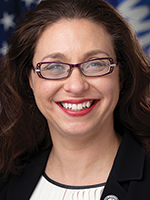
Photo of Rachael Cabral-Guevara
R Wisconsin Senate · District 19 On the 2026 ballot

Sen. Rachael Cabral-Guevara

Compare
Total votes
411
all sessions
Attendance
100%
of floor votes
Near the chamber average
With party
99%
of cast votes
Near the chamber average
Bipartisan score
2%
crosses aisle rarely
Near the chamber average
Sponsored
733
bills & resolutions
Near the chamber average
Committees
5
assignments
733 bills and resolutions

Sponsored bills

Total
733
Primary
733
Co-sponsor
0
This page
733
matching current filters
Primary SB 898
Signed into law · Wisconsin Senate · Lead sponsor
Relating to: the membership of the Pharmacy Examining Board.

Maddy summarySB 898 adds two registered pharmacy technicians to the Pharmacy Examining Board, which oversees pharmacy licensing in the state. The bill creates a new provision (15.405(9)(b)) requiring two members to be registered pharmacy technicians under Chapter 450, alongside existing members including five licensed pharmacists and two public members. This changes the board’s composition to include direct representation from pharmacy technicians, with initial appointments having staggered terms ending in 2028 and 2030. The bill does not alter pharmacy practice rules but adjusts board membership requirements.

Signed into law Apr 6, 2026 0 co-sponsors
Primary SB 128
Failed · Wisconsin Senate · Lead sponsor
Relating to: programs and requirements to address PFAS.

Maddy summarySB 128 establishes a Municipal PFAS Grant Program to help communities test for and address PFAS ("forever chemicals") in drinking water systems. It allows water utilities to use service funds to cover up to half the cost of source reduction measures (like filtration) if cheaper than endpoint treatment, and creates an exception for utilities acting quickly on unexpected PFAS contamination (without penalties if they notify regulators within 30 days and costs stay under $2 million). The bill prioritizes projects addressing serious health risks and extends grant eligibility to disadvantaged communities affected by water contamination, regardless of their existing service area status. It also creates a referral system connecting PFAS contamination claims to the existing Innocent Landowner Grant Program.

Failed Apr 6, 2026 0 co-sponsors
Primary SB 127
Failed · Wisconsin Senate · Lead sponsor
Relating to: exempting certain persons from PFAS enforcement actions under the spills law. (FE)

Maddy summarySB 127 exempts specific entities from PFAS-related enforcement actions under Wisconsin's spills law, provided they allow the state to clean up contaminated land at no cost to them. It directly affects landowners who spread permitted biosolids/wastewater containing PFAS, fire departments using PFAS in emergencies, airports, municipalities, solid waste facilities, and property owners not responsible for the contamination. The key provision requires these entities to grant permission for state-led remediation, removing liability under certain enforcement sections of the spills law. This applies to PFAS chemicals commonly found in firefighting foam and industrial products. The bill does not change PFAS contamination standards but alters enforcement responsibilities for qualifying parties.

Failed Apr 6, 2026 0 co-sponsors
Primary SB 501
Signed into law · Wisconsin Senate · Lead sponsor
Relating to: creating a veterinary loan repayment grant program administered by the Higher Educational Aids Board and exempting from taxation amounts received from such a grant program.

Maddy summarySB 501 creates a state program to help veterinarians repay student loans by providing annual grants of up to $25,000 (max $100,000 total) to those working full-time in rural counties. To qualify, veterinarians must have at least $25,000 in veterinary education debt, work in a rural county for one year, and provide at least 25% of their care to farm animals (defined as animals raised for food or fiber). The program, administered by the Higher Educational Aids Board, is available to recent graduates (within 7 years) or final-year veterinary students. Amounts received through the grant are exempt from state income tax.

Signed into law Apr 6, 2026 0 co-sponsors
Primary SB 367
Signed into law · Wisconsin Senate · Lead sponsor
Relating to: virtual credit card payments in health insurance policies.

Maddy summarySB 367 requires health insurance companies to notify healthcare providers if an additional fee may be charged for using virtual credit card payments. This directly affects insurers who must disclose such fees to providers accepting this payment method. The bill amends policy language to mandate this clear notification about potential extra costs. It does not change insurance coverage or payment amounts, only the disclosure requirement for virtual credit card transactions. The bill passed on November 18, 2025, after being amended to include this notification provision.

Signed into law Apr 6, 2026 0 co-sponsors
Primary SB 485
Signed into law · Wisconsin Senate · Lead sponsor
Relating to: video monitoring or recording in residential care centers for children and youth, group homes, and shelter care facilities.

Maddy summarySB 485 allows residential care centers for children and youth, group homes, and shelter care facilities to use video surveillance in common areas, entrances, and exits without a child’s consent. Facilities must inform children and their parents/guardians about the monitoring and adopt written safety policies that may include video. The law prohibits using video as a substitute for one-on-one supervision of children at high risk for self-harm and requires all video data to remain confidential, with limited exceptions for department review. This directly affects staff and children in these facilities by standardizing monitoring practices while maintaining privacy protections.

Signed into law Apr 6, 2026 0 co-sponsors
Primary SB 748
Signed into law · Wisconsin Senate · Lead sponsor
Relating to: sales tax exemption certificates for the sale of precious metal bullion. (FE)

Maddy summarySB 748 removes the requirement for sellers to obtain exemption certificates from buyers when selling precious metal bullion. This change directly affects retailers selling bullion and simplifies the sales process by eliminating an administrative step for transactions already exempt from sales tax under existing law. The bill amends tax statutes to clarify that no certificate is needed for these specific exempt sales, streamlining compliance without altering the tax status of bullion purchases.

Signed into law Mar 27, 2026 0 co-sponsors
Primary SB 576
Signed into law · Wisconsin Senate · Lead sponsor
Relating to: a property tax exemption for prefabricated recreational structures. (FE)

Maddy summarySB 576 creates a property tax exemption for specific prefabricated recreational structures used in licensed campgrounds. It defines these structures as prefabricated units designed to be towed, used primarily for temporary living (like camping or seasonal stays), and located on land not owned by the structure owner. The bill requires the state to reimburse municipalities starting in 2027 for property taxes collected on these structures for 2025 assessments, based on reports from local governments. This directly affects campground owners and renters of these temporary recreational structures, shifting tax responsibility from property owners to the state. The exemption applies to structures meeting the new definition in Section 70.11(49), excluding permanent mobile homes or other taxable property.

Signed into law Mar 27, 2026 0 co-sponsors
Primary SB 529
Signed into law · Wisconsin Senate · Lead sponsor
Relating to: repeal of obsolete tax credits and tax provisions. (FE)

Maddy summarySB 529 repeals outdated tax provisions and updates specific tax rules in Wisconsin's statutes. It removes obsolete tax credits (like those in sections 71.03(7)(d) and 77.54(57d)(a)1) and modifies college savings account deductions, limiting annual tax deductions for contributions to $5,000 per beneficiary (adjusted annually for inflation). The bill also clarifies that income from disaster relief work performed by out-of-state businesses does not increase a business's taxable income in Wisconsin. These changes primarily affect taxpayers claiming college savings deductions or involved in disaster relief work with out-of-state businesses.

Signed into law Mar 27, 2026 0 co-sponsors
Primary SB 1093
Failed · Wisconsin Senate · Lead sponsor
Relating to: commencement of the fall semester at University of Wisconsin System institutions.

Maddy summaryThis bill would require the University of Wisconsin System to delay the start of fall semester classes until after September 1, with exceptions for medical school, graduate health science, and fourth-year veterinary medicine students. The change is made by amending state statutes to set a specific date for when regular classes can begin. It directly affects students, faculty, and administrators at UW System institutions by establishing a uniform start date for the fall term. The legislation does not address funding, staffing, or curriculum changes, focusing solely on the timing of the academic calendar.

Failed Mar 23, 2026 0 co-sponsors
Showing 21 to 30 of 733 bills
Previous 1 … 2 3 4 … 74 Next