

Maddy summaryThis bill proposes to officially designate the monarch butterfly as the state butterfly of Wisconsin. It achieves this by adding a new section to the state statutes that explicitly names the monarch butterfly and amending the Wisconsin Blue Book to include information about state butterflies alongside other official symbols. The legislation does not create new regulations or funding but serves as a symbolic recognition of the insect's status within the state.
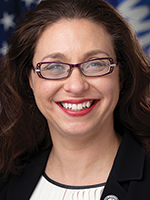
Sen. Rachael Cabral-Guevara
Sponsored bills
Maddy summaryThis bill establishes a grant program to help Wisconsin municipalities and community water systems address perfluoroalkyl and polyfluoroalkyl substances, commonly known as PFAS. It allows public utilities to use up to half of their water or sewer service funds to pay for pretreatment or source reduction measures if these costs are lower than upgrading treatment facilities at the endpoint. Additionally, the bill creates a specific grant fund for testing PFAS levels in municipal water and wastewater systems, ensuring that funding is available to every eligible applicant without requiring them to provide matching funds. The legislation also includes provisions to prioritize projects that address the most serious health risks and assist small or disadvantaged applicants when ranking projects for assistance.
Maddy summaryThis bill primarily updates Wisconsin statutes to expand the scope of medical professionals who can perform specific administrative and clinical tasks. It allows licensed chiropractors, podiatrists, and physician assistants to review applications for permits related to physical and visual disabilities, tasks previously reserved for physicians. Additionally, the legislation grants advanced practice registered nurses the authority to issue prescriptions under existing laws and clarifies the definition of a health care provider to include these expanded roles. The bill also modifies procedures for emergency rule-making, extending time limits and creating exemptions for certain rule changes.
Maddy summaryThis bill requires the Wisconsin Elections Commission to verify the U.S. citizenship status of individuals on the voter registration list by accessing data from the Department of Transportation. Under the new rules, the commission must check this information immediately whenever someone registers to vote or updates their registration details. Additionally, the bill mandates that driver's licenses and identification cards issued to non-citizens must display a clear statement such as "Not valid for voting purposes" to indicate they cannot be used for voter identification. These changes directly affect the state's election administration processes and the design of identification documents issued to residents.
Maddy summaryThis bill would require local governments in Wisconsin, such as cities, towns, and counties, to appoint a specific staff member to handle communications with the federal government about refugee resettlement. Under the proposed rules, local officials must report any initial contact with federal agencies regarding refugee placement within seven business days and then notify neighboring local units within 100 miles within 10 days. Following these notifications, the local governing body would be required to hold a public meeting to discuss the contact and officially designate an employee to serve as the point of contact for future federal consultations on refugee assistance.
Maddy summaryThis bill would require owners of hybrid and nonhybrid electric vehicles in Wisconsin to display specific decals on their license plates to indicate the vehicle type. The legislation allows the Department of Transportation to issue new registration plates with "EV" markings instead, which would exempt those vehicles from the decal requirement. Although the bill passed the legislature, it was vetoed by the Governor and did not become law.
Maddy summaryThis bill, known as SB 549, would have allowed representatives of federally chartered youth organizations to share information with students on public school property during the school day. The legislation proposed that these groups request permission from school principals to speak about their educational and civic purposes, with principals required to schedule at least one meeting time for each request. It would have created a new statute defining eligible organizations and outlining the process for providing oral or written information to pupils. Although the bill passed the legislature, it was vetoed by the Governor and did not become law.
Maddy summaryThis bill establishes a commission to manage Wisconsin's social work licensure compact, which allows licensed social workers to practice across multiple participating states. It creates a new section in state statutes to define the commission's structure and membership, ensuring representation from various professional groups and consumer advocates. The legislation also clarifies the definition of "licensed treatment professional" to include specific mental health practitioners while excluding those with suspended or restricted licenses. Although the bill passed the legislature, it was vetoed by the Governor and did not become law.
Maddy summaryThis Wisconsin bill prohibits hospitals and transplant centers from discriminating against patients or donors based on their vaccination status. It specifically bans removing individuals from organ transplant waiting lists solely because they have not received certain vaccines, while allowing lower priority placement only if a person's disability directly relates to their medical need for the organ. The legislation also prevents insurance companies from denying coverage for organ-related procedures based on vaccination status. Although the bill passed the legislature, the Governor vetoed it, and the state legislature subsequently failed to override that veto.