

Maddy summaryThis bill primarily updates Wisconsin statutes to expand the scope of medical professionals who can perform specific administrative and clinical tasks. It allows licensed chiropractors, podiatrists, and physician assistants to review applications for permits related to physical and visual disabilities, tasks previously reserved for physicians. Additionally, the legislation grants advanced practice registered nurses the authority to issue prescriptions under existing laws and clarifies the definition of a health care provider to include these expanded roles. The bill also modifies procedures for emergency rule-making, extending time limits and creating exemptions for certain rule changes.
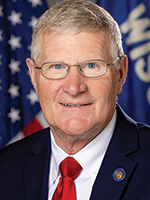
Sen. Howard Marklein
Sponsored bills
Maddy summaryThis bill establishes a funding program to help local governments redevelop former University of Wisconsin branch campuses that are no longer used for education. It provides grants to cities, villages, towns, and counties to cover costs such as planning, demolition, and site improvements, provided the funds are used to boost local economic development, create jobs, or support housing and infrastructure. To qualify, a local government must secure letters of community support and contribute at least 20 percent of the project cost from its own funds, with no single grant exceeding $2 million. The legislation also mandates a specific order for distributing funds, requiring Richland County to receive a grant first, followed by Fond du Lac, Washington, and Marinette counties, before any other locations are considered.
Maddy summaryThis bill would have allowed owners of all-terrain and utility terrain vehicles in Wisconsin to install vertical light bars, known as whip lights, that display any color or pattern. The legislation specifically permitted these lights to show any color in a fixed display or sequence, but it prohibited them from flashing red or blue. If passed, the law would have created a new legal category for these devices while maintaining a ban on red and blue flashing lights to prevent confusion with emergency vehicles. Although the bill was enacted by the legislature, it was ultimately vetoed by the Governor and did not become law.
Maddy summaryThis Wisconsin bill prohibits payment card networks and issuers from requiring firearms retailers to use a specific merchant category code that distinguishes them from general merchandise or sporting goods stores. It also bans state and local governments from intentionally creating or maintaining lists of individuals who own firearms, with limited exceptions for criminal investigations or court orders. The legislation establishes penalties for violations, including the authority for the attorney general to investigate and order non-compliant entities to stop using prohibited codes within 30 days. Although the bill passed the legislature, it was vetoed by the Governor and did not become law.
Maddy summaryThis bill would require owners of hybrid and nonhybrid electric vehicles in Wisconsin to display specific decals on their license plates to indicate the vehicle type. The legislation allows the Department of Transportation to issue new registration plates with "EV" markings instead, which would exempt those vehicles from the decal requirement. Although the bill passed the legislature, it was vetoed by the Governor and did not become law.
Maddy summaryThis bill would have allowed Wisconsin school boards to hire school district administrators without requiring them to hold a license from the Department of Public Instruction. The legislation proposed creating a new statute that explicitly permits these hires despite existing rules mandating licensure for such roles. By removing the mandatory licensing requirement, the bill aimed to give school boards more flexibility in selecting administrative staff. Although the bill passed the legislature, it was vetoed by the Governor and did not become law.
Maddy summaryThis bill establishes a commission to manage Wisconsin's social work licensure compact, which allows licensed social workers to practice across multiple participating states. It creates a new section in state statutes to define the commission's structure and membership, ensuring representation from various professional groups and consumer advocates. The legislation also clarifies the definition of "licensed treatment professional" to include specific mental health practitioners while excluding those with suspended or restricted licenses. Although the bill passed the legislature, it was vetoed by the Governor and did not become law.
Maddy summaryThis Wisconsin bill, SB 21, establishes specific monetary limits on the personal property that prisoners and residents of state correctional facilities are allowed to own. Under the proposed rules, inmates could possess musical instruments or electronic items up to a value of $350, while other non-medical items would be capped at $150 each. The legislation also sets the legal framework for these allowances by creating a new section in the state statutes. Although the bill passed the legislature, it was vetoed by the Governor and ultimately failed to become law.
Maddy summarySB 836 proposed new rules for juvenile offenders in Wisconsin to set specific conditions on their behavior between a plea hearing and a subsequent fact-finding or disposition hearing. The bill aimed to give judges the authority to establish these behavioral requirements during that interim period to manage court resources and ensure compliance. However, the legislation was vetoed by the Governor and ultimately failed to become law, meaning no new conditions were added to the existing juvenile justice process.
Maddy summaryThis bill sought to clarify Wisconsin laws regarding passengers on all-terrain vehicles (ATVs) and utility terrain vehicles (UTVs). It proposed updating statutes to explicitly prohibit riding on vehicles not designed for passengers, while allowing one passenger in a second seated position on certain models. The legislation also included an exception for vehicles with a single passenger in a secondary seat. Ultimately, the bill was vetoed by the Governor and did not become law.