

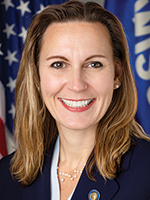
Photo of Melissa Ratcliff
D Wisconsin Senate · District 16

Sen. Melissa Ratcliff

Compare
Total votes
372
all sessions
Attendance
99%
5 missed
Near the chamber average
With party
97%
of cast votes
Near the chamber average
Bipartisan score
2%
crosses aisle rarely
Near the chamber average
Sponsored
888
bills & resolutions
Near the chamber average
Committees
7
assignments
888 bills and resolutions

Sponsored bills

Total
888
Primary
888
Co-sponsor
0
This page
888
matching current filters
Primary SB 1106
Failed · Wisconsin Senate · Lead sponsor
Relating to: expanding eligibility for the Medical Assistance program. (FE)

Maddy summaryThis bill expands eligibility for the Medical Assistance program to include parents or caretakers of dependent children and adults under 65 whose family income falls between 101 and 133 percent of the poverty line. The legislation requires the state insurance commissioner to seek federal approval for these new eligibility categories, and the program changes would only take effect if the federal government grants permission. If federal approval is not obtained, individuals meeting these new criteria would not qualify for benefits. The expanded eligibility provisions are scheduled to take effect on January 1, 2029, if approved.

Failed Mar 23, 2026 0 co-sponsors
Primary SB 1086
Failed · Wisconsin Senate · Lead sponsor
Relating to: restoring private individual authority to bring a qui tam claim against a person for making a false claim for medical assistance, actions by the attorney general against a person for making a false claim for medical assistance, and providing a penalty. (FE)

Maddy summaryThis bill restores the ability for private individuals to file qui tam lawsuits against those who knowingly submit false claims for medical assistance, such as Medicaid fraud. It establishes penalties requiring violators to pay three times the damages caused to the state, while also allowing for reduced penalties if the violator cooperates with the attorney general and reports the fraud promptly. The law outlines procedures for filing complaints, including a 60-day sealing period and the attorney general's option to intervene or take over the case, while also granting the state authority to settle cases with approval from the governor.

Failed Mar 23, 2026 0 co-sponsors
Primary SB 1127
Failed · Wisconsin Senate · Lead sponsor
Relating to: fertility treatment rights, reimbursement of fertility treatments under the Medical Assistance program, and requiring insurance coverage for fertility treatments. (FE)

Maddy summaryThis bill establishes legal rights for individuals to access fertility treatments, including egg and sperm preservation, artificial insemination, in vitro fertilization, and related medications, while also protecting health care providers and insurance companies from interference when delivering these services. It creates a reimbursement mechanism for fertility treatments under the state's Medical Assistance program, though payment is contingent on federal approval or the absence of required federal waivers. The legislation defines fertility treatment broadly to include genetic testing, gamete donation, and other services aligned with American Society for Reproductive Medicine guidelines, and grants individuals rights to make decisions about their reproductive genetic material. Additionally, the bill provides legal recourse through civil actions for individuals, providers, or manufacturers whose rights are violated, with courts authorized to award equitable relief and litigation costs.

Failed Mar 23, 2026 0 co-sponsors
Primary SB 1091
Failed · Wisconsin Senate · Lead sponsor
Relating to: a premium assistance individual income tax credit and making an appropriation. (FE)

Maddy summaryThis bill establishes a state premium assistance tax credit for Wisconsin residents who pay monthly premiums for qualified health plans during the 2026 tax year. The credit allows eligible individuals to claim a refund equal to the federal premium assistance amount they would have qualified for between 2021 and 2025, but only if they are not already eligible for similar federal tax credits. The legislation applies only to full-year residents who file claims within the standard tax filing deadline and requires state funding to cover any credit amounts exceeding the taxpayer's tax liability.

Failed Mar 23, 2026 0 co-sponsors
Primary SB 1119
Failed · Wisconsin Senate · Lead sponsor
Relating to: protection of pregnant individuals’ information, authorization for disclosure, data breach, and providing a penalty.

Maddy summaryThis bill establishes privacy protections for health information collected at unregulated pregnancy services centers, requiring written authorization from individuals before their nonpublic personal health information can be shared. It defines specific types of health information and pregnancy-related services, and outlines requirements for authorization forms including details about the information to be disclosed, who it will be shared with, and the right to revoke consent at any time. The legislation also mandates that these centers notify affected individuals if there is a data breach and prohibits discrimination against people who do not grant authorization for information disclosure. Any violations of these privacy requirements would be treated as unfair and deceptive trade practices under existing state law.

Failed Mar 23, 2026 0 co-sponsors
Primary SB 1115
Failed · Wisconsin Senate · Lead sponsor
Relating to: minimum nurse staffing ratios in hospitals, registered nurses’ right to refuse a work assignment, prohibiting mandatory overtime for registered nurses, and providing a penalty.

Maddy summaryThis bill establishes minimum nurse-to-patient staffing ratios for various hospital units, such as limiting registered nurses to no more than four patients in emergency units or two patients in intensive care units. It requires hospitals to create and publicly post annual staffing plans that include input from nursing staff, maintain detailed records of actual staffing levels, and establish committees with a majority of frontline nurses to oversee staffing decisions. The legislation also grants registered nurses the right to refuse work assignments that violate these ratios and prohibits mandatory overtime for nurses. Hospitals that fail to comply with staffing requirements or submit plans by the deadline face financial penalties, including a $25,000 forfeiture for missing deadlines and daily fines for non-compliance with corrective action plans.

Failed Mar 23, 2026 0 co-sponsors
Primary SB 1105
Failed · Wisconsin Senate · Lead sponsor
Relating to: dental services for pregnant persons under the Medical Assistance program. (FE)

Maddy summaryThis bill expands dental care access for pregnant individuals enrolled in the Medical Assistance program by allowing licensed dental therapists to provide basic dental services. It creates a new legal definition for dental therapists and amends existing statutes to include them alongside dentists for these specific services. The legislation also establishes a requirement that pregnant recipients referred for dental care must be seen within 30 days of their referral, ensuring timely access to care. These changes aim to improve dental health outcomes for pregnant persons by increasing provider options and reducing wait times for appointments.

Failed Mar 23, 2026 0 co-sponsors
Primary SB 1124
Failed · Wisconsin Senate · Lead sponsor
Relating to: firearm transfers and possession that are prohibited under federal law. (FE)

Maddy summaryThis bill modifies Wisconsin statutes to update definitions related to domestic abuse and firearm transfers prohibited under federal law. It reorganizes existing legal sections and expands the definition of "domestic abuse" to include dating relationships and individuals who have cohabited with the actor. The legislation also clarifies who qualifies as a "relative" or "similarly situated" person for the purposes of domestic abuse and firearm transfer restrictions. By updating these definitions, the bill ensures that firearm prohibitions apply consistently to a broader range of relationships covered under federal law.

Failed Mar 23, 2026 0 co-sponsors
Primary SB 1126
Failed · Wisconsin Senate · Lead sponsor
Relating to: a state minimum wage, allowing the enactment of local minimum wage ordinances, and granting rule-making authority. (FE)

Maddy summaryThis bill establishes a state minimum wage of $15 per hour while allowing local governments to enact their own minimum wage ordinances. It creates a system where the state department of labor can set lower wages for specific groups like agricultural workers, camp counselors, and students, and can exempt certain casual employment arrangements. The minimum wage will automatically adjust annually based on changes in the consumer price index, unless inflation shows no increase. The legislation also prohibits the state from setting different minimum wages for men and women.

Failed Mar 23, 2026 0 co-sponsors
Primary SB 1151
Failed · Wisconsin Senate · Lead sponsor
Relating to: general equalization aids, the reimbursement rate for special education costs, excluding special education reimbursement from certain per pupil payments, and making an appropriation. (FE)

Maddy summaryThis bill proposes changes to how Wisconsin calculates and distributes state funding for special education and related school programs. It would adjust the reimbursement rate for special education costs to distribute the full appropriated amount, capping reimbursement at 60 percent of eligible costs, and modifies how certain special education funds are excluded from per-pupil payment calculations. The legislation also increases the general school aid appropriation by approximately $446 million for the 2026-27 fiscal year. These changes would affect the Wisconsin Department of Public Instruction and school districts receiving state education funding. The bill was introduced in March 2026 but failed to pass the Senate.

Failed Mar 23, 2026 0 co-sponsors
Showing 51 to 60 of 888 bills
Previous 1 … 5 6 7 … 89 Next