

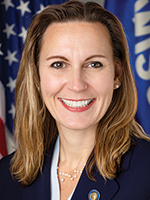
Photo of Melissa Ratcliff
D Wisconsin Senate · District 16

Sen. Melissa Ratcliff

Compare
Total votes
372
all sessions
Attendance
91%
39 missed
Near the chamber average
With party
97%
of cast votes
Near the chamber average
Bipartisan score
2%
crosses aisle rarely
Near the chamber average
Sponsored
888
bills & resolutions
Near the chamber average
Committees
7
assignments
888 bills and resolutions

Sponsored bills

Total
888
Primary
888
Co-sponsor
0
This page
888
matching current filters
Primary SJR 21
Signed into law · Wisconsin Senate · Lead sponsor
Relating to: honoring the life and public service of Senator Timothy Francis Cullen.

Maddy summarySJR 21 is a ceremonial resolution honoring the late Senator Timothy Francis Cullen, a longtime Wisconsin State Senator and public servant who passed away in December 2024. It commemorates his career, including service as Senate Majority Leader (1982-1986), advocacy for workers' rights and consumer protections, and efforts to promote bipartisan governance and fair redistricting. The resolution has no policy impact - it solely serves to recognize Cullen’s life and public service through formal acknowledgment by the legislature. It was formally passed by both chambers and deposited with the Secretary of State on November 25, 2025.

Signed into law May 26, 2026 0 co-sponsors
Primary SB 1148
Failed · Wisconsin Senate · Lead sponsor
Relating to: authorizing the creation of an emergency services district, authorizing an emergency services district to levy a property tax, and authorizing an emergency services district to impose special charges and issue debt. (FE)

Maddy summaryThis bill authorizes the creation of emergency services districts and grants them the authority to levy property taxes, impose special charges, and issue debt to fund local emergency response services. It directly affects local governments and residents within areas where these districts are established by modifying existing statutes related to district formation and financial powers. The legislation includes provisions for how emergency services district board members are elected, specifying ballot arrangements and candidate limits during primary elections. Additionally, it clarifies which entities are responsible for paying election-related costs, such as ballots and voting materials, when emergency services districts hold elections.

Failed May 13, 2026 0 co-sponsors
Primary SB 176
Vetoed · Wisconsin Senate · Lead sponsor
Relating to: an income and franchise tax exemption for broadband expansion grants and for federal high-cost program funding for broadband expansion. (FE)

Maddy summarySB 176 creates tax exemptions for income received from broadband expansion grants and federal high-cost program funding. It exempts from state income and franchise taxes funds provided by the state, local governments, tribal governments, or the federal government for broadband expansion projects. This directly affects businesses, internet service providers, and organizations receiving these specific grants or federal funding. The exemption applies to both state broadband grants and federal high-cost program funds (under 47 USC 254) used for expanding broadband access in the state, effective for tax years beginning after December 31, 2024.

Vetoed May 13, 2026 0 co-sponsors
Primary SB 1085
Failed · Wisconsin Senate · Lead sponsor
Relating to: longevity bonuses for teachers in school districts. (FE)

Maddy summaryThis bill establishes a teacher longevity bonus program for Wisconsin school districts, providing a $7,000 payment to teachers who have been continuously licensed and employed by the same school board for five consecutive school years. The program begins in the 2031-32 school year and allows teachers to receive additional bonuses for each subsequent five-year period of continuous service, provided those years were not already used to qualify for a prior bonus. School boards must annually report eligible teacher names to the Department of Public Instruction, and the funding comes from a new state appropriation. The legislation amends existing statutes to create this new bonus structure and clarifies which school district provisions apply to first-class city school districts.

Failed Apr 24, 2026 0 co-sponsors
Primary SB 1184
Failed · Wisconsin Senate · Lead sponsor
Relating to: creating a journalism fellowship program in the University of Wisconsin System and making an appropriation. (FE)

Maddy summaryThis bill establishes a journalism fellowship program within the University of Wisconsin System to place journalism graduates in local newsrooms. The program would create 25 one-year fellowships, each providing a $40,000 salary to individuals who hold degrees in journalism, media, communications, or related fields. A selection committee composed of university faculty and industry professionals would review applications and match fellows with participating newsrooms based on how the placements would improve access to quality local journalism and support media literacy. The legislation appropriates $1 million for the 2026-27 fiscal year to fund these positions and requires applicants to demonstrate how their participation will meet state residents' civic information needs.

Failed Apr 24, 2026 0 co-sponsors
Primary SB 1183
Failed · Wisconsin Senate · Lead sponsor
Relating to: creating a Civic Information Consortium Board and a grant program administered by a nonprofit corporation to support local journalism and media projects and making an appropriation. (FE)

Maddy summaryThis bill creates a new Civic Information Consortium Board attached to the University of Wisconsin System to administer a grant program supporting local journalism and media projects across the state. The board would include representatives from the university system, local media organizations covering print, online, radio, and television, and two public members, with initial staggered terms to ensure continuity. The program would provide $20 million in 2025-26 and $1 million in 2026-27 to a nonprofit corporation that awards grants for projects addressing community information needs, media literacy, and civic engagement, with at least 30 percent of funding directed to rural areas. The bill includes safeguards requiring grant recipients to remain independent from state influence and mandates annual reporting on how funds were used and their impact on public information access.

Failed Apr 24, 2026 0 co-sponsors
Primary SB 1176
Failed · Wisconsin Senate · Lead sponsor
Relating to: a University of Wisconsin System nonresident tuition exemption. (FE)

Maddy summaryThis bill proposes to create a tuition exemption for certain nonresident students at University of Wisconsin System institutions. It would allow individuals with approved deferred action status under the federal Deferred Action for Childhood Arrivals program to qualify for in-state tuition rates if they have lived in Wisconsin for 12 months before enrolling. The exemption would apply to students registering in semesters following the bill's effective date. This legislation directly affects eligible nonresident students and the state's higher education funding structure.

Failed Apr 24, 2026 0 co-sponsors
Primary SB 949
Failed · Wisconsin Senate · Lead sponsor
Relating to: going armed at a polling place and providing a penalty.

Maddy summarySB 949 prohibits carrying firearms within 100 feet of polling places during voting hours (one hour before opening to one hour after closing), defining this as a Class A misdemeanor. It directly affects voters, election workers, and anyone near polling locations during elections. Key exemptions include law enforcement officers, private property owners on their own land, and security personnel acting in their professional duties. The bill creates new criminal penalties for violations, specifically targeting firearm presence at voting sites to enhance polling place safety. This is a policy change focused on election security, not procedural or commemorative.

Failed Apr 21, 2026 0 co-sponsors
Primary SB 569
Failed · Wisconsin Senate · Lead sponsor
Relating to: implementation of an individualized education program or services plan under the Special Needs Scholarship Program. (FE)

Maddy summarySB 569 requires private schools participating in the Special Needs Scholarship Program to implement each student's most recent individualized education program (IEP) or services plan, adjusted through agreement between the school and the student's parent. It also mandates that these schools share all IEP-related records with the student's public school district within 5 days of a formal request. The law directly affects private schools in the scholarship program, parents of students with disabilities, and public school districts seeking IEP documentation. These requirements will take effect for the 2026-27 school year. The bill focuses on ensuring consistent educational planning and record-sharing between private and public schools for scholarship program participants.

Failed Apr 21, 2026 0 co-sponsors
Primary SB 1172
Failed · Wisconsin Senate · Lead sponsor
Relating to: human growth and development instruction. (FE)

Maddy summaryThis bill requires Wisconsin school boards to provide age-appropriate, medically accurate instruction on human growth and development in grades K-12, covering topics like puberty, reproductive anatomy, gender identity, and healthy relationships. It mandates that schools teach abstinence as the most reliable way to prevent pregnancy and STIs while also including information on contraceptives, consent, and digital safety. The legislation defines key terms such as "age-appropriate" and "medically accurate" to ensure content is scientifically based and recognized by leading health organizations. School boards must decide whether to separate students by gender during instruction and include specific subjects like enthusiastic consent and parental communication. The bill also connects marriage and parenting to parental responsibility while addressing bullying and stereotyping prevention.

Failed Apr 15, 2026 0 co-sponsors
Showing 11 to 20 of 888 bills