

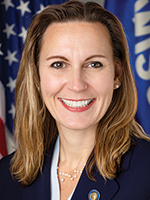
Photo of Melissa Ratcliff
D Wisconsin Senate · District 16

Sen. Melissa Ratcliff

Compare
Total votes
372
all sessions
Attendance
99%
5 missed
Near the chamber average
With party
97%
of cast votes
Near the chamber average
Bipartisan score
2%
crosses aisle rarely
Near the chamber average
Sponsored
888
bills & resolutions
Near the chamber average
Committees
7
assignments
888 bills and resolutions

Sponsored bills

Total
888
Primary
888
Co-sponsor
0
This page
888
matching current filters
Primary SJR 130
Passed · Wisconsin Senate · Lead sponsor
Relating to: celebrating the Wisconsin athletes competing in the 2026 Olympic Winter Games and Paralympic Winter Games in Italy.

Maddy summarySJR 130 is a ceremonial joint resolution celebrating Wisconsin athletes competing in the 2026 Winter Olympics and Paralympics in Italy. It formally recognizes the state's athletes, including those in cross-country skiing, biathlon, wheelchair curling, sled hockey, and other sports, by urging the Wisconsin Legislature to honor their participation. The resolution has no binding effect or policy changes; it serves solely as a symbolic gesture of support. It directly affects Wisconsin athletes by acknowledging their representation of the state on an international stage.

Passed Mar 23, 2026 0 co-sponsors
Primary SB 958
Failed · Wisconsin Senate · Lead sponsor
Relating to: creating the water fund for our future, granting rule-making authority, and making an appropriation. (FE)

Maddy summarySB 958 creates a dedicated "Water Fund for Our Future" with $250 million transferred from the general fund for state water infrastructure and emergency response. It establishes a rapid response account within the fund to cover costs for natural disasters and public health emergencies, including remediation, relocation, and assistance for affected individuals. A joint legislative committee oversees fund spending, ensuring money is only used for clean water activities and requiring written recommendations for funding requests. The fund also includes provisions for transferring unspent balances to the budget stabilization fund during fiscal shortages.

Failed Mar 23, 2026 0 co-sponsors
Primary SB 1052
Failed · Wisconsin Senate · Lead sponsor
Relating to: paid preparation time for teachers. (FE)

Maddy summarySB 1052 requires Wisconsin school districts to include at least 45 minutes of daily self-directed preparation time in teachers' schedules, or one full class period if longer. This applies to teachers in 1st class city school districts under collective bargaining agreements or employment contracts. The requirement takes effect when current contracts expire or are renewed, whichever comes first. The bill establishes this as a new statutory standard (120.12(30)) without specifying funding or enforcement details.

Failed Mar 23, 2026 0 co-sponsors
Primary SJR 136
Failed · Wisconsin Senate · Lead sponsor
Relating to: recognizing February as Teen Dating Violence Awareness and Prevention Month.

Maddy summaryThis resolution (SJR 136) is a symbolic recognition by the Wisconsin Legislature that February is designated as Teen Dating Violence Awareness and Prevention Month. It does not create new laws or directly affect specific groups, but it aims to raise public awareness about teen dating violence - highlighting statistics like one in five teens experiencing abuse and two in three victims not reporting it - by encouraging community education and support for prevention efforts.

Failed Mar 23, 2026 0 co-sponsors
Primary SB 942
Failed · Wisconsin Senate · Lead sponsor
Relating to: changes to the low-income housing tax credit. (FE)

Maddy summarySB 942 amends state tax statutes to clarify how the low-income housing tax credit is claimed by entities and their members. It specifies that partnerships, limited liability companies, and tax-option corporations cannot claim the credit directly, but their individual partners, members, or shareholders may claim it based on the entity’s eligible costs. The bill requires entities to calculate and distribute credit amounts to members and mandates that individuals claiming credit under written agreements must submit those agreements with tax returns. It also adds a specific provision allowing insurers (as shareholders) to claim the credit based on costs incurred by the entity they are part of. This bill directly affects housing developers, investors, and insurers involved in low-income housing projects financed with tax-exempt bonds.

Failed Mar 23, 2026 0 co-sponsors
Primary SB 1068
Failed · Wisconsin Senate · Lead sponsor
Relating to: notice to employees of full-service pharmacies and major grocery stores of permanent business closings and providing a penalty. (FE)

Maddy summarySB 1068 requires full-service pharmacies and major grocery stores (defined as stores over 15,000 sq ft selling fresh produce, meats, and dairy) to provide employees with 60 days' written notice before a permanent closure (over 90 days, excluding health emergencies or renovations). Employers must notify affected employees, union representatives, local officials, and county boards, including contact information for local workforce resources. If notice is not given on time, employees can recover up to 60 days' pay and lost benefits through the state department, with enforcement handled by the department of justice if needed. The bill directly affects workers at these specific retail businesses and aims to provide advance notice and support during job loss.

Failed Mar 23, 2026 0 co-sponsors
Primary SB 1026
Failed · Wisconsin Senate · Lead sponsor
Relating to: required instruction in African American history in the elementary and high school grades and making an appropriation. (FE)

Maddy summarySB 1026 requires all Wisconsin public and private schools, including charter schools, to incorporate African American history into their social studies curriculum for all grades kindergarten through 12. The bill mandates a state-developed model curriculum covering African American contributions, experiences, and migration history within broader U.S. and state contexts, with grade-specific learning standards. It funds three education consultants to assist schools with implementation and adds a requirement for teacher licensure to include African American history study. The law applies to all schools starting with the school year following its effective date.

Failed Mar 23, 2026 0 co-sponsors
Primary SB 1070
Failed · Wisconsin Senate · Lead sponsor
Relating to: public financing of campaigns for the offices of justice of the supreme court, court of appeals judge, and circuit court judge, and making an appropriation. (FE)

Maddy summarySB 1070 creates a public financing system for judicial candidates running for supreme court justice, court of appeals judge, or circuit court judge. To qualify, candidates must collect 1,000 separate contributions of $5-$100 each (totaling $5,000-$50,000) during a defined period, with written receipts required. The bill limits anonymous contributions to $5 for candidates using public funds and requires unspent campaign funds to transfer to replacement candidates if a vacancy occurs. It establishes a "Democracy Trust Fund" to administer these public financing benefits and sets strict reporting requirements for contributions. This system aims to reduce reliance on large private donations in judicial elections.

Failed Mar 23, 2026 0 co-sponsors
Primary SB 1013
Failed · Wisconsin Senate · Lead sponsor
Relating to: maintaining a supply of usable opioid antagonist at a public or private school and making an appropriation. (FE)

Maddy summarySB 1013 requires all public and private schools, including charter schools, to maintain an on-site, easily accessible supply of opioid overdose reversal medication. Schools must ensure this supply is available at all times to address potential opioid overdoses on campus. The bill also appropriates $100,000 for fiscal year 2026-27 to fund grants helping schools purchase this medication, effective September 1, 2026.

Failed Mar 23, 2026 0 co-sponsors
Primary SB 1065
Failed · Wisconsin Senate · Lead sponsor
Relating to: requiring carbon monoxide detectors in child care centers and schools, grants for placing carbon monoxide detectors in schools, and making an appropriation. (FE)

Maddy summarySB 1065 requires all public and private elementary and secondary schools, as well as licensed child care centers, to install carbon monoxide detectors in rooms with fuel-burning appliances. Detectors must be battery-powered for older buildings or hardwired with fire alarm monitoring for newer buildings, and must meet safety certification standards. The bill also creates a $75,000 grant program to help schools purchase detectors, with grants up to $3,000 per school, and mandates annual reporting on grant usage. These requirements apply directly to schools and child care centers serving students or children, with the grants specifically targeting compliance costs.

Failed Mar 23, 2026 0 co-sponsors
Showing 111 to 120 of 888 bills
Previous 1 … 11 12 13 … 89 Next