

Maddy summarySB 876 creates a new green jobs training program funded with $1.5 million annually for grants to public or private organizations. These grants support training for workers in clean energy sectors like solar, wind, and renewable resource management, with organizations required to provide matching funds. The bill exempts the program from standard emergency rule procedures, allowing faster implementation, and mandates annual reports tracking participants, job placements, and wage changes. It directly affects workforce development organizations, unemployed/underemployed workers, and employers in emerging green industries. The program is administered by the Department of Workforce Development, with reporting requirements detailing outcomes like job placements and wage increases.
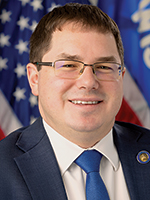
Sen. Mark Spreitzer
Sponsored bills
Maddy summarySB 882 amends Wisconsin sentencing laws to specifically address individuals under 18 convicted of crimes. It requires courts to consider designated mitigating factors and relevant information (such as youth-related circumstances) when determining release eligibility for "youthful offenders" under sections 973.014 and 973.018. The bill creates new procedural requirements for parole commissions, including mandatory consideration of these factors and written reasons for denials with reconsideration timelines. These changes apply to juvenile offenders sentenced under the specified statutes, focusing on release decisions rather than sentencing ranges.
Maddy summarySB 878 creates a new grant program to fund planning for regional biodigesters, which convert organic waste into renewable energy. It allocates $250,000 annually from the environmental fund for planning grants, specifically for establishing these facilities. The Department of Agriculture would administer the grants and develop rules for the program. This bill directly affects entities seeking to develop regional biodigester infrastructure, providing funding for initial planning stages. The legislation focuses on creating a structured process for grant distribution without specifying recipient eligibility.
Maddy summarySB 820 gives the state superintendent of public instruction (or their designee) the authority to issue subpoenas during investigations into revoking professional licenses for incompetency or immoral conduct. The bill creates new statute sections (115.31(2c) and 885.01(6)) allowing the superintendent to compel witness testimony or document production using subpoenas in the same format as those authorized under section 885.02. This directly affects license holders facing potential revocation and streamlines investigations by providing clear subpoena authority. The bill does not change license standards or revocation criteria, only the process for gathering evidence during investigations.
Maddy summarySB 881 increases annual funding for crime victim services by $17.1 million for fiscal years 2025-26 and 2026-27, directed to the Department of Justice. This appropriation supports statewide victim services programs, including counseling, legal advocacy, and emergency assistance for crime victims. The bill also allocates $4.0 million to convert 17 existing FED (funded employee) positions to GPR (general purpose revenue) positions within the Department. These changes directly affect crime victim service providers and the Department of Justice’s capacity to deliver support.
Maddy summarySB 844 creates a $2.5 million biennial grant program to help healthcare facilities recruit and retain providers who conduct forensic exams for sexual assault, domestic abuse, or strangulation cases. It requires facilities to establish new positions or programs for these exams and guarantees reimbursement to providers regardless of whether victims cooperate with law enforcement. The bill modifies reimbursement rules to cover all exam costs (including STI prevention treatments) up to a $3,000 maximum per exam, adjusted annually for inflation. This directly affects healthcare facilities providing these services in counties needing additional exam providers.
Maddy summarySB 824 requires the state Department of Transportation to include specific goals in the long-range statewide transportation plan, affecting statewide transportation planning and implementation. The bill mandates a vision for five key areas: low-carbon public transit, transportation electrification, cost-effective charging infrastructure, equitable clean transportation incentives, and solutions for underserved rural, low-income, and minority communities. It also requires the department to submit a report within six months detailing current efforts, gaps, and future strategies for meeting these requirements. These provisions directly shape how transportation funding and projects are prioritized across the state.
Maddy summarySB 850 updates Wisconsin's rules for "no-sale event venue permits," which allow event spaces to host gatherings where attendees consume alcohol without it being sold (e.g., private parties). The bill permits event renters to bring their own alcohol for guests to consume without charge, and allows caterers with specific licenses to provide alcohol if the renter first purchases it face-to-face at the caterer’s retail location. It also sets clear limits: no more than 36 events per year, with no more than one event per month and each event lasting up to 36 hours. This directly affects property owners applying for these permits, event renters, and caterers holding Class B licenses.
Maddy summarySB 894 creates a new grant program to fund crime victim protective services, directly benefiting crime victims and the agencies serving them. It allocates $2.57 million biennially (starting 2025-26) from the Justice Department budget to provide grants to law enforcement agencies and prosecutors. These grants will cover services like temporary housing for victims of crime. The bill also authorizes one new full-time position at the Justice Department to administer the program.
Maddy summarySB 808 creates a "blue envelope program" to improve communication between law enforcement and individuals with invisible disabilities during traffic stops. It requires the state department to provide free blue envelopes containing vehicle registration/insurance copies, traffic stop safety tips, and spaces for emergency contacts or accommodation requests. Individuals with disabilities (covered under the ADA or needing accommodations), their families, or legal guardians can obtain an envelope by declaring their condition. The program mandates law enforcement training on using the envelopes and includes provisions for tracking envelope issuances. This bill directly affects people with disabilities, their representatives, and law enforcement officers interacting during traffic stops.