

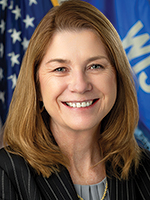
Photo of Mary Felzkowski
R Wisconsin Senate · District 12

Sen. Mary Felzkowski

Compare
Total votes
830
all sessions
Attendance
100%
1 missed
Near the chamber average
With party
99%
of cast votes
Near the chamber average
Bipartisan score
1%
crosses aisle rarely
Near the chamber average
Sponsored
803
bills & resolutions
Near the chamber average
Committees
5
assignments
803 bills and resolutions

Sponsored bills

Total
803
Primary
803
Co-sponsor
0
This page
803
matching current filters
Primary SB 280
Failed · Wisconsin Senate · Lead sponsor
Relating to: interest earned on coronavirus state and local fiscal recovery funds. (FE)

Maddy summarySB 280 redirects $172 million in interest earned from coronavirus state and local fiscal recovery funds to the general fund. It directly affects the state's budget by moving existing interest funds that would otherwise remain in the department of administration's appropriation. The bill's key mechanism is a fiscal adjustment under section 20.906(1), lapsing these funds to the general fund upon the bill's effective date. This is a procedural budget reallocation, not a new policy or program.

Failed Mar 23, 2026 0 co-sponsors
Primary SB 296
Failed · Wisconsin Senate · Lead sponsor
Relating to: enumeration of projects in the Authorized State Building Program, modifications to building program project budgets, selection of project architects and engineers, single prime contracting, agency cooperation with energy conservation contractors, timeline for claims before the Claims Board, and making a transfer to the state building trust fund. (FE)

Maddy summarySB 296 updates Wisconsin's state building program rules. It requires state agencies to list projects in the official building program (with a $2 million minimum cost threshold), mandates quarterly budget reports for cost overruns, and sets a 6-month deadline for resolving contractor claims involving state buildings. The bill also allows waivers for projects over $200 million, changes how architects/engineers are selected for larger projects, and encourages partnerships with energy service companies to improve facility efficiency. These changes directly affect state agencies, construction contractors, and energy providers managing public building projects.

Failed Mar 23, 2026 0 co-sponsors
Primary SB 383
Failed · Wisconsin Senate · Lead sponsor
Relating to: price transparency in hospitals, restricting certain debt collection actions against patients, and providing a penalty. (FE)

Maddy summarySB 383 requires hospitals to publish clear pricing information for "shoppable services" (like surgeries and imaging) in a machine-readable format, including standard charges, negotiated rates with insurers, and discounted cash prices. This applies to all hospitals not specifically exempted (e.g., psychiatric or correctional facilities) and aims to help patients compare costs before receiving care. The bill also includes restrictions on certain aggressive debt collection practices against patients and establishes penalties for noncompliance with transparency requirements.

Failed Mar 23, 2026 0 co-sponsors
Primary SB 384
Passed · Wisconsin Senate · Lead sponsor
Relating to: requirements for children born alive following abortion or attempted abortion and providing a penalty.

Maddy summarySB 384 requires health care providers to provide the same standard of care and immediate hospital transport for any child born alive after an abortion or attempted abortion, as they would for any newborn of the same gestational age. Violating these requirements is a Class H felony, but the mother cannot be prosecuted for the incident. The bill also allows affected women to seek triple the cost of the abortion as civil damages, plus attorney fees, while protecting their identity through court confidentiality orders. It explicitly states the law does not create or recognize a right to abortion.

Passed Mar 23, 2026 0 co-sponsors
Primary SB 371
Passed · Wisconsin Senate · Lead sponsor
Relating to: explaining pregnancy, prenatal development, and childbirth as part of a human growth and development instructional program. (FE)

Maddy summarySB 371 requires public schools to include specific content in human growth and development classes about pregnancy, prenatal development, and childbirth. It mandates two key instructional tools: a high-definition ultrasound video showing fetal organ development week-by-week, and a presentation detailing each trimester's impact on a mother's physical and emotional health. The bill directly affects public school curricula in human growth and development courses, setting concrete requirements for the instructional materials used. It does not alter existing curriculum standards but specifies the exact content and format for this particular topic. The bill is currently under review in the Education Committee.

Passed Mar 23, 2026 0 co-sponsors
Primary SB 600
Failed · Wisconsin Senate · Lead sponsor
Relating to: participating in the federal tax credit program for contributions to scholarship granting organizations.

Maddy summarySB 600 would enable Wisconsin to participate in a federal tax credit program that allows individuals to deduct contributions to scholarship granting organizations (SGOs) from their state taxes. The bill requires the state education department to annually submit a list of qualifying SGOs meeting federal standards and certify Wisconsin's eligibility to the U.S. Treasury. It gives the governor until July 1, 2026, to decide whether to join the program, which would take effect for tax years beginning after December 31, 2026. The bill does not create new tax benefits but establishes the state's administrative process to align with the federal program.

Failed Mar 23, 2026 0 co-sponsors
Primary SB 456
Failed · Wisconsin Senate · Lead sponsor
Relating to: a tax credit for aviation biofuel manufacturing, authorizing the state to contract public debt for an aviation biofuel project grant, and making an appropriation. (FE)

Maddy summarySB 456 provides a $150 million grant to support aviation biofuel manufacturing in Wisconsin, funded through state public debt. It directly affects manufacturers who build facilities in designated zones, requiring them to use 80% in-state biomass (measured over 5 years), make $1.5 billion in state investments within 5 years, and maintain facilities exclusively for aviation biofuel production. The bill also creates a tax credit for such manufacturing and includes repayment penalties if grant conditions aren't met. This policy aims to support the state's forest products industry and create jobs through aviation biofuel development.

Failed Mar 23, 2026 0 co-sponsors
Primary SJR 4
Failed · Wisconsin Senate · Lead sponsor
Relating to: the freedom to gather in places of worship during a state of emergency (second consideration).

Maddy summarySJR 4 proposes a constitutional amendment to protect religious gatherings during emergencies. It would amend the state constitution to prohibit state or local governments from closing places of worship or banning gatherings there during a declared state of emergency, including public health crises. This directly affects religious organizations and government entities with emergency authority. The amendment requires voter approval in the November 2026 election, with the ballot question asking if the constitution should be changed to prevent closures of places of worship during emergencies. It is a proposed constitutional change, not a law.

Failed Mar 23, 2026 0 co-sponsors
Primary SB 203
Failed · Wisconsin Senate · Lead sponsor
Relating to: regulation of pharmacy benefit managers, fiduciary and disclosure requirements on pharmacy benefit managers, and application of prescription drug payments to health insurance cost-sharing requirements. (FE)

Maddy summarySB 203 regulates pharmacy benefit managers (PBMs) by requiring them to pay pharmacies within 30 days for electronic claims and 60 days for paper claims. It mandates that claims for 340B drugs (federally discounted medications) include specific identifiers for processing. The bill also prohibits PBMs from forcing pharmacies to join multiple networks or penalizing them for declining to join such networks. These provisions directly affect PBMs, pharmacies, and prescribers within the state’s health insurance system.

Failed Mar 23, 2026 0 co-sponsors
Primary SB 213
Failed · Wisconsin Senate · Lead sponsor
Relating to: a tax credit for rail infrastructure modernization. (FE)

Maddy summarySB 213 creates two new tax credits for rail infrastructure in Wisconsin: a 50% credit for modernization (e.g., new track, switches, rehabilitation) and a 50% credit for maintenance (e.g., repairs, labor, safety improvements). It directly affects rail infrastructure owners or operators certified by the Wisconsin Economic Development Corporation under Section 238.309. The modernization credit caps at $2 million annually per claimant, while the maintenance credit limits to $5,000 per mile of track. Credits can be transferred to other taxpayers or carried forward for up to five years if not fully used in the claim year.

Failed Mar 23, 2026 0 co-sponsors
Showing 21 to 30 of 803 bills
Previous 1 … 2 3 4 … 81 Next