

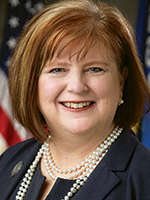
Photo of Barbara Dittrich
R Wisconsin Assembly · District 99 On the 2026 ballot

Rep. Barbara Dittrich

Compare
Total votes
717
all sessions
Attendance
100%
of floor votes
Near the chamber average
With party
99%
of cast votes
Near the chamber average
Bipartisan score
0%
crosses aisle rarely
Near the chamber average
Sponsored
1,126
bills & resolutions
Near the chamber average
Committees
9
assignments
1,126 bills and resolutions

Sponsored bills

Total
1,126
Primary
1,126
Co-sponsor
0
This page
1,126
matching current filters
Primary AB 419
Failed · Wisconsin Assembly · Lead sponsor
Relating to: a sales and use tax exemption for ski lifts. (FE)

Maddy summaryAB 419 creates a sales and use tax exemption for ski lifts and related equipment used exclusively to operate them. The bill exempts the purchase price of ski lifts, machines, equipment, accessories, and parts specifically for ski lift operations from state sales and use taxes. This directly affects ski resort operators and businesses that buy or maintain ski lift infrastructure. The exemption applies to the equipment itself, not the lift services or user fees, and takes effect three months after publication. The bill is procedural, focusing solely on modifying tax law to remove this tax burden for qualifying equipment.

Failed Mar 23, 2026 0 co-sponsors
Primary AB 509
Failed · Wisconsin Assembly · Lead sponsor
Relating to: alternative delivery of projects contracted by the Department of Transportation. (FE)

Maddy summaryAB 509 updates Wisconsin's rules for highway project delivery by creating new definitions for alternative methods like "design-build" and excluding others. It establishes a $300 million annual funding limit for alternative delivery projects (adjusted yearly using the DOT's construction cost index), with a cap of six contracts per year. The bill specifically prohibits using "construction manager-general contractor" or "progressive design-build" methods in the pilot program. This directly affects the Wisconsin Department of Transportation, contractors bidding on highway projects, and state transportation budget allocations.

Failed Mar 23, 2026 0 co-sponsors
Primary AB 315
Passed · Wisconsin Assembly · Lead sponsor
Relating to: the Warren Knowles-Gaylord Nelson stewardship 2000 program and a major land acquisitions program. (FE)

Maddy summaryAB 315 modifies grant rules for Wisconsin's Warren Knowles-Gaylord Nelson stewardship program and land conservation efforts. It creates new provisions requiring governmental units and nonprofits to apply for funding *before* purchasing land to qualify for up to 50% of acquisition costs (reduced to 40% if applying after purchase). The bill maintains a 30% cap on additional costs covered by grants or in-kind contributions. These changes directly affect local governments and conservation groups seeking state funds to acquire land for parks, recreation, or conservation. The bill does not create new funding but adjusts eligibility and percentage limits for existing programs.

Passed Mar 23, 2026 0 co-sponsors
Primary AB 439
Failed · Wisconsin Assembly · Lead sponsor
Relating to: eligibility of a highway for an agricultural roads improvement program grant. (FE)

Maddy summaryAB 439 modifies eligibility rules for a state grant program that funds improvements to agricultural roads. The bill adds a new requirement: a highway must have an engineering analysis by a licensed professional showing it cannot handle heavy agricultural traffic to qualify for the grant. This directly affects farmers and agricultural businesses that rely on these roads, as it expands the criteria beyond existing structural deficiencies or weight restrictions. The change aims to ensure roads serving farming operations receive targeted funding based on actual traffic capacity needs.

Failed Mar 23, 2026 0 co-sponsors
Primary AB 106
Failed · Wisconsin Assembly · Lead sponsor
Relating to: exempting certain electric vehicle charging stations located at a residence from the electric vehicle charging tax. (FE)

Maddy summaryAB 106 exempts electricity delivered to Level 3 electric vehicle (EV) charging stations installed at residences from the existing EV charging tax. This directly affects homeowners who own or operate Level 3 chargers at their primary residence. The bill removes the tax on electricity used for charging EVs at these residential stations, effective retroactively from January 1, 2025. The exemption applies specifically to Level 3 chargers at homes, not to commercial or public charging locations.

Failed Mar 23, 2026 0 co-sponsors
Primary AB 399
Failed · Wisconsin Assembly · Lead sponsor
Relating to: requirement for certain telecommunications providers to provide basic voice service.

Maddy summaryAB 399 requires certain telecommunications providers serving residential customers to offer a basic voice service plan. This directly affects telecom companies that provide phone service in the state, mandating them to maintain an affordable, essential phone service option. The key provision is that providers must offer this service at a fixed, low cost to ensure accessibility for all residents, particularly in underserved communities. The bill aims to guarantee reliable communication for emergencies and daily needs without requiring new infrastructure.

Failed Mar 23, 2026 0 co-sponsors
Primary AB 197
Failed · Wisconsin Assembly · Lead sponsor
Relating to: a levy limit exemption for regional emergency medical systems and eligibility for the expenditure restraint incentive program. (FE)

Maddy summaryAB 197 creates a new exemption allowing local governments (like counties or municipalities) to count certain regional emergency medical services costs toward their budget limits without triggering spending restrictions. To qualify, the service must cover at least 232 square miles or include 8 municipalities, and annual cost increases must stay below the inflation rate plus 5%. The exemption requires confirmation of a regional service area and a designated coordination entity for EMS across the area. This specifically affects jurisdictions operating joint emergency medical services districts or intergovernmental agreements for EMS, including fire department-provided services.

Failed Mar 23, 2026 0 co-sponsors
Primary AB 156
Passed · Wisconsin Assembly · Lead sponsor
Relating to: requiring child sexual abuse prevention education. (FE)

Maddy summaryAB 156 requires public school districts in the 2026-27 school year to provide age-appropriate child sexual abuse prevention education to all students from 4-year-old kindergarten through 12th grade. The curriculum must include specific topics like correct body part names, setting personal boundaries, identifying safe adults, distinguishing safe/unsafe touch, and reporting abuse, using research-based methods. Schools must notify parents about the program schedule and content annually, and parents can opt their child out with a written request. This law directly affects all K-12 students and their families in public schools across the state.

Passed Mar 23, 2026 0 co-sponsors
Primary AJR 109
Passed · Wisconsin Assembly · Lead sponsor
Relating to: honoring Wisconsin’s Hispanic and Latino veterans.

Maddy summaryAJR 109 is a symbolic joint resolution honoring Wisconsin's Hispanic and Latino veterans. It formally recognizes their service and sacrifices throughout U.S. military history, including specific references to the Borinqueneers unit and General Richard Cavazos. The resolution expresses the Wisconsin Legislature's gratitude through a formal statement, acknowledging these veterans' contributions without creating new programs or altering laws. This is a commemorative gesture, not a policy change, and directly affects no individuals or entities through legislative action.

Passed Mar 23, 2026 0 co-sponsors
Primary AB 678
Failed · Wisconsin Assembly · Lead sponsor
Relating to: school board policies on appropriate communication with pupils. (FE)

Maddy summaryAB 678 requires Wisconsin school boards to adopt a policy by July 2026 governing appropriate communication between school employees and volunteers (acting in their official capacity) and students. The policy must cover all communication methods and content, both during and outside school hours, and specify consequences for violations. It directly affects school district staff, volunteers, and students by establishing clear standards for professional interactions. The bill creates a new statutory requirement (120.12(30)) without dictating specific communication rules, leaving implementation to individual school boards.

Failed Mar 23, 2026 0 co-sponsors
Showing 341 to 350 of 1,126 bills
Previous 1 … 34 35 36 … 113 Next