

Maddy summaryAB 284 streamlines the management of state construction projects by raising the cost threshold for mandatory project enumeration from $1 million to $2 million. It requires quarterly budget reports for projects needing increases, sets a 6-month deadline for the Claims Board to resolve certain construction claims, and mandates state agencies to collaborate with energy conservation contractors on pilot projects. The bill also clarifies responsibilities for utility costs in contracts, modifies bidding procedures, and transfers $32 million from the general fund to the state building trust fund for infrastructure. These changes primarily affect state agencies, the building commission, and contractors managing public construction projects.
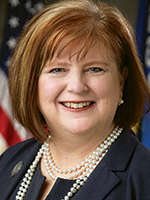
Rep. Barbara Dittrich
Sponsored bills
Maddy summaryAB 406 establishes the framework for setting resident undergraduate tuition and fee rates at the University of Wisconsin System. It directly affects Wisconsin residents enrolled in undergraduate programs across UW System campuses. The bill outlines the process for determining these rates, though specific dollar amounts or changes are not detailed in the current summary. Introduced in August 2025 and referred to the Consumer Protection committee, it is currently under review with a fiscal estimate received.
Maddy summaryAB 92 creates a Spinal Cord Injury Council in Wisconsin's Department of Health Services to oversee research funding. It allocates $2.5 million biennially for grants supporting research into new treatments for spinal cord injuries, including pharmaceutical, medical device, and rehabilitative approaches. The council - composed of researchers, patients, veterans, and family members - sets grant criteria, reviews applications, and recommends awardees. Grant recipients must present findings at department-hosted symposia (held no more than once every two years) and report annual results to the legislature. This directly affects Wisconsin-based researchers and medical institutions conducting spinal cord injury research.
Maddy summaryAB 311 would allow transgender and intersex individuals to update their sex marker on birth certificates without requiring medical documentation. The bill directly affects people seeking to align their legal identity with their gender identity through simplified administrative changes. Key provisions would replace current requirements (like court orders or medical certifications) with a straightforward self-attestation process. The bill is currently under review in the Assembly Judiciary Committee after being introduced on June 6, 2025.
Maddy summaryAB 23 establishes a 22-member Palliative Care Council within the Department of Health Services to advise on palliative care policy. The council includes physicians, nurses, patient advocates, insurers, and legislators, with specific requirements for geographic and program-type representation (e.g., community-based vs. hospital-based care). It will evaluate palliative care programs, advise on reimbursement mechanisms, and report biennially to the legislature on access and impact. The bill explicitly excludes physician-assisted suicide and similar topics from the council’s advisory scope. This bill directly affects palliative care providers, patients, insurers, and state health agencies through structured policy guidance.
Maddy summaryAB 235 establishes a state-funded grant program to support workforce literacy initiatives. It provides annual grants to nonprofit organizations located in the state that serve adult literacy programs across more than half of the state's counties. Grant funds can be used for workforce readiness training, GED exam preparation, digital literacy skills, and supporting other job-related literacy services. The bill is currently pending passage after a committee recommended approval with a 7-2 vote. This program directly affects nonprofits delivering statewide adult education services and aims to strengthen workforce skills through targeted funding.
Maddy summaryAB 412 would require certain professionals, such as teachers and healthcare workers, to directly report suspected child abuse cases to law enforcement instead of child protective services. This changes the current reporting process by mandating immediate referrals to police for safety concerns. The bill applies to individuals already designated as mandated reporters under existing law. It was introduced in August 2025 and referred to the Criminal Justice Committee for review.
Maddy summaryAB 401 creates penalties for damaging or defacing designated historical properties in Wisconsin. It directly affects individuals who intentionally damage such properties, including vandalism or graffiti on sites with historical significance. The bill establishes specific fines or penalties for these offenses, targeting property owners or vandals who harm protected historical landmarks. This legislation focuses on safeguarding culturally significant sites through new enforcement mechanisms.
Maddy summaryThe bill title claims to address LLC filing fees, but the provided text actually amends a statute about student enrollment requirements (183.0122), not business fees. The bill text specifies that a student must be enrolled in a postsecondary institution, public/private/tribal high school, or home-based private program to qualify for certain benefits. It does not change LLC filing fees or affect business entities. The mismatch between the title and the actual content in the bill text makes it impossible to summarize the LLC fee aspect as described. This appears to be an error in the provided bill text.
Maddy summaryAB 7 requires local governments (cities, villages, or towns) to approve large-scale wind and solar projects (15 megawatts or more) before the Public Service Commission can approve them. Developers must seek municipal approval, which must be granted or denied within 90 days (with possible 90-day extensions for specific reasons). If a municipality fails to act within the deadline, the project is automatically approved. This bill directly affects renewable energy developers and local governments, shifting approval authority to municipalities for qualifying projects.