

Maddy summaryThis bill prohibits serving margarine as a butter substitute in public restaurants unless specifically requested by the customer. It also bans using margarine instead of butter for students in schools unless ordered by the student or their parent/guardian, with limited health exceptions requiring a healthcare provider's direction. State institutions (like hospitals or prisons) can only substitute margarine for butter with superintendent approval for specific health reasons. The law aims to ensure butter substitutions are intentional and health-appropriate in these settings.
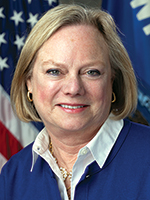
Rep. Cindi Duchow
Sponsored bills
Maddy summaryAB 368 prevents health insurance plans from requiring prior authorization for the first 12 visits of physical therapy, occupational therapy, speech therapy, or chiropractic care per treatment episode. It also eliminates prior authorization for non-drug pain management (like therapy) for chronic pain patients during the first 90 days of treatment (up to twice weekly). Health plans must explain coverage denials in plain language, apply similar copays for these therapies as for primary care, and decide on reauthorization requests within 3 business days. This bill directly affects patients seeking these services, healthcare providers, and all health benefit plans or self-insured employer health plans in the state.
Maddy summaryAB 315 modifies grant rules for Wisconsin's Warren Knowles-Gaylord Nelson stewardship program and land conservation efforts. It creates new provisions requiring governmental units and nonprofits to apply for funding *before* purchasing land to qualify for up to 50% of acquisition costs (reduced to 40% if applying after purchase). The bill maintains a 30% cap on additional costs covered by grants or in-kind contributions. These changes directly affect local governments and conservation groups seeking state funds to acquire land for parks, recreation, or conservation. The bill does not create new funding but adjusts eligibility and percentage limits for existing programs.
Maddy summaryAB 197 creates a new exemption allowing local governments (like counties or municipalities) to count certain regional emergency medical services costs toward their budget limits without triggering spending restrictions. To qualify, the service must cover at least 232 square miles or include 8 municipalities, and annual cost increases must stay below the inflation rate plus 5%. The exemption requires confirmation of a regional service area and a designated coordination entity for EMS across the area. This specifically affects jurisdictions operating joint emergency medical services districts or intergovernmental agreements for EMS, including fire department-provided services.
Maddy summaryAB 644 modifies state aid formulas for school districts that consolidate. It provides consolidated districts that merge in 2026, 2027, or 2028 with a higher initial payment of $2,000 per student in their first year, followed by $150 per student for the next four years. Districts consolidating outside this window receive $150 per student for five years (first year plus four subsequent years). The bill directly affects school districts undergoing consolidation, ensuring adjusted funding during transition periods. It passed the Assembly on November 19, 2025, with 53-44 support.
Maddy summaryAB 648 provides supplemental state aid to school districts formed by consolidation after July 1, 2026. It directly affects these newly consolidated districts by determining eligibility based on property tax rates: if their projected tax rate after consolidation exceeds the lowest rate of the original districts, they qualify for aid. The aid amount is calculated as the difference between the projected tax rate and the lowest original rate, multiplied by the district's property valuation. Payments are phased over four years (100% in the first year, then 80%, 60%, and 40% in subsequent years) if state funds are sufficient.
Maddy summaryAB 647 creates a 4-year grant program for school districts that enter into whole grade sharing agreements (where districts share entire grade levels, such as all 5th graders). Eligible school boards receive $500 per enrolled student in the shared grade level each school year, starting in 2026-27, with funds distributed annually. The program requires school districts to submit annual reports on grant usage, and the state department must report to the legislature on grant distribution and spending. This directly affects school districts participating in grade-sharing arrangements by providing ongoing funding for shared educational resources.
Maddy summaryAB 646 requires the Department of Public Instruction to commission a study on school district consolidation by January 1, 2027. The study must examine school boundaries, facility conditions, population demographics, staffing, finances, and geographic feasibility across all school districts. The resulting report must include specific consolidation recommendations with details on projected enrollment, affected communities, school locations, and property values. This study aims to inform future decisions about district boundaries but does not mandate any immediate consolidation.
Maddy summaryAB 671 mandates the Department of Administration to study redundant federal, state, and local requirements for constructing new housing (including single-family, duplex, and multifamily units). The study must identify overlapping or unnecessary rules and submit a report with legislative recommendations within one year of the bill's effective date. This bill does not create new laws but directs a formal review to potentially streamline housing construction regulations. It directly affects future legislative decisions on housing policy, not current construction practices.
Maddy summaryAJR 109 is a symbolic joint resolution honoring Wisconsin's Hispanic and Latino veterans. It formally recognizes their service and sacrifices throughout U.S. military history, including specific references to the Borinqueneers unit and General Richard Cavazos. The resolution expresses the Wisconsin Legislature's gratitude through a formal statement, acknowledging these veterans' contributions without creating new programs or altering laws. This is a commemorative gesture, not a policy change, and directly affects no individuals or entities through legislative action.