

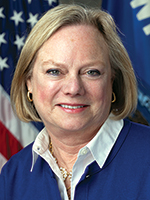
Photo of Cindi Duchow
R Wisconsin House · District 97 On the 2026 ballot

Rep. Cindi Duchow

Compare
Total votes
575
all sessions
Attendance
99%
8 missed
Near the chamber average
With party
99%
of cast votes
Near the chamber average
Bipartisan score
0%
crosses aisle rarely
Near the chamber average
Sponsored
702
bills & resolutions
Near the chamber average
Committees
5
assignments
702 bills and resolutions

Sponsored bills

Total
702
Primary
702
Co-sponsor
0
This page
702
matching current filters
Primary AB 85
Vetoed · Wisconsin House · Lead sponsor
Relating to: recommendation to revoke extended supervision, parole, or probation if a person is charged with a crime. (FE)

Maddy summaryAB 85 requires Wisconsin's Department of Corrections to recommend revoking parole, probation, or extended supervision whenever a person under supervision is charged with a new crime. This applies directly to individuals on community supervision who face new criminal charges. The bill mandates that the department submit this recommendation to the appropriate administrative body, triggering a hearing process unless the person waives it. The law changes existing statutes to make this recommendation automatic upon a new charge, without requiring proof of violation first.

Vetoed May 13, 2026 0 co-sponsors
Primary AB 167
Vetoed · Wisconsin House · Lead sponsor
Relating to: various changes to the unemployment insurance law and requiring approval by the Joint Committee on Finance of certain federally authorized unemployment benefits. (FE)

Maddy summaryAB 167 requires the governor or state agency to notify the Joint Committee on Finance before implementing any increase to unemployment benefits above current state law (e.g., higher weekly rates or additional benefit weeks). The committee must approve such "benefit augmentations" before they take effect, and it retains the right to terminate them at any time. This applies to federally funded benefits but excludes federal extended benefits under Section 108.141. The bill also makes minor technical updates to unemployment claim requirements, such as requiring out-of-state claimants to register with local job centers. These changes aim to centralize oversight of unemployment benefit adjustments at the state level.

Vetoed May 13, 2026 0 co-sponsors
Primary AB 457
Vetoed · Wisconsin House · Lead sponsor
Relating to: the conditions under which a school district may adopt a resolution to exceed its revenue limit. (FE)

Maddy summaryAB 457 would allow California school districts to adopt resolutions exceeding their legally set revenue limits under specific, defined conditions. It directly affects school districts seeking flexibility to spend more than their allocated budget for certain needs, such as addressing unexpected costs or funding critical projects. The bill establishes clear criteria and procedures districts must follow to request and receive approval for exceeding revenue limits. Currently, the bill has passed the Education Committee and is pending further review by the Rules Committee, but it has not yet become law.

Vetoed May 13, 2026 0 co-sponsors
Primary AB 460
Vetoed · Wisconsin House · Lead sponsor
Relating to: pupil eligibility for parental choice programs based upon participation by a sibling or a dependent child of the pupil's parent or guardian. (FE)

Maddy summaryAB 460 changes eligibility rules for parental choice education programs (like school vouchers or education savings accounts). It allows a student to qualify for such a program if a sibling or dependent child of their parent/guardian is already enrolled in the program. This directly affects families with multiple children, making it easier for additional children in the same household to access these programs once one child qualifies. The bill is currently under review by the Rules Committee after passing the Education Committee.

Vetoed May 13, 2026 0 co-sponsors
Primary AB 415
Vetoed · Wisconsin House · Lead sponsor
Relating to: use restrictions on state and local government electronic devices.

Maddy summaryAB 415 restricts state and local government employees from using electronic devices owned by their agencies to access social media, apps, or AI tools owned by entities located in "foreign countries of concern" (as defined by federal regulations). The bill directly affects government employees and contractors who use official devices for non-law enforcement work, banning access to specific foreign-owned technology. Exceptions allow written waivers from the secretary of administration for limited job-related purposes. This policy change aims to limit government use of technology linked to designated foreign adversaries, with no impact on law enforcement activities. The bill does not create new funding or require agency budget changes.

Vetoed May 13, 2026 0 co-sponsors
Primary AB 165
Vetoed · Wisconsin House · Lead sponsor
Relating to: local guaranteed income programs.

Maddy summaryAB 165 defines "guaranteed income program" in Wisconsin law as a program providing regular, unearned cash payments to individuals that can be used for any purpose, with no work or training requirements. It applies specifically to "political subdivisions" (cities, villages, towns, or counties), enabling them to use their own funds - including shared revenue, tax money, or fees - to implement such programs. The bill does not create new funding or mandate local governments to establish these programs; it only provides a legal definition for future local initiatives. This definition allows local governments to structure cash assistance programs under clear statutory guidance.

Vetoed May 13, 2026 0 co-sponsors
Primary AB 169
Vetoed · Wisconsin House · Lead sponsor
Relating to: various changes to the unemployment insurance law. (FE)

Maddy summaryAB 169 amends Wisconsin's unemployment insurance law to strengthen work search requirements for claimants. It requires individuals receiving benefits to document at least four weekly job search actions (such as interviews or job offers) and provide verification to the department, including records of all offers received. The bill also creates new employer reporting obligations, allowing employers to notify the department if claimants decline interviews, fail to respond, or cancel interviews without rescheduling. However, the bill was vetoed by the governor on October 31, 2025, and did not become law.

Vetoed May 13, 2026 0 co-sponsors
Primary AB 225
Vetoed · Wisconsin House · Lead sponsor
Relating to: determination of where a defendant resides or does substantial business for purposes of venue.

Maddy summaryAB 225 clarifies venue rules for civil cases involving businesses. It states that courts cannot count insurers or other joined parties when deciding if a county is the proper location for a case. For businesses, the bill defines "residence" as the state or country where they were incorporated, and "substantial business" as only occurring in their main county of operation. This directly affects corporations, LLCs, and civil lawsuits where venue is contested, simplifying how courts determine case locations. The law passed in November 2025 and is now in effect.

Vetoed May 13, 2026 0 co-sponsors
Primary AB 168
Vetoed · Wisconsin House · Lead sponsor
Relating to: various changes to the unemployment insurance law. (FE)

Maddy summaryAB 168 would have updated Wisconsin's unemployment insurance law with several key changes. It required stronger identity verification for claimants filing benefits and operating a dedicated call center with extended hours during emergencies or high call volumes. The bill also mandated training materials for employers and required the unemployment department to notify lawmakers and the governor before changing fraud detection methods. This bill was vetoed by the governor on October 31, 2025, so these provisions did not become law.

Vetoed May 13, 2026 0 co-sponsors
Primary AB 759
Signed into law · Wisconsin House · Lead sponsor
Relating to: eligibility to receive occupational credentials for recipients of deferred action under the Deferred Action for Childhood Arrivals program. (FE)

Maddy summaryAB 759 allows individuals with deferred action under the federal DACA program to obtain state occupational licenses (like nursing or cosmetology credentials) if they have valid federal work permits. It requires state licensing agencies to verify DACA recipients' federal work authorization through official systems before issuing licenses. Licenses issued under this law expire when the federal work permit expires, and recipients must renew both simultaneously. The bill explicitly states it does not grant eligibility for public benefits beyond occupational credentials.

Signed into law Apr 9, 2026 0 co-sponsors
Showing 11 to 20 of 702 bills