

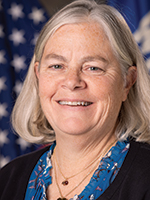
Maddy summaryAB 381 requires the state department to partner with healthcare providers (like OB/GYNs) and community health centers to educate women about perimenopause and menopause. It directs the department to create accessible informational materials covering symptoms, treatments, biological processes, when to seek care, and communication tips - distributed through healthcare providers to women identified as experiencing or nearing these stages. The materials must be available both online and in print. This bill directly affects women navigating perimenopause and menopause by providing standardized educational resources through existing healthcare channels.
Rep. Tara Johnson
Sponsored bills
Maddy summaryAB 508 repeals two sections of state law (108.04 (2) (h) and 108.04 (12) (f)) that previously prevented Social Security Disability Insurance (SSDI) recipients from receiving unemployment insurance benefits at the same time. This bill directly affects individuals who qualify for SSDI but are currently unemployed and seeking unemployment benefits. The key provision removes the legal barrier forcing these individuals to choose between disability and unemployment benefits. The change would allow them to receive both types of benefits simultaneously, effective for weeks of unemployment beginning after the bill's publication.
Maddy summaryAB 598 allows patient representatives to consent to health care facility admissions for incapacitated individuals without requiring a court-appointed guardian or protective placement petition. The bill creates a defined "patient representative" role, requiring two medical professionals (e.g., two physicians or one physician plus an advanced practice clinician) to certify incapacity based on medical need - not age, disability, or eccentricity. Patient representatives gain authority to make health care decisions, enroll individuals in Medical Assistance, and authorize health care expenses similar to a guardian, but only for non-developmental disability and non-mental illness cases. This change streamlines admissions for incapacitated patients while mandating 72-hour notifications to county agencies about the certification.
Maddy summaryAJR 95 designates October as Domestic Violence Awareness Month in Wisconsin. This symbolic resolution does not create new laws or funding but formally recognizes the importance of addressing domestic violence. It aims to honor survivors, remember those lost to domestic violence, and acknowledge the work of advocates and service providers across the state. The bill passed unanimously and is now official, aligning Wisconsin with national observances to promote awareness.
Maddy summaryAJR 91 is a ceremonial joint resolution recognizing the U.S. Navy's 250th birthday on October 13, 2025, marking the anniversary of the Continental Congress vote to establish the Navy on October 13, 1775. It expresses the Wisconsin Legislature's appreciation for the Navy's historical service and its legacy of defending U.S. freedoms, values, and interests over 250 years. The resolution has no binding effect or policy changes; it solely serves to honor the Navy's history and its connections to Wisconsin through shipbuilding, named vessels, and military contributions.
Maddy summaryAJR 85 is a ceremonial joint resolution that formally congratulates the University of Wisconsin-Whitewater Baseball Team for winning the 2025 NCAA Division III National Championship. It specifically recognizes their championship victory, including their record 74 runs scored in the tournament and 49-6 season record. The resolution directly affects the team, its coaching staff, and athletic department by offering legislative recognition of their achievement. This is a symbolic gesture with no policy changes or funding implications, as it merely expresses the legislature's commendation.
Maddy summaryAJR 92 is a ceremonial resolution recognizing the U.S. Marine Corps' 250th birthday on November 10, 2025. It formally celebrates the Marine Corps' history, beginning with its founding by the Continental Congress on November 10, 1775, and acknowledges its ongoing service, including active-duty personnel and training at Fort McCoy in Wisconsin. The resolution contains no new policies, funding, or legal requirements - it solely expresses the Wisconsin Legislature's symbolic appreciation for the Marine Corps' 250 years of service. As a procedural resolution, it does not directly affect any individuals or change existing laws.
Maddy summaryAB 273 amends Wisconsin statute 15.405(5g) to update the membership of the Controlled Substances Board. It adds the secretary of agriculture, trade and consumer protection (or their designee), chairpersons of several medical boards (pharmacy, medical, physician assistant, dentistry, nursing), and two appointed experts (a psychiatrist and pharmacologist) serving 3-year terms. The bill does not change the board's duties but specifies who serves on it. This directly affects the composition of the board, which reviews controlled substances regulations. The change is procedural, focusing on board structure rather than policy.
Maddy summaryAB 302 amends Wisconsin statute 347.25(3) to allow funeral procession vehicles to use flashing amber or purple lights exclusively during processions. The law permits the lead vehicle in a procession to display such lights, or requires all vehicles in the procession to have them if any vehicle uses them. This change directly affects funeral homes, drivers, and vehicles participating in formal funeral processions by standardizing permissible lighting for visibility and safety during these events.
Maddy summaryAJR 99 is a symbolic resolution recognizing October 14, 2025, as "First Responders Appreciation Day" in Wisconsin. It does not create new laws or policies but formally honors all professional and volunteer first responders, including police, firefighters, and emergency medical personnel. The resolution acknowledges their daily risks and service to the public, specifically noting Wisconsin's over 4,800 career firefighters, 20,600 volunteer firefighters, 14,700 law enforcement officers, and 17,426 EMS personnel. This is a non-binding gesture of appreciation with no direct impact on legislation or funding.