

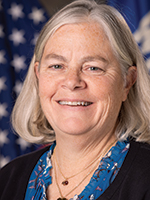
Photo of Tara Johnson
D Wisconsin House · District 96 On the 2026 ballot

Rep. Tara Johnson

Compare
Total votes
360
all sessions
Attendance
95%
18 missed
Near the chamber average
With party
96%
of cast votes
Near the chamber average
Bipartisan score
2%
crosses aisle rarely
Near the chamber average
Sponsored
312
bills & resolutions
Near the chamber average
Committees
2
assignments
312 bills and resolutions

Sponsored bills

Total
312
Primary
312
Co-sponsor
0
This page
312
matching current filters
Primary AB 790
Failed · Wisconsin House · Lead sponsor
Relating to: creating the water fund for our future, granting rule-making authority, and making an appropriation. (FE)

Maddy summaryAB 790 creates a dedicated "Water Fund for Our Future" with an initial $250 million transfer from the general fund. The fund establishes a rapid response account to cover clean water-related costs during natural disasters or public health emergencies, including remediation and assistance for affected individuals. A new joint committee oversees fund spending, reviewing requests for funding (excluding non-clean-water uses) and recommending approvals to the finance committee. All funds must be used exclusively for clean water activities, with specific rules for disbursement and oversight.

Failed Apr 13, 2026 0 co-sponsors
Primary AB 1203
Failed · Wisconsin House · Lead sponsor
Relating to: net zero emissions, carbon-free and renewable energy standards, and creating an office of sustainability and clean energy, granting rule-making authority, making an appropriation, and providing a penalty. (FE)

Maddy summaryThis bill establishes a comprehensive clean energy framework requiring Wisconsin to achieve 100 percent clean electricity production and net-zero carbon emissions by 2050. It creates a new Office of Sustainability and Clean Energy within the Department of Administration to develop and update an economy-wide decarbonization roadmap using sector-based modeling. The legislation sets specific interim targets for carbon-free electricity, including 50 percent by 2030, 65 percent by 2035, 80 percent by 2040, 90 percent by 2045, and full carbon-free status by 2050. State agencies must consider purchasing renewable energy from providers with long-term contracts, though the requirements do not apply if generation is not technically feasible or cost-effective. The bill also provides funding for technology implementation and defines carbon-free resources to include hydroelectric power alongside other renewable sources.

Failed Apr 9, 2026 0 co-sponsors
Primary AB 1205
Failed · Wisconsin House · Lead sponsor
Relating to: a tax credit for local newspaper subscriptions. (FE)

Maddy summaryThis bill creates a state tax credit to help residents offset the cost of subscribing to local newspapers. It directly affects individuals who file state income tax returns and purchase subscriptions from newspapers that are legally qualified to print official notices. Under the bill, eligible taxpayers can claim a credit equal to 50 percent of their newspaper subscription costs, with a maximum credit of $250 per year or $125 for married individuals filing separately. The credit applies to taxable years beginning after December 31, 2024, and must be claimed within the standard tax filing period.

Failed Apr 9, 2026 0 co-sponsors
Primary AB 854
Failed · Wisconsin House · Lead sponsor
Relating to: violence prevention grants and making an appropriation. (FE)

Maddy summaryAB 854 creates a grant program funded by taxes on vapor products to support violence prevention efforts. It directs $30,000 for fiscal year 2025-26 and $120,000 for 2026-27 toward local health departments or tribal health centers. These entities can use the funds to run violence prevention programs or award grants to community organizations, but they cannot distribute money to law enforcement agencies or any groups working with them. The bill specifies that applications for these grants must be submitted by June 30 each year.

Failed Apr 9, 2026 0 co-sponsors
Primary AB 1168
Failed · Wisconsin House · Lead sponsor
Relating to: medical debt abolition and making an appropriation. (FE)

Maddy summaryThis bill establishes a program to eliminate medical debt for eligible Wisconsin residents by creating a $10 million annual appropriation for the Department of Health Services to purchase and cancel outstanding medical bills. To qualify, residents must either have household income at or below 400 percent of the federal poverty line or owe medical debt equal to at least 5 percent of their annual household income. The department will identify eligible individuals, negotiate with healthcare providers and debt collectors to buy their outstanding balances, and then formally abolish the debt while minimizing tax consequences for recipients. The program prioritizes purchasing debt from providers serving low-income populations and those in areas disproportionately affected by medical debt, with annual reporting required to track the number of debts eliminated and demographic information of affected residents.

Failed Apr 8, 2026 0 co-sponsors
Primary AB 916
Failed · Wisconsin House · Lead sponsor
Relating to: a home repair program and making an appropriation. (FE)

Maddy summaryAB 916 creates a state-funded home repair program to address habitability issues and improve energy efficiency in affordable housing. It provides grants of up to $25,000 per unit to eligible homeowners (income ≤100% of area median income who own or occupy their homes) and interest-free loans of up to $25,000 to eligible landlords (owning ≤5 properties/15 units of affordable housing). The program prioritizes repairs for homes with health/safety hazards, energy efficiency upgrades, and accessibility improvements for individuals with disabilities or young children. Properties must be between 10 and 40 years old to qualify, and funds are administered by the state authority or contracted counties/nonprofits with strict reporting requirements.

Failed Apr 7, 2026 0 co-sponsors
Primary AB 1155
Failed · Wisconsin House · Lead sponsor
Relating to: protection of pregnant individuals’ information, authorization for disclosure, data breach, and providing a penalty.

Maddy summaryThis bill requires unregulated pregnancy centers to obtain written authorization from individuals before disclosing their personal health information, with specific requirements for what the authorization must include and how long it remains valid. The law defines unregulated pregnancy centers as facilities that do not provide abortions or emergency contraception and are not covered by existing medical privacy laws, while also establishing rules for when information can be shared without consent, such as for legal compliance or law enforcement cooperation. Centers must notify individuals if their health data is breached and face penalties for violating these privacy protections, while also being prohibited from discriminating against people who refuse to authorize information sharing. The bill creates a new section in the state statutes to establish these requirements and specifies that the law takes effect three months after publication.

Failed Mar 30, 2026 0 co-sponsors
Primary AB 1142
Failed · Wisconsin House · Lead sponsor
Relating to: funding for passenger rail operations and making an appropriation.

Maddy summaryThis bill proposes to increase state funding for passenger rail operations by $10 million and allocate an additional $5.2 million for feasibility studies on rail expansion projects. The funds would be directed to the department of transportation for fiscal year 2026-27 to support existing rail services and evaluate potential new routes. The legislation affects state transportation budgets and rail service providers by authorizing these specific appropriations. The bill is currently in the early stages of the legislative process and has not yet been enacted into law.

Failed Mar 26, 2026 0 co-sponsors
Primary AB 1100
Failed · Wisconsin House · Lead sponsor
Relating to: a sales and use tax exemption for the sale of over-the-counter drugs. (FE)

Maddy summaryThis bill would exempt over-the-counter drugs from state sales and use taxes. It directly affects consumers purchasing non-prescription medications and retailers selling these products. The legislation defines over-the-counter drugs as those with specific labeling requirements, including a drug facts panel or a list of active ingredients. By removing the tax burden, the bill aims to lower costs for buyers of these common health products. The change would take effect on the first day of the third month after the bill is published.

Failed Mar 25, 2026 0 co-sponsors
Primary AB 1130
Failed · Wisconsin House · Lead sponsor
Relating to: a premium assistance individual income tax credit and making an appropriation. (FE)

Maddy summaryThis bill creates a new state tax credit to help Wisconsin residents pay for health insurance premiums. It allows individuals who purchase qualified health plans to claim a credit on their state income tax return for the amount they would have received under federal premium assistance rules between 2021 and 2025. The credit is available only to full-year state residents who file their own tax returns and cannot be claimed if the taxpayer already qualifies for similar federal assistance. The legislation also authorizes state funds to pay any portion of the credit that exceeds the taxpayer's state tax liability.

Failed Mar 24, 2026 0 co-sponsors
Showing 11 to 20 of 312 bills