

Maddy summaryAB 659 modifies Wisconsin's tuition benefit policies for veterans and their families. It reduces the required residency period from 5 to 3 consecutive years in the state before enrollment for veterans themselves and their dependents (spouses or children) to qualify for tuition exemptions or grants at University of Wisconsin System schools, technical colleges, or private nonprofit institutions. The bill applies to veterans who served honorably, died on duty or from service-connected disabilities, or have a 30% service-connected disability rating, and to dependents who meet the revised residency requirement. It does not change eligibility for veterans who were Wisconsin residents at the time of military entry. The policy change takes effect for the first semester or session beginning after the bill's effective date.
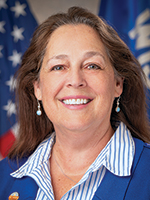
Rep. Jill Billings
Sponsored bills
Maddy summaryThis bill is a joint resolution that designates April 2026 as Family Strengthening Month in Wisconsin. It directly affects the state legislature, which would officially proclaim the month to raise awareness about preventing child abuse and neglect. The resolution highlights the importance of building family protective factors like parental resilience and social connections to support children and communities. It does not create new laws or funding but serves as a symbolic acknowledgment of the state's commitment to family support. The bill is procedural in nature and does not change any existing policies or programs.
Maddy summaryThis bill authorizes the Department of Health Services to create a public health campaign aimed at preventing youth from starting to use tobacco and electronic cigarettes. It also provides funding for grants to local and regional organizations that work on youth vaping prevention and offer cessation services. The legislation includes a requirement for the department to submit annual reports to the governor and legislature evaluating the success of the grant program. Additionally, the bill appropriates $2 million for fiscal year 2026-27 to support these initiatives.
Maddy summaryThis bill updates the state's indoor smoking ban to explicitly include electronic delivery devices like vapes and e-cigarettes, as well as marijuana use. It defines "smoking" to cover inhaling or exhaling vaporized substances and requires that activated electronic devices be treated the same as traditional smoking in indoor spaces. The legislation applies to businesses and public venues that currently prohibit smoking, extending those restrictions to vaping and marijuana consumption. By clarifying these definitions, the bill ensures existing indoor smoking rules cover modern inhalation methods without requiring new enforcement mechanisms.
Maddy summaryThis bill prohibits vaping on all public and private school property, including classrooms, playgrounds, and athletic facilities. It defines electronic smoking devices broadly to include e-cigarettes, vape pens, and similar products, regardless of whether they contain nicotine. The law applies to students, staff, and visitors on school grounds and allows schools or local governments to adopt even stricter rules if they choose.
Maddy summaryThis bill creates a new section in state statutes to regulate how online services collect and use personal data from minors under 18 years old. It applies to businesses that operate online services in the state, earn most of their revenue from those services, and are likely to be accessed by minors. The law requires covered businesses to implement age-appropriate design features, restrict the collection of sensitive data like biometric and genetic information from minors, and prevent compulsive use patterns that disrupt a minor's daily activities. The bill also grants the state rule-making authority to establish specific standards for how these protections should be implemented and enforced.
Maddy summaryThis bill establishes a new basic health plan for individuals with household incomes below 200 percent of the poverty line and creates a purchase option program allowing eligible people with higher incomes to buy coverage through the state program instead of private insurance. The program would offer benefits similar to existing state coverage, include tax credits for eligible participants, and set premium rates comparable to managed care plans while requiring federal waivers to implement. It also directs the creation of a state-based insurance exchange where individuals can access these purchase options and grants officials authority to create rules needed for implementation. The bill requires a report on federal waiver status and economic analyses by March 2027 before the program can be fully launched.
Maddy summaryThis bill proposes to update the legal definition of a political action committee (PAC) for campaign finance purposes in the state statutes. It would classify a group as a PAC if it spends more than $1,000 in a 12-month period on express advocacy, referendum support or opposition, or contributions to candidates, legislative committees, or political parties. The definition specifically excludes fundraising and administrative expenses from the spending calculation. This change would affect how organizations are categorized and regulated under campaign finance laws. The bill was introduced in March 2026 but failed to pass the Senate.
Maddy summaryThis bill would allow corporations, cooperatives, labor organizations, and federally recognized American Indian Tribes to make contributions to segregated political funds, but only up to a total of $12,000 per calendar year. The law currently prohibits these entities from contributing to most political committees, with this change creating a specific exception for segregated funds. The bill does not permit these groups to contribute to independent expenditure committees or referendum committees. This provision would apply to both foreign and domestic corporations as well as the other specified organizations.
Maddy summaryThis bill amends Wisconsin campaign finance laws to establish specific contribution limits for individuals, committees, and political parties supporting candidates for various state offices. It sets maximum donation amounts that differ based on the office being sought, ranging from $500 for state representatives to $43,000 for governor, while also defining contribution caps for political action committees and other persons not subject to individual limits. The legislation creates new statutory sections to organize these limits and adjusts the calculation method for local office contributions based on population size, capping donations at $2,500 per jurisdiction.