

Maddy summaryAJR 34 is a ceremonial resolution honoring Wisconsin's child support program on its 50th anniversary, specifically recognizing January 4, 2025 - the anniversary of the federal law that established the program. It highlights the program's impact, noting it served 341,000 children and collected $841 million in fiscal year 2023 while ranking third nationally in support collection. The resolution commends the work of county, state, and tribal child support agencies and their staff, who help enforce support orders, connect parents to services, and promote financial security for families. As a joint resolution, it does not create new laws or policies but formally acknowledges the program's role in reducing child poverty and supporting Wisconsin families.
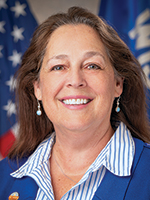
Rep. Jill Billings
Sponsored bills
Maddy summaryAB 27 expands eligibility for state veterans' benefits to include individuals who served in Laos supporting U.S. forces during the Vietnam War and were naturalized under the federal Hmong Veterans Naturalization Act of 2000. The bill updates state statutes to define these veterans as qualifying for property tax exemptions (under 36.27) and other benefit programs (under 38.24 and 45.01). It specifically adds them to eligibility criteria for benefits previously limited to other veteran categories. This change directly affects Hmong veterans residing in the state who meet the federal naturalization requirements. The bill passed committee unanimously and is now pending in the Rules committee.
Maddy summaryAJR 72 is a ceremonial resolution that officially recognizes June 19, 2025, as Juneteenth Day in Wisconsin. It does not create new laws or policies but formally declares this date to honor the historical significance of Juneteenth, which commemorates the end of slavery in the United States following Union troops' arrival in Galveston, Texas, on June 19, 1865. The resolution acknowledges Wisconsin’s longstanding Juneteenth observance, including Milwaukee’s celebration beginning in 1971. As a symbolic gesture, it has no legal effect beyond promoting awareness of this historical milestone.
Maddy summaryAB 317 creates the Child Care Quality Improvement Program to provide monthly payments to certified child care providers, including licensed centers and school-based programs. It allocates $221 million for fiscal year 2025-26 and $220 million for 2026-27 from the Department of Children and Families budget. The program grants the department rule-making authority to set eligibility, payment amounts, and usage requirements for recipients. The bill repeals outdated sections of existing law and updates funding allocations for quality improvement activities.
Maddy summaryAB 288 prohibits retailers and plant providers from labeling plants as "beneficial to pollinators" if those plants were treated with systemic insecticides that carry pollinator warnings on their labels (such as "bee protection" statements or environmental hazard notices). The law directly affects businesses selling plants at retail or to end users, requiring them to avoid misleading claims about pollinator benefits when insecticides with specific warnings were used. Key provisions define "systemic insecticide" and require that labeling aligns with the insecticide's actual pollinator safety status. This creates a clear policy change: plants treated with pollinator-risk insecticides cannot be marketed as pollinator-friendly, aiming to prevent consumer confusion about environmental impact.
Maddy summaryAB 355 removes specific restrictions on abortion access and requires certain health insurance plans to cover abortion care without cost-sharing. It directly affects patients seeking abortion services and health insurers offering coverage under specified plans. Key provisions eliminate mandatory waiting periods and counseling requirements, while mandating coverage for abortion services in state-regulated health insurance plans. This policy change aims to improve access by removing regulatory barriers and ensuring insurance coverage.
Maddy summaryAB 267 requires Wisconsin state parks to waive all daily admission fees (including any issuing fees) on April 22 each year, commemorating Earth Day and its founder, Gaylord Nelson. This policy directly affects all visitors to Wisconsin state parks on April 22, making entry free on that specific date. The bill creates a new statutory provision (27.01(9)(b)) that mandates this automatic fee waiver annually. It does not change existing fee structures outside of Earth Day or create new funding obligations.
Maddy summaryAB 392 creates a state Task Force focused on addressing the crisis of missing and murdered African American women and girls in Wisconsin. The task force will develop recommendations to improve responses, prevention efforts, and support services for this community. The bill includes a funding appropriation to cover the task force’s operational costs. It was introduced by multiple legislators and referred to the Committee on Criminal Justice and Public Safety for further review.
Maddy summaryAB 272 amends eligibility rules for Wisconsin's Family Care program to automatically include individuals who are deaf-blind, as defined under federal law (29 U.S.C. § 1905). This change directly affects deaf-blind residents seeking Family Care services, removing the need for separate care-level assessments for this group. The bill establishes that deaf-blind status alone satisfies the "functional eligibility" requirement under existing statute. It does not alter other eligibility criteria or funding mechanisms for the program. The bill was introduced in May 2025 and referred to the Health, Aging and Long-Term Care committee.
Maddy summaryAB 264 restricts veterans and surviving spouses from claiming the property tax credit for the same taxable year if they also file for certain other property tax credit programs (specifically subchapters VIII or IX, or subsections 3m or 9). It prevents duplicate claims by prohibiting the veterans' credit when related claims under other provisions are filed for the same year. The law applies to taxable years beginning January 1, 2025, and directly affects eligible veterans and surviving spouses seeking property tax relief. This is a policy change clarifying eligibility rules for existing tax credit programs.