

Maddy summaryThis Wisconsin bill expands the state tax deduction for retirement income, allowing more people to exclude certain pension and savings withdrawals from their taxable income. It specifically increases the annual deduction limit and adds new categories of eligible payments, including those from the U.S. Coast Guard, the National Oceanic and Atmospheric Administration, and the Public Health Service. The legislation also clarifies the definition of disability for individuals under 65 who receive disability payments from non-retirement plans. Although the bill passed the legislature, the Governor vetoed it, and the state legislature did not override that veto, meaning the proposed changes did not become law.
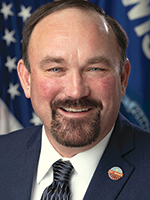
Rep. Clint Moses
Sponsored bills
Maddy summaryThis Wisconsin bill proposes expanding the state's individual income tax brackets to apply to higher income levels. It would create two new tax tiers for single filers, heads of households, and married couples, taxing income between $14,320 and $112,500 at 4.40 percent and income above $315,310 at 7.65 percent. The legislation also includes provisions to adjust these tax brackets annually based on changes in the consumer price index to account for inflation. Although the bill passed the legislature, the Governor vetoed it, and the measure failed to override that veto.
Maddy summaryThis bill prohibits cities, villages, towns, and counties in Wisconsin from using their own funds to pay individuals under guaranteed income programs. It defines these programs as those providing regular, unearned cash payments that recipients can use for any purpose, while explicitly excluding initiatives that require work or training. The law restricts the use of local tax revenues, shared state funds, and fees for these payments, effectively banning municipal funding for such initiatives.
Maddy summaryThis Wisconsin bill proposes allowing the Secretary of Administration to temporarily transfer employees from any state agency to the Department of Workforce Development to help manage unemployment insurance appeals. Under the plan, transferred workers would serve as appeal tribunal members for up to 120 days, with the option to extend this period if the Joint Committee on Finance approves. The legislation ensures that neither the employee's original agency nor the Department of Workforce Development can raise the transferred employee's salary during the assignment. Although the bill was passed by the legislature, the Governor vetoed it in August 2023, and subsequent attempts to override the veto failed.
Maddy summaryAssembly Bill 150 updates Wisconsin's unemployment insurance law to rename the program "reemployment assistance" and establishes a new division within the Department of Workforce Development to manage it. The bill tightens eligibility rules by requiring job seekers to make at least two direct contacts with employers each week after their first week of benefits and mandates that they post current resumes on the state's job center website. Additionally, the legislation requires claimants nearing the end of their benefits to attend reemployment counseling and ensures they are offered at least four specific job opportunities weekly, including those with temporary staffing agencies. The bill also mandates that the department immediately create rules for drug testing applicants in occupations where such testing is standard and requires the state to continue participating in federal reemployment grants.