

Maddy summaryAB 208 creates tax exemptions for income and franchise taxes related to broadband expansion funding. It directly affects internet service providers, telecom companies, and community organizations receiving grants or federal high-cost program funds for building broadband infrastructure in the state. The bill exempts from taxation: (1) state/local/tribal/federal grants for broadband expansion, and (2) federal high-cost program funding under 47 USC 254. These exemptions apply to taxable years beginning after December 31, 2024, and prevent double-counting with other existing tax provisions.
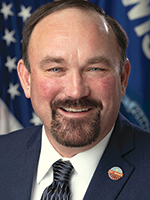
Rep. Clint Moses
Sponsored bills
Maddy summaryAB 610 creates a temporary sales and use tax exemption for firearms, bows/arrows for archery, crossbows, and ammunition sold exclusively on July 4 and during the third week of December. This exemption applies directly to retailers selling these items during those specific dates and to consumers purchasing them, removing the standard sales tax liability for these transactions. The bill adds a new provision (77.54(76)) to the tax code, explicitly listing the covered items and timeframes. It does not change year-round tax treatment but provides a limited, annual exemption for these products during the designated periods.
Maddy summaryAB 501 establishes new standards for free speech and academic freedom at University of Wisconsin System institutions and technical colleges. It protects students, faculty, staff, and graduate assistants from campus restrictions on First Amendment-protected speech, including in virtual spaces (except during virtual classroom instruction). Institutions may only limit speech that violates laws, constitutes threats/harassment, or materially disrupts operations, and must use content-neutral time/place/manner rules for public forums. The bill also creates legal grounds for individuals to sue the Board of Regents or technical college boards if these protections are violated.
Maddy summaryAB 550 requires food manufacturers selling packaged products in the state to include a prominent warning label on any item containing specific ingredients, such as certain artificial colors (e.g., FD&C Yellow No. 5), banned additives (like trans fats or titanium dioxide restricted in the EU), or chemicals listed in federal regulations. The label must state: "WARNING: This product contains an artificial color, chemical, or food additive that is banned in Australia, Canada, the European Union, or the United Kingdom," and meet visibility standards. Manufacturers must also post this disclosure on websites for online sales. Violations incur fines of $100-$1,000 for first offenses (or up to 6 months in jail) and higher penalties for repeat violations. The law takes effect January 1, 2027.
Maddy summaryThis bill prohibits serving margarine as a butter substitute in public restaurants unless specifically requested by the customer. It also bans using margarine instead of butter for students in schools unless ordered by the student or their parent/guardian, with limited health exceptions requiring a healthcare provider's direction. State institutions (like hospitals or prisons) can only substitute margarine for butter with superintendent approval for specific health reasons. The law aims to ensure butter substitutions are intentional and health-appropriate in these settings.
Maddy summaryThis bill requires public school districts to allow military recruiters access to high school common areas and school events during the school day, as mandated by federal law (10 USC 503(c)). It specifically prohibits schools from denying this access based on whether they allow college recruiters or employers, but explicitly states that classrooms during instructional time are excluded. The law applies to all public high schools and takes effect for the 2025-26 school year. It directly affects school districts, which must adjust their policies to comply.
Maddy summaryAB 268 allows individuals who filed complaints about election officials' conduct (complainants) to appeal decisions by the Elections Commission to local court. The bill lets complainants appeal within 30 days - regardless of whether they suffered actual harm - to the circuit court in the county where the election official works or the complainant lives. It specifically clarifies that complainants can appeal if their complaint is dismissed or they don’t get the requested relief. The bill does not pause the Commission’s original decision during the appeal unless a court orders it. This bill was recommended for passage in October 2025 but was later laid on the table and did not advance further.
Maddy summaryAB 509 updates Wisconsin's rules for highway project delivery by creating new definitions for alternative methods like "design-build" and excluding others. It establishes a $300 million annual funding limit for alternative delivery projects (adjusted yearly using the DOT's construction cost index), with a cap of six contracts per year. The bill specifically prohibits using "construction manager-general contractor" or "progressive design-build" methods in the pilot program. This directly affects the Wisconsin Department of Transportation, contractors bidding on highway projects, and state transportation budget allocations.
Maddy summaryAB 197 creates a new exemption allowing local governments (like counties or municipalities) to count certain regional emergency medical services costs toward their budget limits without triggering spending restrictions. To qualify, the service must cover at least 232 square miles or include 8 municipalities, and annual cost increases must stay below the inflation rate plus 5%. The exemption requires confirmation of a regional service area and a designated coordination entity for EMS across the area. This specifically affects jurisdictions operating joint emergency medical services districts or intergovernmental agreements for EMS, including fire department-provided services.
Maddy summaryAB 606 regulates hemp-derived cannabinoid products by creating an occupational tax on businesses selling these products, alcohol warehouses, and production facilities. It renames the state's "Division of Alcohol Beverages" to the "Division of Intoxicating Products" and grants this new division rule-making authority to enforce regulations. The bill also establishes penalties for violations of the new rules. This directly affects hemp product businesses, alcohol warehouse operators, and the state agency responsible for oversight.