

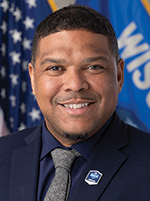
Photo of Amaad Rivera-Wagner
D Wisconsin Assembly · District 90 On the 2026 ballot

Rep. Amaad Rivera-Wagner

Compare
Total votes
220
all sessions
Attendance
90%
25 missed
Near the chamber average
With party
95%
of cast votes
Near the chamber average
Bipartisan score
2%
crosses aisle rarely
Near the chamber average
Sponsored
246
bills & resolutions
Near the chamber average
Committees
2
assignments
246 bills and resolutions

Sponsored bills

Total
246
Primary
246
Co-sponsor
0
This page
246
matching current filters
Primary AB 999
Failed · Wisconsin Assembly · Lead sponsor
Relating to: collective bargaining for employees of the University of Wisconsin Hospitals and Clinics Authority.

Maddy summaryAB 999 clarifies that employees of the University of Wisconsin Hospitals and Clinics Authority (UWHCA) are covered under collective bargaining agreements. The bill amends specific statutes (including 40.02, 40.05, and 111.02) to explicitly include UWHCA employees in provisions governing union dues, sick leave conversion, and bargaining unit structures. This ensures UWHCA staff have the same collective bargaining rights as other state employees covered under Chapter 111. The changes directly affect UWHCA employees by integrating them into existing labor frameworks without creating new rights. The bill focuses on administrative alignment within current state labor laws.

Failed Mar 23, 2026 0 co-sponsors
Primary AB 1018
Failed · Wisconsin Assembly · Lead sponsor
Relating to: income eligibility for Wisconsin Shares child care subsidy and making an appropriation. (FE)

Maddy summaryThis bill expands eligibility for Wisconsin's child care subsidy program (Wisconsin Shares) by allowing families with incomes above 200% of the federal poverty line but below 100% of the state median income to continue receiving subsidies. It creates a new eligibility pathway (20.437 (2) (ct)) to cover families previously disqualified due to income thresholds and adjusts copayment rules for those exceeding income limits. The policy directly affects low-income working families who lost subsidies due to modest income increases but remain below the new 100% state median income cutoff. A $1.25 million appropriation for fiscal year 2026-27 funds this expansion.

Failed Mar 23, 2026 0 co-sponsors
Primary AB 1016
Failed · Wisconsin Assembly · Lead sponsor
Relating to: funding for child care provider workforce training and making an appropriation. (FE)

Maddy summaryAB 1016 allocates $2,166,600 annually for two fiscal years (2025-26 and 2026-27) to fund workforce training for child care providers and prospective providers. The bill creates a new funding line (20.437(2)(d)) under the Department of Children and Families, directing these funds toward contracts focused specifically on training child care staff. It directly affects licensed child care providers and those seeking to enter the field by providing financial support for their professional development. The bill establishes a dedicated funding stream but does not change eligibility rules or create new regulatory requirements.

Failed Mar 23, 2026 0 co-sponsors
Primary AB 1017
Failed · Wisconsin Assembly · Lead sponsor
Relating to: child care subsidies for custodial parents who are child care employees and making an appropriation. (FE)

Maddy summaryAB 1017 creates a new child care subsidy program specifically for custodial parents who work as employees in child care facilities. It allows these parents to qualify for subsidies under revised eligibility rules, bypassing standard income and asset requirements that typically apply to other subsidy recipients. The bill appropriates $1.2 million in fiscal year 2025-26 for administrative costs related to this new program. This directly affects parents employed by child care providers who have primary custody of children under 13 (or 19 if disabled) and meet the new eligibility criteria.

Failed Mar 23, 2026 0 co-sponsors
Primary AJR 136
Failed · Wisconsin Assembly · Lead sponsor
Relating to: the right to privacy (first consideration).

Maddy summaryAJR 136 is a proposed constitutional amendment that would add a new Section 1m to Article I of the state constitution, stating: "As a necessary part of a free society, the people have an individual and fundamental right to privacy." This resolution, introduced by multiple assembly members and senators, would establish this privacy right as a fundamental constitutional protection for all residents. The bill requires voter approval at the next general election, as it must be referred to voters following a three-month publication period. It does not create immediate legal requirements but proposes a foundational constitutional change.

Failed Mar 23, 2026 0 co-sponsors
Primary AB 1030
Failed · Wisconsin Assembly · Lead sponsor
Relating to: increasing the earned income tax credit for families with fewer than three children. (FE)

Maddy summaryAB 1030 increases the state earned income tax credit for low-income working families with fewer than three children. Starting in 2026, eligible individuals will receive a credit equal to 34% of the federal earned income credit (if they have children) or 15% (if they have no children), up from previous rates. This policy directly benefits qualifying working adults and families who earn below certain income thresholds. The change applies to tax returns filed for years beginning after December 31, 2025.

Failed Mar 23, 2026 0 co-sponsors
Primary AB 1031
Failed · Wisconsin Assembly · Lead sponsor
Relating to: sales and use tax exemption for menstrual discharge collection devices. (FE)

Maddy summaryAB 1031 exempts menstrual discharge collection devices from sales tax. The bill defines these products to include tampons, pads, menstrual cups, period underwear, and other similar items designed for menstrual cycle use (such as period swimwear or sleep shorts), while explicitly excluding regular grooming products like soap or toothpaste. It adds these items to the list of tax-exempt goods under state law, meaning retailers won’t charge sales tax on them. This change directly affects consumers who purchase these products, making them more affordable by removing the tax burden.

Failed Mar 23, 2026 0 co-sponsors
Primary AB 1015
Failed · Wisconsin Assembly · Lead sponsor
Relating to: Wisconsin Shares copayment amounts and making an appropriation. (FE)

Maddy summaryAB 1015 adjusts Wisconsin Shares child care assistance copayment rules and increases funding. It limits copayments to no more than 7% of a family’s gross income (49.155 (5) (ag)) and waives copayments entirely for families earning below 150% of the federal poverty line (49.155 (5) (ar)). The bill also increases annual funding for child care subsidies by $22.93 million for fiscal years 2025-26 and 2026-27. These changes directly affect low-income families using Wisconsin Shares child care assistance.

Failed Mar 23, 2026 0 co-sponsors
Primary AB 1041
Failed · Wisconsin Assembly · Lead sponsor
Relating to: required instruction in African American history in the elementary and high school grades and making an appropriation. (FE)

Maddy summaryAB 1041 requires all Wisconsin public, private, and charter schools to integrate age-appropriate instruction about African American history into K-12 social studies curricula. It mandates the development of a state model curriculum covering African American contributions to U.S. and state history, with collaboration from organizations like the Wisconsin Black Historical Society. The bill funds three full-time education consultants ($384,900 annually) to support schools in implementing this curriculum. This policy directly affects all K-12 schools and educators, requiring concrete changes to social studies teaching standards starting with the 2026-27 school year.

Failed Mar 23, 2026 0 co-sponsors
Primary AB 1063
Failed · Wisconsin Assembly · Lead sponsor
Relating to: legislator district residency requirements and residency standard for qualified electors. (FE)

Maddy summaryAB 1063 requires state legislators to prove they live in the district they represent by filing sworn statements with proof of residency (like utility bills) at the start of each session and annually. If a legislator moves, they must update this within 10 days. Failure to comply triggers an investigation and potential legal action to remove them from office if residency is disputed. The bill also protects submitted residency records as confidential information. It directly affects all elected state legislators and aims to enforce existing residency requirements for legislative officeholders.

Failed Mar 23, 2026 0 co-sponsors
Showing 41 to 50 of 246 bills
Previous 1 … 4 5 6 … 25 Next