

Maddy summaryAB 476 creates a new legal right for employees to sue employers or co-workers for creating an "abusive work environment" that causes physical or psychological harm. It defines "abusive conduct" as repeated verbal abuse, threats, sabotage of work, or exploitation of health conditions - excluding single incidents unless exceptionally severe. Employees can seek remedies like medical costs, back pay, or front pay through a civil lawsuit filed within one year of the abusive conduct, while also prohibiting retaliation for reporting abuse or participating in investigations. The law directly affects employees experiencing such conduct and employers/co-workers who engage in it, with specific procedures requiring notification to the department for certain claims.
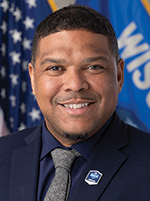
Rep. Amaad Rivera-Wagner
Sponsored bills
Maddy summaryAB 688 creates a temporary Shared Revenue Advisory Council to review and recommend improvements to how Wisconsin distributes supplemental county and municipal aid. The council, composed of legislative leaders, local association representatives, and the revenue secretary, must study revenue variations, evaluate current distribution formulas, and propose fairer methods for 2027 and beyond. It requires the council to submit recommendations by January 2027, including a formula that maintains or increases aid for all counties/municipalities and accounts for population and equalized value changes. The bill also establishes a new funding mechanism: starting in 2026, payments will adjust annually based on tax revenue changes (using $16.2575 million as the base for 2026-27) and include a population-based supplement for larger cities. This directly affects all Wisconsin counties and municipalities receiving supplemental aid under existing statutes.
Maddy summaryAB 692 organizes the administration of existing county and municipal sales taxes in Wisconsin. It creates new administrative structures for local governments to manage tax revenues collected under statutes 77.70 (counties) and 77.702 (municipalities), specifically designating 0.75% of collected tax revenue for administrative purposes. The bill requires local governments to follow specific procedures for adopting or repealing tax ordinances (e.g., submitting certified copies to the revenue secretary 120 days in advance) and limits refund claims to four years after repeal. It directly affects counties and municipalities that impose local sales taxes, ensuring consistent handling of these funds within state tax administration.
Maddy summaryAB 684 repeals and revises specific laws related to Milwaukee's fire and police department governance and a tax provision for rail projects, as originally enacted under 2023 Act 12. It modifies the appointment rules for the fire and police board (requiring political balance and 45-day appointment deadlines), mandates an annual policy review by the board, and requires a two-thirds city council vote to change department policies. The bill also clarifies that tax incentives for rail projects do not apply to Milwaukee's Lakefront Line route. These changes directly affect Milwaukee's fire and police departments, the city council, and the board of fire and police commissioners.
Maddy summaryAB 694 amends multiple state statutes to explicitly prohibit the use of eminent domain (government power to take private land) for establishing or extending recreational trails, bicycle ways, bicycle lanes, or pedestrian paths. It directly affects state agencies, counties, and cities when acquiring land for public parks, trails, or related infrastructure. The bill adds consistent language across various land acquisition statutes, banning condemnation for these specific purposes while allowing it for traditional park or trail development under other provisions. This policy change clarifies that governments cannot use eminent domain to build or expand recreational trails or bike/pedestrian pathways, though they may still acquire land for other park-related projects.
Maddy summaryAB 690 prohibits local governments (like cities and counties) from granting preferential treatment or discriminating based on race, color, ancestry, national origin, or sexual orientation in hiring employees or awarding public works contracts. The bill amends statutes to state that political subdivisions may not use these protected characteristics in employment decisions or contracting, unless required to secure federal aid. This directly affects how local governments manage their workforce and public construction projects. The law would require neutrality in these hiring and contracting processes, with no exceptions beyond federal requirements.
Maddy summaryAB 462 requires construction contractors to register with the state and comply with worker classification laws, directly affecting employers in the construction industry. It creates a whistleblower program offering 15-30% of penalties collected (up to 10% for media-sourced tips) to employees who report misclassification or tax violations, while prohibiting retaliation against reporting workers. The bill also mandates multilingual outreach to educate employers and workers about misclassification rights and anonymous reporting options. These provisions aim to increase compliance with worker classification and tax laws in the construction sector.
Maddy summaryAB 578 ensures Wisconsin continues providing WIC (Women, Infants, and Children) food benefits during federal government shutdowns. It requires the state to fund these benefits at pre-shutdown levels until federal funding is restored under federal law. The bill directly affects WIC participants - mothers, infants, and young children - who rely on these nutrition services. It creates a state funding mechanism to prevent benefit disruptions during federal funding lapses, such as the October 2025 shutdown referenced in the bill. The policy change takes effect immediately but includes a repeal provision for October 2026.
Maddy summaryAB 478 repeals two existing statutes (66.0134 and 947.21) that previously prohibited state and local governments from regulating labor matters. This bill directly affects state and local government entities by removing a legal barrier that prevented them from creating their own labor regulations. The key mechanism is the simple repeal of these specific statutes, allowing governments to establish rules on issues like wages, working conditions, or union practices without violating the repealed restrictions. The bill does not create new regulations but enables governments to develop their own labor policies where they previously could not.
Maddy summaryAB 598 allows patient representatives to consent to health care facility admissions for incapacitated individuals without requiring a court-appointed guardian or protective placement petition. The bill creates a defined "patient representative" role, requiring two medical professionals (e.g., two physicians or one physician plus an advanced practice clinician) to certify incapacity based on medical need - not age, disability, or eccentricity. Patient representatives gain authority to make health care decisions, enroll individuals in Medical Assistance, and authorize health care expenses similar to a guardian, but only for non-developmental disability and non-mental illness cases. This change streamlines admissions for incapacitated patients while mandating 72-hour notifications to county agencies about the certification.