

Maddy summaryAB 515 makes it a crime to disrupt elections by engaging in loud, harassing, or intimidating behavior at polling places or absentee voting sites during voting hours. It directly affects individuals who interfere with voters, election officials, or municipal staff performing election duties. The bill increases penalties for crimes committed specifically to target election activities, such as attacking someone because they were voting or working at a polling place. Violators face fines up to $10,000 or up to 9 months in jail, with steeper penalties for repeat offenses or crimes against election workers.
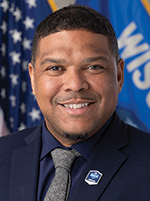
Rep. Amaad Rivera-Wagner
Sponsored bills
Maddy summaryAB 451 creates new rules for "residential tax incremental districts" (RTIDs) in cities, limiting these districts to 3% of a city's total taxable property value (down from a 12% cap for other districts). It requires RTIDs to fund only infrastructure for residential developments meeting strict size limits: single-family homes under 7,500 sq ft lots, two-family homes under 15,000 sq ft lots, and strict setbacks/sizes for homes (e.g., max 1,500 sq ft for single-story). Project costs are restricted to district-wide infrastructure (like stormwater systems), not individual lots, and must be paid from tax increments or developer financing. The bill directly affects cities creating RTIDs and developers building qualifying residential projects.
Maddy summaryAJR 105 is a commemorative resolution proposing to recognize September 25, 2025, as "First Amendment Day" in Wisconsin. It honors the First Amendment's protections of free speech, religion, press, assembly, and petition rights, referencing its historical role in movements like civil rights and women's suffrage. As a symbolic resolution, it has no legal effect or policy changes - it does not create new laws or alter existing rights. The resolution was introduced by multiple legislators and referred to committee for further consideration.
Maddy summaryAB 441 requires law enforcement officers to clearly identify themselves during arrests or detentions. Specifically, officers must state their name, display their badge number and agency insignia (with specified visibility standards), and state the legal authority for the action. The bill prohibits concealing identity except for medical masks, tactical gear, or during imminent danger. Violating these rules is a Class D felony, though courts cannot impose jail time. This directly affects officers employed by state or local law enforcement agencies during enforcement actions.
Maddy summaryAB 557 updates Wisconsin's regulations for real estate appraisers and appraisal management companies. It raises the transaction value threshold for "residential appraiser" certification from $250,000 to $500,000 and establishes state-to-state reciprocity agreements to recognize appraiser credentials. The bill also requires appraisers to display their title and license number on reports and prohibits appraisal management companies from removing independent appraisers from their panels without specific justification. These changes directly affect licensed appraisers, appraisal management companies, and the Department of Financial Institutions overseeing credentialing.
Maddy summaryAB 145 requires the state legislature to create and pass a plan to reduce carbon emissions by 52% by 2030 and achieve net-zero emissions by 2050. The bill mandates that any legislative plan developed must prioritize improving both economic and racial equity alongside emission reductions. It directly affects the legislature, which must finalize this plan during the 2025-26 session. The key provision is establishing legally binding emission reduction targets with an explicit requirement to address equity impacts in the implementation strategy.
Maddy summaryAB 527 removes restrictions on county advisory referendums in Wisconsin. It eliminates a specific exception that previously barred counties from holding advisory votes on most issues, except for capital projects funded by property taxes. The bill amends statute 59.52(25) to allow county boards to conduct advisory referendums on any topic without prior restrictions. This directly affects county governments seeking to gather public input on local policy decisions through non-binding votes. The change removes barriers to community engagement on a broader range of local issues.
Maddy summaryAB 337 requires public school staff in Wisconsin to receive training focused on student mental health and social-emotional learning. This bill directly affects school staff, including teachers and administrators, by mandating new training programs. It authorizes a $500,000 funding increase for fiscal years 2025-26 and 2026-27 to support these training initiatives through the Department of Public Instruction. The legislation creates a new statutory requirement (115.28 (63)(d)) for schools to implement this training, funded by the specified appropriations.
Maddy summaryAB 534 requires public high schools to offer voter registration during regular school days for enrolled students and school staff. It creates a process where schools appoint "school registration deputies" to collect forms, which are then sent to the local election office; students who register as minors will be automatically added to the voter rolls when they turn 18. Private or tribal high schools with many local students may also participate if they request it. The bill directly affects high school students (especially those approaching voting age) and school staff by expanding access to voter registration at school locations.
Maddy summaryAB 383 increases funding for Wisconsin's Veterans Housing and Recovery Program. It allocates an additional $900,000 for fiscal year 2025-26 and $1,050,000 for 2026-27 to cover program supplies, services, and leasing costs for the Chippewa Falls-based program. This adjustment addresses space and facility deficiencies at the current location by enabling a facility move. The bill directly affects veterans utilizing this housing program in Chippewa Falls. The changes are purely fiscal, with no new program requirements or policy shifts.