

Maddy summaryAB 923 creates a civil legal pathway for victims of sexual extortion (defined under statute 942.095) to sue for physical injury, emotional distress, or property loss. It allows victims, their parents/guardians (if minors), or estate representatives (in cases involving suicide linked to the extortion) to file lawsuits regardless of any criminal case outcome. The bill includes strong privacy protections, permitting plaintiffs to use initials instead of full names in court documents and allowing courts to issue orders shielding victims from public disclosure or unnecessary examinations. If successful, plaintiffs can recover damages for emotional distress, punitive damages, attorney fees, and other litigation costs.
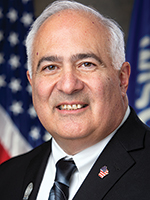
Rep. John Spiros
Sponsored bills
Maddy summaryAB 968 would require virtual currency kiosks (machines exchanging cash for digital currency or vice versa) to obtain state licenses, display mandatory fraud warnings, and verify customer identities using government ID and photos. It sets a $500 daily transaction limit, caps fees at 3% or $5 per transaction, and mandates detailed receipts showing all transaction details. The bill directly affects kiosk operators and customers, aiming to prevent fraud through identity checks and clear transaction records. Currently under review in the Financial Institutions committee.
Maddy summaryAB 194 modifies Wisconsin's housing programs under the Wisconsin Housing and Economic Development Authority. It redefines "developer" to include tribal housing authorities (Section 3) and clarifies "residential housing" to include tax-exempt reservation or trust lands (Section 4). The bill reduces maximum loan limits for housing projects from 33% to 20% of development costs (Section 10) and from 25% to 10% (Section 11). It also requires local governments to submit cost-reduction analyses showing how zoning or fee changes lowered housing costs (Section 7), directly affecting developers, tribal entities, and local governments administering housing programs.
Maddy summaryAB 992 revises cost thresholds for administrative rule reviews, lowering the trigger point from $10 million to $4 million in projected costs for businesses, local governments, and individuals over two years. It prohibits agencies from splitting a single rule into multiple rules to avoid this cost analysis requirement. Agencies must halt rulemaking if costs exceed the threshold unless they modify the rule to reduce costs, then re-evaluate. This directly affects state agencies creating regulations and entities bearing compliance costs.
Maddy summaryAB 131 establishes a municipal grant program to test for PFAS (perfluoroalkyl and polyfluoroalkyl substances) in public water systems and fund source reduction measures. It allows water utilities to use customer service fees to cover up to half the cost of PFAS source reduction for connected customers, if cheaper than facility upgrades. The bill also creates eligibility rules for disadvantaged communities extending service due to PFAS contamination and directs PFAS contamination claims to an existing landowner grant program. These provisions directly affect municipal water systems, public utilities, and communities addressing PFAS in drinking water.
Maddy summaryAB 130 exempts specific groups from certain PFAS enforcement actions under Wisconsin's spills law if they allow the state to clean up contaminated land at no cost to them. It directly affects landowners, fire departments, airports, wastewater spreaders, and waste facilities that handled PFAS-contaminated materials legally. The bill creates exemptions for those who spread permitted biosolids, owned land where such spreading occurred, used PFAS in emergency response (per federal rules), accepted PFAS waste, or own property not responsible for the contamination origin. This applies only to enforcement sections related to PFAS contamination under the spills law, not all PFAS regulations.
Maddy summaryAB 856 repeals and amends specific sections of state law related to operating while intoxicated (OWI) that were deemed unconstitutional by the U.S. Supreme Court. The bill primarily affects drivers of all-terrain vehicles (ATVs), utility terrain vehicles, and motorboats who face penalties for OWI or refusal to submit to chemical tests. Key changes include adjusting penalty tiers for repeat offenses (e.g., fines of $300-$1,100 for one prior conviction, up to $2,000 for four or more), clarifying when refusal constitutes a violation, and adding provisions for "additional chemical tests" for ATV/boat operators involved in accidents. The bill also revises procedures for law enforcement officers requesting tests and providing required information. These changes aim to align the statutes with constitutional standards while maintaining enforcement mechanisms for impaired operation.
Maddy summaryAB 619 creates a $150 million grant program to fund aviation biofuel manufacturing projects in Wisconsin, funded through state public debt issuance. The bill requires grantees to use facilities exclusively for aviation biofuel production (with limited exceptions for other biofuels if 80% of output is aviation fuel), source 80% of biomass locally, and invest at least $1.5 billion in aviation biofuel manufacturing within five years. It directly affects companies building such facilities and the Department of Natural Resources, which administers the grants. The program aims to support the state's forest products industry and create jobs, with strict repayment terms if grantees fail to meet requirements.
Maddy summaryAB 679 creates a new permit system for trucks carrying grain, feed, or commercial fertilizer that exceed standard weight limits. It allows vehicles with 6 or more axles to operate at up to 91,000 pounds gross weight on state highways, provided they meet axle weight distribution rules and follow department-specified routes. The bill directly affects agricultural haulers and trucking companies transporting these materials, requiring a $325 permit for such operations. Permits are invalid on interstate highways (except as permitted by federal law) and may be suspended during spring thaw conditions. This bill does not change base weight limits but establishes a regulated pathway for heavier agricultural transport.
Maddy summaryAB 596 creates a state matching grant program that allocates $950,000 to provide state funds matching federal per diem payments received by eligible non-state entities. It directly affects organizations or programs receiving federal per diem payments (such as those supporting veterans) by allowing them to access additional state funding. The bill establishes this program under the Veterans Affairs department budget, requiring the state to match federal payments without changing eligibility criteria or adding new requirements for recipients.