

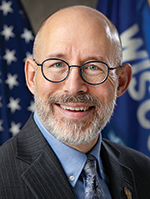
Photo of Scott Allen
R Wisconsin House · District 82

Rep. Scott Allen

Compare
Total votes
545
all sessions
Attendance
94%
36 missed
Lower than 88% of chamber peers
With party
95%
of cast votes
Near the chamber average
Bipartisan score
2%
crosses aisle rarely
Near the chamber average
Sponsored
762
bills & resolutions
Near the chamber average
Committees
6
assignments
762 bills and resolutions

Sponsored bills

Total
762
Primary
762
Co-sponsor
0
This page
762
matching current filters
Primary AB 248
Vetoed · Wisconsin House · Lead sponsor
Relating to: vacancies in appointive state offices.

Maddy summaryAB 248 creates a new statutory section (17.03(10m)) clarifying how vacancies are handled in appointive state offices with fixed terms. It defines "appointive state office" to include positions in state departments, agencies, boards, commissions, and authorities (but excludes the legislature and courts). The bill specifies that when an appointee's fixed term expires, the vacancy is filled under existing procedures - without changing current rules. This is a procedural clarification, not a policy change, affecting state government appointees but not altering how vacancies are currently managed.

Vetoed May 13, 2026 0 co-sponsors
Primary AB 595
Vetoed · Wisconsin House · Lead sponsor
Relating to: compliance with the federal Help America Vote Act, voter registration data sharing agreements, removing ineligible voters from the official voter registration list, and fees for obtaining the official voter registration list. (FE)

Maddy summaryAB 595 updates Wisconsin's voter registration system to better comply with federal voting laws. It requires the Elections Commission to verify U.S. citizenship for all voters by matching registration data with state databases from the Department of Transportation, State Registrar, and Department of Corrections. Municipal clerks must report monthly on voter status changes, including removals due to citizenship issues, and share audit results with election officials. The bill directly affects election administrators, state agencies handling voter data, and voters whose eligibility is verified through these new processes.

Vetoed May 13, 2026 0 co-sponsors
Primary AB 759
Signed into law · Wisconsin House · Lead sponsor
Relating to: eligibility to receive occupational credentials for recipients of deferred action under the Deferred Action for Childhood Arrivals program. (FE)

Maddy summaryAB 759 allows individuals with deferred action under the federal DACA program to obtain state occupational licenses (like nursing or cosmetology credentials) if they have valid federal work permits. It requires state licensing agencies to verify DACA recipients' federal work authorization through official systems before issuing licenses. Licenses issued under this law expire when the federal work permit expires, and recipients must renew both simultaneously. The bill explicitly states it does not grant eligibility for public benefits beyond occupational credentials.

Signed into law Apr 9, 2026 0 co-sponsors
Primary AB 253
Signed into law · Wisconsin House · Lead sponsor
Relating to: independence accounts. (FE)

Maddy summaryThis bill creates "independence accounts" allowing individuals to save up to $15,000 annually from their gross earnings without that money counting toward Medicaid asset limits. It specifically excludes assets acquired through inheritance when determining eligibility for benefits. The department must seek federal approval to implement this change, though the program would take effect if federal authorities approve. The bill directly affects people applying for or receiving Medicaid benefits in the state.

Signed into law Apr 9, 2026 0 co-sponsors
Primary AB 910
Passed · Wisconsin House · Lead sponsor
Relating to: the amounts of fines and fees state agencies are authorized or required to impose by law. (FE)

Maddy summaryAB 910 requires state agencies to adjust fines and fees for inflation every three years. Agencies must report current amounts, calculate inflation-adjusted values using the consumer price index, and recommend whether to increase, decrease, or maintain fees based on inflation. This applies to all state agencies collecting fees for services or penalties (like driver’s license fees or permit charges), affecting individuals who pay these fees. Agencies can spread increases over up to four years and must consider their service costs when recommending changes. The bill establishes a regular process to keep fee levels aligned with inflation, rather than allowing them to become outdated.

Passed Apr 6, 2026 0 co-sponsors
Primary AB 86
Signed into law · Wisconsin House · Lead sponsor
Relating to: imposing the penalty of life imprisonment for the crime of child trafficking and providing a penalty. (FE)

Maddy summaryAB 86 amends Wisconsin law to impose a life sentence without parole for individuals convicted of child trafficking involving three or more child victims. It specifically upgrades penalties under statutes 948.051(1)(b) and 948.051(2)(b), defining child trafficking as recruiting, transporting, or exploiting children for commercial sex acts. The bill requires courts to sentence offenders to life imprisonment without parole eligibility when three or more child victims are involved, affecting both traffickers and those who benefit from such crimes. This change applies to offenses committed on or after the bill’s effective date.

Signed into law Apr 3, 2026 0 co-sponsors
Primary AB 320
Signed into law · Wisconsin House · Lead sponsor
Relating to: increasing certain court fees and surcharges and indexing those amounts for inflation. (FE)

Maddy summaryAB 320 increases multiple court filing fees and requires these fees to be adjusted for inflation starting in 2030. It raises specific fees, such as the civil filing fee from $75 to $190 and the criminal case fee from $163 to $239, with future adjustments tied to the U.S. consumer price index. These changes directly affect individuals filing court cases (e.g., defendants in criminal matters, plaintiffs in civil or family cases) who pay these fees. The bill mandates that fee amounts be recalculated every five years based on inflation data, rounded up to the nearest dollar, and posted online by the state courts director. The adjustments apply to over 20 specific fee categories across criminal, civil, and family court proceedings.

Signed into law Apr 3, 2026 0 co-sponsors
Primary AB 778
Signed into law · Wisconsin House · Lead sponsor
Relating to: eligibility for the Transform Milwaukee Jobs program and the Transitional Jobs program. (FE)

Maddy summaryAB 778 changes eligibility rules for Wisconsin's Transform Milwaukee Jobs and Transitional Jobs programs. It requires applicants to have neither filed for unemployment insurance benefits nor be eligible for them. The bill repeals an existing eligibility provision (49.163(2)(am)4) and amends the current rule (49.163(2)(am)5) to clarify this requirement. This directly affects individuals seeking employment assistance through these specific Milwaukee-based workforce programs. The change simplifies eligibility by excluding those currently accessing unemployment benefits.

Signed into law Apr 2, 2026 0 co-sponsors
Primary AB 19
Signed into law · Wisconsin House · Lead sponsor
Relating to: increased penalties for crimes against adults at risk; restraining orders for adults at risk; freezing assets of a defendant charged with financial exploitation of an adult at risk; sexual assault of an adult at risk; and providing a penalty.

Maddy summaryAB 19 increases penalties for crimes against elders (60+ years) and adults at risk (a defined term under state law) by raising felony classifications for physical abuse and sexual assault. It requires courts to allow these victims to participate in hearings via phone or video, and allows asset freezes for defendants charged with financial exploitation of such victims. Crucially, the bill states that defendants cannot claim ignorance of the victim’s age or status as a defense. The bill directly affects vulnerable adults, courts handling related cases, and defendants facing charges under these provisions. It amends multiple statutes to implement these changes without creating new offenses.

Signed into law Apr 2, 2026 0 co-sponsors
Primary AB 668
Signed into law · Wisconsin House · Lead sponsor
Relating to: reports on the competency of involuntarily committed individuals to refuse medication or treatment based upon an examination by an advanced practice registered nurse.

Maddy summaryAB 668 amends Wisconsin law to allow advanced practice registered nurses (APRNs) with psychiatric expertise to conduct examinations determining whether involuntarily committed individuals can refuse medication or treatment. This change directly affects individuals in psychiatric commitment under specific legal standards who refuse care, as it expands the pool of qualified professionals (previously limited to physicians) who can provide the required medical certification. The bill requires any motion to override a patient's refusal to include a written report signed by an APRN or physician stating the individual is not competent to refuse treatment or that treatment is necessary to prevent serious harm. The amendment takes effect September 1, 2026, after a temporary transition period allowing physician-only assessments until that date. This creates a new pathway for competency determinations while maintaining existing court hearing requirements.

Signed into law Mar 27, 2026 0 co-sponsors
Showing 21 to 30 of 762 bills
Previous 1 2 3 4 77 Next