

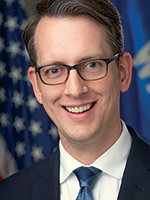
Photo of Mike Bare
D Wisconsin Assembly · District 80 On the 2026 ballot

Rep. Mike Bare

Compare
Total votes
426
all sessions
Attendance
100%
of floor votes
Near the chamber average
With party
97%
of cast votes
Near the chamber average
Bipartisan score
1%
crosses aisle rarely
Near the chamber average
Sponsored
731
bills & resolutions
Near the chamber average
Committees
5
assignments
731 bills and resolutions

Sponsored bills

Total
731
Primary
731
Co-sponsor
0
This page
731
matching current filters
Primary AB 733
Failed · Wisconsin Assembly · Lead sponsor
Relating to: recreational opportunities and structured programming for inmates in state correctional institutions and county jails and houses of correction. (FE)

Maddy summaryAB 733 requires state prisons and county jails to provide inmates with minimum weekly hours of recreational activities and structured programming. State facilities must offer 21-35 hours weekly (depending on staffing levels), prioritizing education, job training, reentry planning, and wellness programs. County jails must provide at least 10 hours weekly starting 31 days into confinement, increasing to 21-35 hours after 90 days if staffing meets thresholds. Exceptions allow temporary reductions during lockdowns or solitary confinement, limited to 10 consecutive days.

Failed Mar 23, 2026 0 co-sponsors
Primary AB 723
Failed · Wisconsin Assembly · Lead sponsor
Relating to: bathing periods for inmates of state correctional institutions and county jails or houses of correction. (FE)

Maddy summaryAB 723 establishes minimum bathing requirements for inmates in state correctional facilities and county jails. It mandates that state facilities provide at least four 15-minute bathing periods weekly, including 10 minutes of heated running water, while county jails must meet the same standard. The bill directly affects all inmates in these facilities by setting concrete, measurable hygiene standards. It requires the state department of corrections and county sheriffs to implement these provisions, with no additional exemptions or cost details specified in the current text.

Failed Mar 23, 2026 0 co-sponsors
Primary AB 734
Failed · Wisconsin Assembly · Lead sponsor
Relating to: climate control in state correctional institutions and county jails and houses of correction and making an appropriation. (FE)

Maddy summaryAB 734 establishes specific temperature standards for state correctional institutions and county jails, requiring indoor temperatures to stay between 68°F and 76°F at all times in housing units. It mandates facilities to record temperatures in common areas and random cells during extreme weather (below 10°F or above 90°F) and submit annual reports to the legislature. The bill appropriates $65 million for 2026-27 to install and operate heating, ventilation, and air conditioning systems, with phased implementation: one-third of facilities by 2029, another third by 2031, and the final third by 2035. This directly affects all state prisons and county jails/houses of correction in Wisconsin, requiring them to meet new climate control requirements and report compliance data.

Failed Mar 23, 2026 0 co-sponsors
Primary AJR 121
Failed · Wisconsin Assembly · Lead sponsor
Relating to: custody of the county jail and its inmates (first consideration).

Maddy summaryAJR 121 is a constitutional amendment proposal that would clarify county jail custody authority. It would add language stating sheriffs normally have custody of county jails and inmates, but county boards of supervisors could delegate that custody to other public officials or entities. This directly affects sheriffs, county boards, and county jail operations by defining who holds legal responsibility for inmates. The amendment does not create new policies but adjusts constitutional language governing jail custody. The bill is currently in committee after its December 2025 introduction.

Failed Mar 23, 2026 0 co-sponsors
Primary AB 725
Failed · Wisconsin Assembly · Lead sponsor
Relating to: reporting of and notifications about restricted movement and solitary confinement in state correctional institutions and county jails and making an appropriation. (FE)

Maddy summaryAB 725 requires state prisons and county jails to notify designated family members within 24 hours when an inmate faces restrictions affecting visits or communication (like solitary confinement). It also mandates an online public dashboard updated every 48 hours, showing current restrictions (with reasons and duration), solitary confinement numbers broken down by reason, and total inmate counts. The bill funds these systems with $780,000 for fiscal year 2025-26 and $275,000 for 2026-27, plus temporary staff to implement them. These changes directly affect inmates, their families, and correctional facilities by increasing transparency around restrictive practices.

Failed Mar 23, 2026 0 co-sponsors
Primary AB 729
Failed · Wisconsin Assembly · Lead sponsor
Relating to: inmate access to transparent windows and making an appropriation. (FE)

Maddy summaryAB 729 requires all state correctional institutions and county jails to install transparent windows in inmate cells by October 2030 that are at least 1.5 square feet and provide 92% visibility to the outdoors. It mandates that every inmate must have access to view outdoors through such windows for at least 3 hours daily (unless in lockdown or solitary), achievable via time outdoors, in-cell viewing, or shared facility windows. The bill directly affects all state prisons and county jails in the state, requiring physical modifications to cell structures. Funding of $500,000 for 2025-26 and $3 million for 2026-27 is allocated specifically for window installation under this law.

Failed Mar 23, 2026 0 co-sponsors
Primary AB 745
Failed · Wisconsin Assembly · Lead sponsor
Relating to: reimbursement for the provision of military funeral honors. (FE)

Maddy summaryAB 745 creates a new eligibility category for state reimbursement of military funeral honors costs, specifically for individuals who were naturalized under the federal Hmong Veterans’ Naturalization Act of 2000 and were residing in the state at the time of death. It requires the state department to reimburse certified veteran organizations for providing military funeral honors, with a maximum payment of $85 per funeral (adjusted annually for inflation based on the U.S. consumer price index). The bill directly affects families of qualifying Hmong veterans who served in the U.S. military and were naturalized under the 2000 federal law. This establishes a clear reimbursement mechanism for organizations providing these honors, replacing the previous $50 limit with an inflation-adjusted $85 cap.

Failed Mar 23, 2026 0 co-sponsors
Primary AB 731
Failed · Wisconsin Assembly · Lead sponsor
Relating to: telecommunications service access by inmates and juveniles and making an appropriation. (FE)

Maddy summaryAB 731 requires state and county correctional facilities to provide inmates and juveniles with minimum weekly telecommunications access at no cost, including 180 minutes of phone calls, 60 minutes of video calls, and 100 text messages. It directly affects individuals in state prisons, juvenile correctional facilities, and county jails by mandating these service levels, which must be maintained or improved from existing access levels. The bill establishes funding through specific appropriations ($4.46 million for adult inmates, $517,500 for juveniles) and requires counties to join a state telecommunications contract or report why they don’t, with the state reimbursing counties for costs if they opt out. It also prohibits using telecom services to replace in-person visitation and bans charging inmates for services beyond the minimums.

Failed Mar 23, 2026 0 co-sponsors
Primary AB 784
Failed · Wisconsin Assembly · Lead sponsor
Relating to: creating a multifamily housing innovation council and allowing a multifamily dwelling up to six stories to be served by a single stairway. (FE)

Maddy summaryAB 784 creates a Multifamily Housing Innovation Council within the Department of Safety and Professional Services to develop safety guidelines for apartment buildings. The bill allows local governments to permit multifamily buildings up to six stories to use a single stairway for egress, provided they follow a safety guidebook developed by the council. The council must create this guidebook (ensuring compliance with National Fire Protection Association standards) and a model ordinance to help communities allow apartment construction on commercial-zoned land. This directly affects local governments, developers, and fire safety standards for new residential construction.

Failed Mar 23, 2026 0 co-sponsors
Primary AB 774
Failed · Wisconsin Assembly · Lead sponsor
Relating to: prohibiting step therapy protocols for certain cancer drugs.

Maddy summaryAB 774 prohibits health insurers and pharmacy benefit managers from requiring step therapy protocols for certain cancer treatments. Specifically, it bans forcing patients to try less expensive drugs first when a doctor prescribes a drug approved by the FDA for metastatic cancer (cancer that has spread) or a cancer-associated condition (symptoms or side effects from cancer treatment that worsen health if untreated). The ban applies only when the drug meets three evidence-based criteria: FDA approval, alignment with best medical practices, and support from peer-reviewed research. This directly affects patients with advanced cancer and their insurers, ensuring access to prescribed treatments without unnecessary barriers.

Failed Mar 23, 2026 0 co-sponsors
Showing 151 to 160 of 731 bills
Previous 1 … 15 16 17 … 74 Next