

Maddy summaryThis bill allocates $2 million annually for two years to fund LGBTQIA+ rights training for school counselors and social workers in Wisconsin public schools. It requires school boards to provide department-approved training on LGBTQIA+ rights, defined as including lesbian, gay, bisexual, transgender, queer, intersex, and other nonheterosexual or noncisgender identities. The training must be developed or approved by the state Department of Public Instruction. School counselors and social workers employed by participating school boards will directly receive this training through the grant program. The funding is tied to specific statutory provisions creating new grant categories under education budgets.
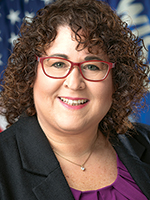
Rep. Lisa Subeck
Sponsored bills
Maddy summaryAB 336 would allocate $11 million annually for the 2025-26 and 2026-27 fiscal years to fund additional mental and behavioral health services at the University of Wisconsin System. The bill specifically directs these funds toward improving student health services through enhanced staffing, training, prevention programs, and assessment tools. It directly affects all University of Wisconsin System campuses and their students by expanding access to mental health support. The funding mechanism is a direct state appropriation with no additional requirements for institutions.
Maddy summaryAB 359 prohibits licensed mental health professionals from providing conversion therapy to individuals under 18 years old. The bill defines conversion therapy as any attempt to change a person’s sexual orientation or gender identity, while explicitly excluding supportive counseling for gender transition, general acceptance, or safety-focused interventions. Violations could lead to disciplinary actions by licensing boards, including license suspension, revocation, or limitations on practice. This law directly affects minors under 18 and mental health professionals licensed under chapters 448, 455, or 457 of the statutes.
Maddy summaryAB 361 eliminates specific criminal defenses in cases where a defendant claims they acted due to the victim's gender identity or sexual orientation. The bill amends statutes to prevent defendants from using "adequate provocation," "self-defense," or "not guilty by reason of mental disease" as justifications if the claim relates to the victim's actual or perceived gender identity, expression, or sexual orientation. This specifically blocks defenses in situations like when the victim made a romantic advance without force or when the defendant and victim dated. The law applies to offenses committed on its effective date and directly affects defendants in criminal cases involving these specific circumstances.
Maddy summaryAJR 79 is a ceremonial joint resolution recognizing June 2025 as LGBTQ Pride Month in Wisconsin. It formally acknowledges the state’s historical support for LGBTQ rights - including being the first to pass anti-discrimination laws in 1982 - and highlights ongoing community efforts, though it does not create new policies or affect specific groups. As a symbolic resolution, it has no legal force or binding requirements.
Maddy summaryAB 355 removes specific restrictions on abortion access and requires certain health insurance plans to cover abortion care without cost-sharing. It directly affects patients seeking abortion services and health insurers offering coverage under specified plans. Key provisions eliminate mandatory waiting periods and counseling requirements, while mandating coverage for abortion services in state-regulated health insurance plans. This policy change aims to improve access by removing regulatory barriers and ensuring insurance coverage.
Maddy summaryAB 258 modifies Wisconsin's license restrictions for drivers required to use ignition interlock devices after DUI convictions. It extends license revocation periods by 180 days for specific violations detected by the device, including three or more violations within 60 days, tampering, or unauthorized removal. The bill also creates a process for drivers to dispute violations using documentation (e.g., device malfunctions) and requires electronic reporting from interlock providers to the department. This directly affects individuals subject to ignition interlock orders under existing DUI-related license restrictions.
Maddy summaryAB 360 creates a grant program to help small law enforcement agencies (those with 25 or fewer full-time officers) address staffing shortages. Agencies can apply for grants to cover costs of preparatory training for future officers and up to six months of on-the-job training for new recruits, provided they have high vacancy rates (20%+) or upcoming retirements. Recipients must commit to working at the agency for one year after training, and agencies may exclude new recruits from staffing maintenance requirements for six months. The program runs for 18 months after all funds are distributed, with repayment required if commitments aren't met.
Maddy summaryAB 334 requires state highway departments to include bicycle and pedestrian facilities in all new highway projects funded by state or federal money (such as those under statutes §20.395 or §20.866). The bill mandates this unless specific exceptions apply, such as if facility costs exceed 20% of the total project cost, if the location is too constrained, if there's no demonstrated need (e.g., low population/traffic), or if a community refuses to maintain the facilities. It grants the transportation secretary authority to review and approve such exceptions on a case-by-case basis. This directly affects state highway projects and transportation planning decisions across the state.
Maddy summaryAB 267 requires Wisconsin state parks to waive all daily admission fees (including any issuing fees) on April 22 each year, commemorating Earth Day and its founder, Gaylord Nelson. This policy directly affects all visitors to Wisconsin state parks on April 22, making entry free on that specific date. The bill creates a new statutory provision (27.01(9)(b)) that mandates this automatic fee waiver annually. It does not change existing fee structures outside of Earth Day or create new funding obligations.